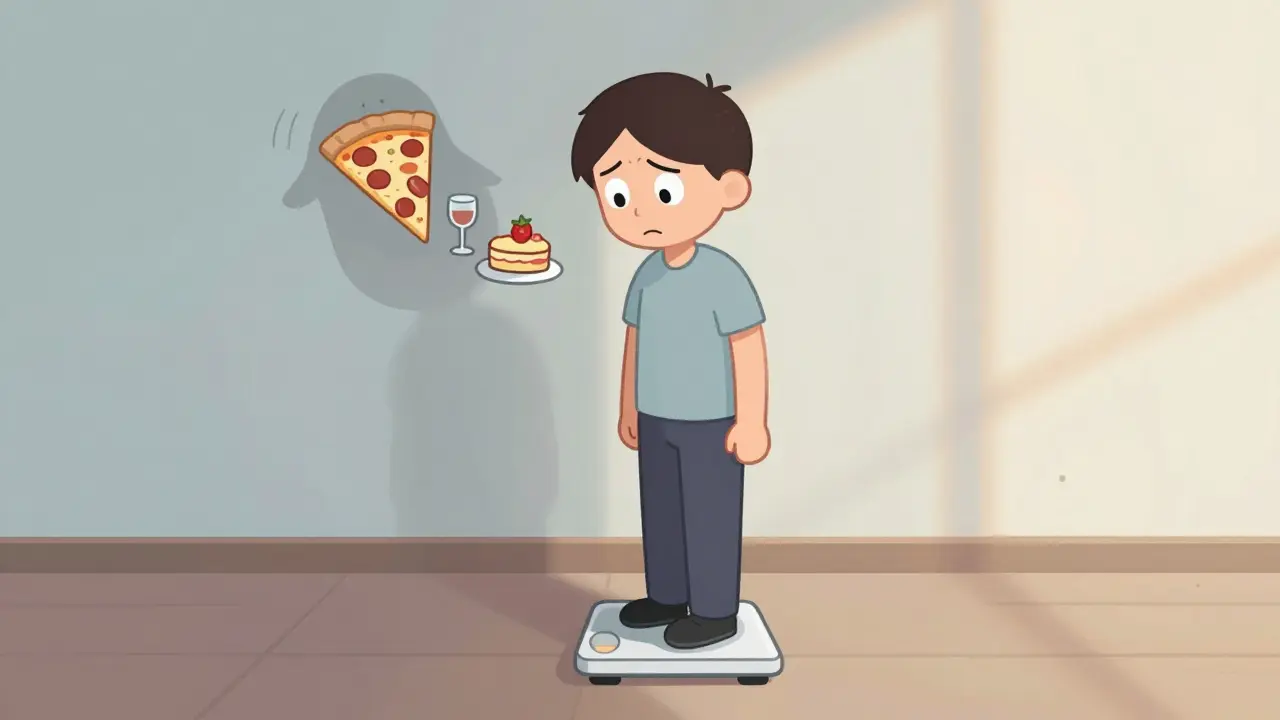
It’s Friday night. You’ve stuck to your plan all week-measured portions, daily walks, no sugary snacks. You deserve a break, right? So you order pizza, have a couple of drinks, skip the morning workout on Saturday, and eat dessert after dinner. Sunday follows the same pattern. By Monday morning, the scale shows you’ve gained half a kilo. You feel defeated. But here’s the truth: weekend weight gain isn’t about laziness or lack of willpower. It’s a predictable pattern-and one you can stop.
Why Your Weight Goes Up on Weekends
Research from Washington University in 2008 first showed this clearly: people consistently eat more on weekends, especially on Saturday. That’s not just anecdotal. In a study of 48 adults trying to lose weight, those who stuck to a calorie-restricted diet during the week ended up eating 36% of their daily calories from fat on Saturdays-up from under 35% on weekdays. The result? Weight loss stopped cold on weekends. Some even gained weight. A 2023 study tracking 368 Australians over a year found a steady weekly rhythm: weight drops Monday through Thursday, creeps up Friday night, peaks Saturday and Sunday, then falls again on Monday. The average weekly fluctuation? Just 0.3%. Sounds small, right? But over a year, that adds up to a 0.26% increase in body weight. For someone weighing 80 kg, that’s nearly 200 grams of extra fat per year-without even realizing it. And it’s not just about food. People who exercise more on weekends often eat more to “compensate.” One group in the Washington study increased their activity by 20%-but still gained weight on weekends because they ate more calories than they burned. Exercise alone doesn’t fix weekend eating. You need to manage intake, too.It’s Not Just Food-It’s the Mindset
Many people think weekends are a “free pass.” That’s called the “all-or-nothing” trap. You’ve been good all week, so now you go all out. But that mindset turns a small slip into a full-blown reset. You don’t just eat extra calories-you also stop tracking, skip movement, and delay returning to your routine. The good news? You don’t need to be perfect. Studies show people who allow themselves flexibility on weekends but stay aware of what they eat actually do better long-term than those who try to stick to a strict plan every single day. The key isn’t restriction-it’s awareness. A 2022 study tested a weekend-specific cognitive behavioral therapy program that helped people reframe their thinking. Instead of “I blew it,” they learned to say, “I made a choice.” That shift reduced emotional eating by 32% and improved weight maintenance at six months.What Actually Works to Stop Weekend Weight Gain
Here’s what the data says works-not guesswork, not fads.- Self-weighing on Monday morning: Six different studies found people who weighed themselves every Monday stayed stable. Those who didn’t gained weight. It’s not about obsession-it’s about feedback. If you see a 0.5 kg gain, you adjust before it becomes 2 kg.
- Plan your weekend meals: People who wrote down what they’d eat on Friday night consumed 41% fewer extra calories than those who didn’t. You don’t need a full meal plan-just pick your main meals. Example: “Saturday dinner: grilled chicken, salad, one glass of wine.”
- Swap sugary drinks for water or sparkling water: Added sugar is the biggest contributor to weekend calorie creep. One can of soda adds 150 calories. Two drinks over the weekend? That’s 300 extra calories-enough to gain 1 kg in 10 weeks.
- Add 2,000 steps on weekends: That’s about 20 minutes of walking. It doesn’t need to be a gym session. Walk after dinner. Take the stairs. Park farther away. This burns roughly 100 calories-just enough to offset a small indulgence.
- Keep fruit and veggies visible: Research shows a strong link between easy access to produce and lower calorie intake. Keep a bowl of apples or sliced carrots on the counter. When you’re hungry, reach for that first.

What Doesn’t Work (And Why)
Many people try to fix weekend weight gain with extreme measures-and fail.- Skipping meals on Friday: This backfires. You end up hungrier on Saturday and eat more overall.
- Only eating “healthy” foods on weekends: That’s unsustainable. If you hate salad on Saturday night, you’ll eventually quit. Focus on balance, not perfection.
- Using weekends to “catch up” on exercise: As the Washington study showed, extra workouts don’t cancel out extra eating. You can’t out-exercise a bad diet.
- Waiting until Monday to fix it: By then, the habit is set. The best time to act is Friday night, before the weekend begins.
How to Build a Weekend Routine That Sticks
Here’s a simple, real-world system that works for people in Darwin, Sydney, Melbourne, and beyond.- Friday evening (before you start relaxing): Set one clear goal: “I won’t drink more than two glasses of wine.” Or: “I’ll have one dessert, not two.” Write it down.
- Saturday morning: Take a 20-minute walk before breakfast. It sets the tone. You’re not “working out”-you’re starting the day with movement.
- Saturday lunch: Choose one indulgence. Pizza? Fine. But skip the garlic bread. Ice cream? Okay. Skip the syrup.
- Sunday afternoon: Prep two healthy meals for Monday. Wash and chop veggies. Cook a batch of eggs or grilled chicken. This removes the “I’m too tired” excuse on Monday.
- Monday morning: Weigh yourself. If you gained 0.3 kg or more, don’t panic. Just go back to your weekday habits. No punishment. No guilt. Just reset.

The Role of Social Support
You’re not alone in this. Friends matter. People with strong social support ate 35% more fruits and vegetables on weekends. They also ate more fiber-58% more than those without support. That doesn’t mean you need a workout buddy. It just means: tell someone your goal. “I’m trying to keep my weekend eating in check this month.” Ask them to check in. “How was your weekend?” That simple accountability makes a difference. If you’re hosting friends, suggest a potluck with healthy options. Or order a salad platter instead of chips. You don’t have to be the “boring” one-you just need to make the healthy choice easier.Why This Matters More Than You Think
Weekend weight gain isn’t just about the scale. It’s about momentum. Every time you gain weight over the weekend, you reset your progress. Over months, that adds up. The 2023 JAMA study found that adults who didn’t address weekend eating gained an average of 0.26% body weight per year-even if they lost weight during the week. That’s not a lot. But if you’re trying to lose 10 kg over two years, weekend creep can eat up 2-3 kg of that progress. That’s the difference between success and frustration. The good news? You don’t need to overhaul your life. You just need to make two small changes: track your weekend eating, and move a little more. That’s it.What to Do If You Slip Up
You had a big dinner. You drank more than planned. You skipped your walk. That’s okay. Don’t think, “I ruined the week.” Think, “I made a choice.” Then ask yourself: “What’s one thing I can do differently tomorrow?” Maybe it’s drinking water instead of soda at lunch. Maybe it’s taking the stairs. Maybe it’s just eating dinner earlier. One small step. That’s all you need to get back on track. Weight management isn’t about being perfect. It’s about being consistent. And consistency doesn’t mean never slipping-it means always getting back up.Why do I gain weight only on weekends and not weekdays?
Your body doesn’t care if it’s Friday or Tuesday-it responds to calories. But weekends bring more social events, relaxed routines, and emotional eating. People eat more fat, sugar, and alcohol on weekends, and move less. Studies show this pattern is consistent across cultures and income levels. It’s not your metabolism-it’s your environment.
Can I still enjoy weekend treats without gaining weight?
Yes. The key is portion control and awareness. One slice of pizza, one glass of wine, one small dessert-those are fine. The problem isn’t the treat itself, it’s the extra chips, extra drinks, and extra seconds. Plan your indulgences ahead of time, and stick to them. You’ll feel satisfied without the guilt.
Should I weigh myself on weekends?
Not necessarily. Weighing on weekends can be misleading because water retention and food volume cause temporary spikes. The best time to weigh is Monday morning, after you’ve had a normal night’s sleep and a light breakfast. That gives you a clear baseline to track weekly trends.
Is weekend weight gain worse during holidays?
Yes, but in different ways. Holiday weight gain is bigger-around 0.7 kg on average-but it’s one-time. Weekend weight gain is smaller, but it happens every week. Over a year, that weekly creep adds up to more than a single holiday binge. That’s why weekend habits matter more for long-term weight control.
Do I need to exercise more on weekends to prevent weight gain?
No. Research shows extra exercise on weekends doesn’t stop weight gain if you’re eating more. One study found people who exercised more still gained weight because they ate more to compensate. Focus on managing food intake first. Add movement as a bonus-not a cure.
How long does it take to see results from weekend changes?
You’ll notice changes in your energy and hunger levels within a week. On the scale, you should see less fluctuation by the second week. After four weeks of consistent tracking and small adjustments, most people stop gaining weight on weekends entirely-even if they still enjoy treats.



Ashok Sakra
19 January / 2026This is so real I cried. I gained 2 kilos last weekend and blamed my cat. My cat doesn’t even eat pizza. But now I get it-it’s not the cat, it’s me. I’m a disaster. I need help. Or a new life.