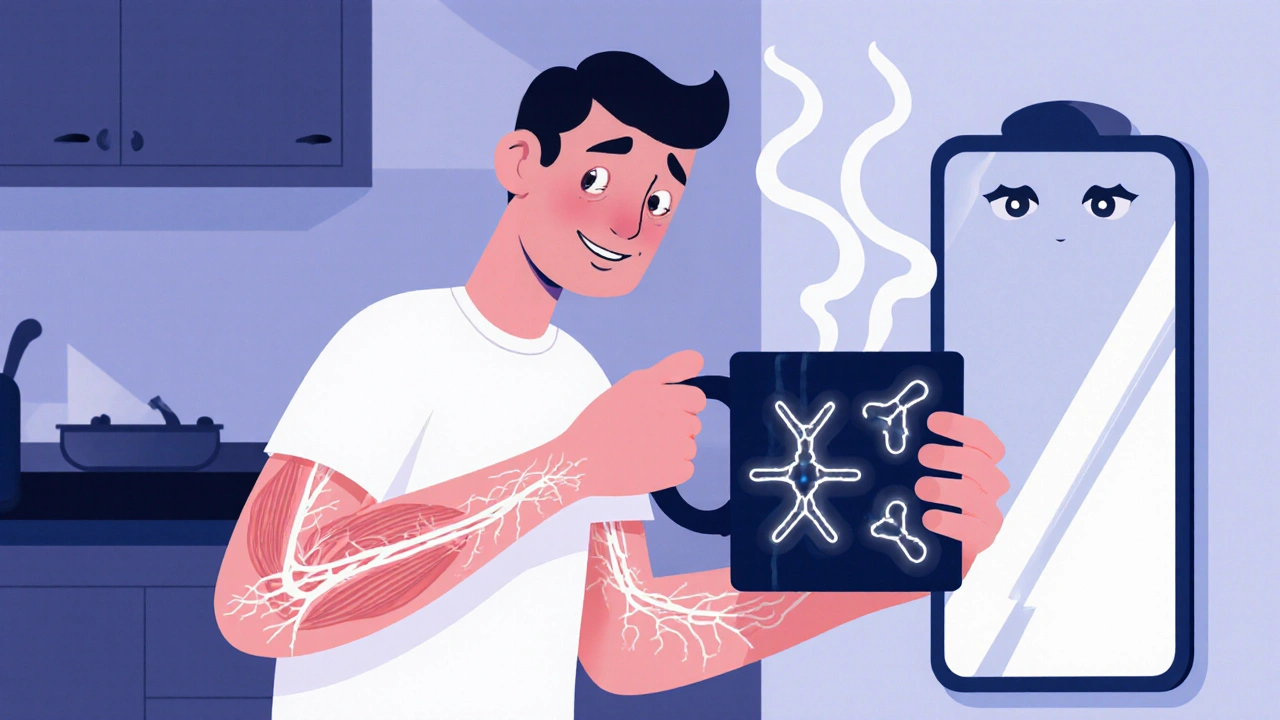
Myasthenia gravis isn’t just muscle weakness-it’s weakness that gets worse when you use your muscles and improves with rest. This isn’t ordinary tiredness. It’s the kind of fatigue that makes lifting a coffee cup feel like hoisting a dumbbell, or causes double vision after reading just a few lines. For people with this rare autoimmune disorder, the body’s own immune system attacks the connection between nerves and muscles, turning everyday movements into exhausting battles.
What Causes Fatigable Weakness in Myasthenia Gravis?
The problem starts at the neuromuscular junction-the tiny gap where nerve signals tell muscles to contract. In healthy people, a chemical called acetylcholine is released from nerves and binds to receptors on muscle cells, triggering movement. In myasthenia gravis (MG), antibodies block or destroy those receptors. Without enough receptors, the signal doesn’t get through. The muscle doesn’t respond properly. And the more you try to use it, the weaker it gets.
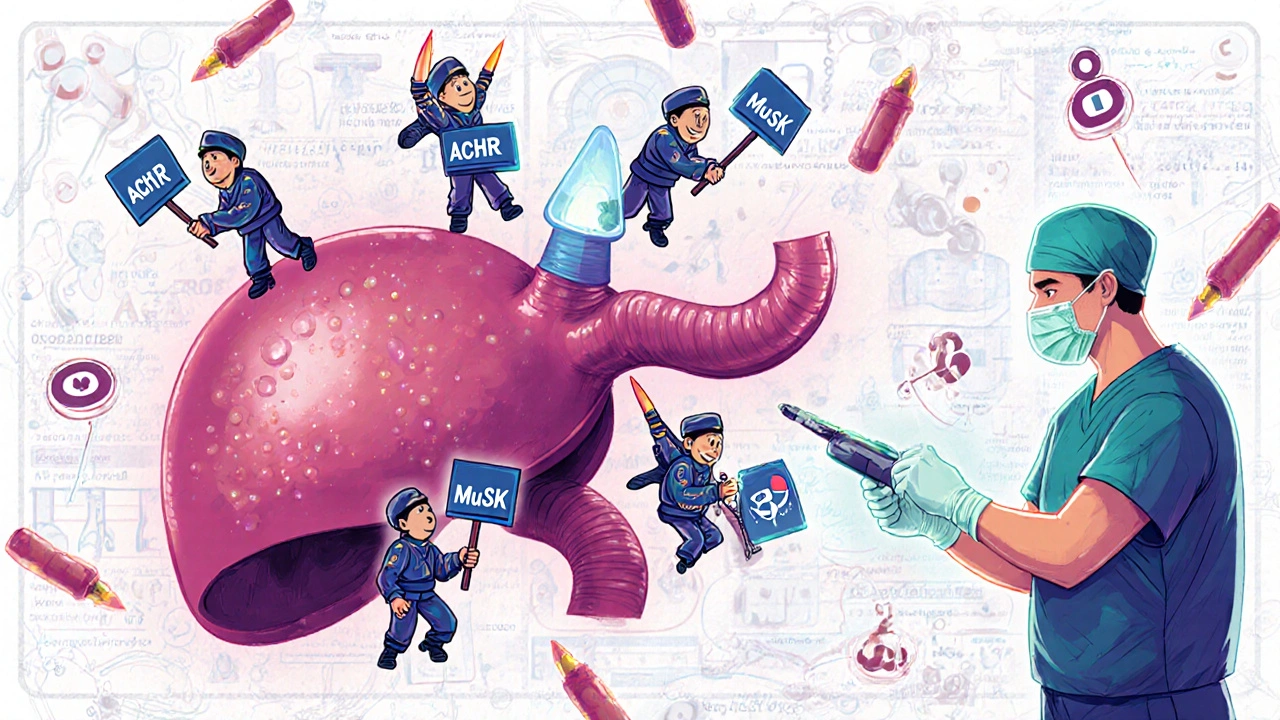
Eighty to ninety percent of people with generalized MG have antibodies against the acetylcholine receptor (AChR). About 5 to 8% have antibodies against something called MuSK, a different protein involved in receptor clustering. The rest are seronegative-no known antibody is found, but the symptoms are unmistakable. This isn’t guesswork; it’s confirmed through blood tests and nerve studies.
What makes MG unique is its pattern: weakness that comes and goes. Eyelids droop after staring at a screen too long. Chewing becomes hard after a meal. Walking gets tougher the farther you go. Rest brings relief. That’s fatigable weakness-and it’s the hallmark of MG. It’s not muscle wasting. It’s signal failure.
Who Gets Myasthenia Gravis and Why?
MG can show up at any age, but it has two clear peaks. Younger adults, mostly women under 50, often develop early-onset MG with thymus gland enlargement. Older adults, typically men over 60, are more likely to have late-onset MG-and a higher chance of a thymoma, a tumor in the thymus. About 10 to 15% of all MG patients have this tumor.
The thymus plays a role in training immune cells. In MG, it seems to go rogue, teaching the immune system to attack muscle receptors. That’s why removing the thymus (thymectomy) helps many patients. Studies show that early-onset AChR-positive patients who get a thymectomy have a 35 to 45% chance of full remission within five years. That’s not a cure for everyone, but it’s a major win for a disease that used to be managed with lifelong drugs.
How Is Myasthenia Gravis Diagnosed?
Doctors don’t just guess. They use a mix of tools. The Quantitative Myasthenia Gravis Score (QMGS) measures weakness in eyes, face, swallowing, speech, arms, and legs. A score above 11 means moderate to severe disease-time to start immunotherapy, not just symptom relief.
Electromyography (EMG) shows how muscles respond to repeated nerve stimulation. In MG, the signal drops with each pulse. Blood tests find AChR or MuSK antibodies. A positive result confirms the diagnosis. Even if antibodies are negative, clinical signs and EMG patterns are enough to move forward.
And here’s a key detail: MG mimics other conditions. Stroke, multiple sclerosis, even Lyme disease can look similar. That’s why accurate testing matters. Misdiagnosis delays treatment-and increases the risk of a myasthenic crisis, where breathing muscles fail.
First-Line Treatments: Symptomatic Relief and Steroids
Pyridostigmine is the first drug most patients get. It blocks the enzyme that breaks down acetylcholine, so more of it hangs around to bind to the remaining receptors. It helps with drooping eyelids and chewing. But it doesn’t stop the immune attack. It just masks the symptom. Doses range from 60 to 240 mg a day, split into several doses.
When pyridostigmine isn’t enough, doctors turn to corticosteroids. Prednisone, at 0.5 to 1.0 mg per kg of body weight daily, suppresses the immune system. About 70 to 80% of patients see major improvement or even complete symptom relief. But steroids come with a cost: weight gain, mood swings, bone thinning, high blood sugar. About 70% of patients on long-term prednisone (more than 10 mg/day) gain significant weight.
That’s why steroids are rarely used alone long-term. They’re a bridge. The goal is to get patients off them-or at least down to the lowest possible dose.
Immunosuppressants: The Long-Term Strategy
To reduce steroid dependence, doctors add steroid-sparing drugs. Azathioprine is one of the oldest. Taken daily at 2 to 3 mg per kg, it takes 6 to 18 months to kick in. But once it does, 60 to 70% of patients stabilize. The downside? Liver damage in 15 to 20% of users. Blood tests are required every few weeks.
Mycophenolate mofetil is a popular alternative. It’s easier on the liver. Taken twice daily at 1,000 to 1,500 mg, it helps about 50 to 60% of patients. It’s often preferred for women planning pregnancy because it’s safer than azathioprine in that context.
Tacrolimus is another option, especially for patients who don’t respond to the first two. It’s a calcineurin inhibitor, like cyclosporine, but with fewer kidney side effects. Still, it needs close monitoring.
None of these drugs work fast. They’re for maintenance. For sudden worsening, you need something faster.
Fast-Acting Immunotherapy: IVIG and Plasma Exchange
If someone with MG suddenly can’t swallow, speak clearly, or breathe, they’re in a myasthenic crisis. That’s a medical emergency. You need rapid antibody removal.
Two options: intravenous immunoglobulin (IVIG) and plasma exchange (PLEX). Both clear out the bad antibodies. IVIG uses donated antibodies that confuse the immune system, causing the body to destroy its own harmful ones. PLEX physically filters the blood, removing the antibodies directly.
IVIG takes 5 to 7 days to work. It’s safer-no needles in big veins. But it’s expensive and can cause headaches or kidney issues. PLEX works faster-often in 2 to 3 days-and is preferred in severe cases like respiratory failure. But it requires a central line, carries infection risks, and isn’t available everywhere.
Both give relief for 3 to 6 weeks. They’re not cures. They’re rescue tools. Used before surgery, during flare-ups, or when oral meds aren’t enough.
Targeted Biologics: The New Frontier
The treatment landscape changed in 2021 with the FDA approval of efgartigimod. This drug blocks the neonatal Fc receptor (nFcR), which normally recycles IgG antibodies. By blocking it, efgartigimod makes the body break down all IgG-including the bad ones that cause MG. In clinical trials, 68% of patients reached minimal manifestation status within weeks. It’s given as a weekly IV infusion for four weeks, then as needed.
Another breakthrough: rituximab. Originally used for lymphoma, it wipes out B-cells-the immune cells that make the bad antibodies. It’s especially powerful in MuSK-positive MG. Studies show 71 to 89% of MuSK patients improve with rituximab, compared to only 40 to 50% in AChR-positive patients. For those who don’t respond to other drugs, rituximab can be life-changing.
In 2023, ravulizumab became the first complement inhibitor approved for MG. It blocks a specific part of the immune system that damages muscle receptors. It’s given every 8 weeks by IV. These new drugs mean fewer patients need long-term steroids or daily immunosuppressants.
What About Thymectomy?
Thymectomy isn’t just for tumors. The Myasthenia Gravis Foundation recommends it for all generalized AChR-positive patients between 18 and 65-even if the thymus looks normal. The MGTX trial showed patients who had surgery reached remission faster than those on meds alone. At three years, they were nearly twice as likely to be in minimal manifestation status.
The surgery is done through minimally invasive techniques now. Recovery is quicker. And the benefits last years. Some patients stop all meds after surgery. Others reduce them dramatically. It’s one of the few treatments that can actually change the disease’s course.

When Treatment Goes Wrong: Complications and Risks
Immunotherapy saves lives-but it’s not risk-free. Long-term steroid use raises infection risk two to three times higher than normal. Pneumonia, urinary tract infections, even shingles can flare up.
Then there’s immune checkpoint inhibitors (ICIs)-cancer drugs that unleash the immune system. In about 60% of cases, they trigger severe MG, often with heart inflammation (myocarditis). These cases are dangerous: 83% require ICU care. If someone develops sudden weakness after starting cancer immunotherapy, MG must be ruled out immediately.
And while new drugs like efgartigimod are promising, we still don’t know what happens after five years. Are we just delaying the problem? Or truly resetting the immune system? That’s why doctors don’t rush to use them first. They’re reserved for patients who don’t respond to standard care.
Living With Myasthenia Gravis: Real-Life Management
Most patients-85 to 90%-need long-term treatment. Only 10 to 20% go into spontaneous remission. That means planning for life with MG, not just treating it.
Small adjustments make a big difference. Eating smaller meals to avoid swallowing fatigue. Scheduling rest between activities. Avoiding heat, which worsens weakness. Wearing an eye patch if double vision is constant. Carrying a medical alert card.
And never stop meds without your doctor’s advice. Tapering too fast leads to relapse in 40 to 50% of cases. The goal is minimal manifestation status-no symptoms, or barely noticeable ones. That’s the benchmark. Once you’re there for two years, tapering can begin. Slowly. Carefully.
What’s Next for Myasthenia Gravis?
The future is targeted. Researchers are testing drugs that block specific B-cell types, inhibit complement proteins more precisely, or silence the immune signals that trigger MG. Over 15 clinical trials are active as of late 2023.
The ultimate goal? Disease modification without lifelong immunosuppression. To reset the immune system so it stops attacking muscles-permanently. That’s the dream. And with each new drug, we’re getting closer.
For now, MG is manageable. It’s not curable for most. But with the right combination of drugs, surgery, and lifestyle, most patients live full, active lives. The key is early diagnosis, subtype-specific treatment, and staying ahead of flare-ups-not reacting to them.
Is myasthenia gravis curable?
There is no universal cure for myasthenia gravis, but many patients achieve long-term remission. About 35 to 45% of early-onset AChR-positive patients who undergo thymectomy go into full remission within five years without needing medication. Spontaneous remission occurs in only 10 to 20% of cases. For most, treatment focuses on controlling symptoms and minimizing immune attacks, not eliminating the disease entirely.
Can myasthenia gravis go away on its own?
Rarely. Only about 10 to 20% of people with MG experience spontaneous remission without treatment. Most cases require ongoing medical management. Even if symptoms improve temporarily, stopping treatment without medical guidance often leads to relapse. Monitoring and maintenance therapy are essential for long-term stability.
What’s the difference between AChR and MuSK myasthenia gravis?
AChR-positive MG is the most common type, caused by antibodies attacking acetylcholine receptors. It often affects eyes, face, limbs, and breathing. MuSK-positive MG is rarer and tends to cause more severe bulbar symptoms-difficulty speaking, swallowing, and breathing-with less eye involvement. MuSK patients respond poorly to standard immunosuppressants like azathioprine but often do very well with rituximab. Treatment must be tailored based on antibody type.
Why is thymectomy recommended for myasthenia gravis?
The thymus gland plays a role in triggering the autoimmune attack in MG, especially in early-onset AChR-positive cases. Removing it reduces antibody production and improves symptoms. The MGTX trial showed thymectomy nearly doubled the chance of reaching minimal manifestation status within three years compared to medication alone. It’s now standard for patients aged 18 to 65 with generalized AChR-positive MG-even if no tumor is found.
Do immunotherapy drugs for myasthenia gravis have long-term side effects?
Yes. Long-term steroid use causes weight gain, diabetes, osteoporosis, and infections. Azathioprine can damage the liver. Newer drugs like efgartigimod and ravulizumab are safer short-term, but data beyond two years is limited. All immunosuppressants increase infection risk. The goal is to use the least amount of medication needed to control symptoms. Regular monitoring helps catch side effects early.
Can cancer immunotherapy cause myasthenia gravis?
Yes. Immune checkpoint inhibitors (ICIs), used to treat cancers like melanoma and lung cancer, can trigger a severe form of MG called immune-related MG (irMG). In 60% of these cases, patients also develop myocarditis (heart inflammation). About 83% require ICU admission. If someone develops sudden muscle weakness after starting ICI treatment, MG must be ruled out immediately. This is a medical emergency.
How do I know if my treatment is working?
The goal is to reach minimal manifestation status-no symptoms or only mild ones that don’t interfere with daily life. Doctors use the Quantitative Myasthenia Gravis Score (QMGS) to track progress. If you can lift your arms without fatigue, chew without choking, and speak clearly without rest breaks, you’re likely in control. Regular blood tests and check-ins with your neurologist help confirm improvement and adjust treatment before crises happen.
Final Thoughts: Managing MG Today
Myasthenia gravis is no longer a death sentence. It’s a chronic condition that can be controlled. The tools we have now-pyridostigmine, steroids, thymectomy, IVIG, rituximab, efgartigimod-are better than ever. What matters most is matching the treatment to the subtype: AChR vs. MuSK, early vs. late onset, ocular vs. generalized.
Patients who get diagnosed early, stick to their treatment plan, and avoid triggers like heat and stress can live full lives. The future holds even more promise: drugs that target only the harmful immune cells, not the whole system. For now, the message is clear: don’t ignore fluctuating weakness. Get tested. Know your antibodies. Work with your neurologist. And don’t settle for just managing symptoms-aim for remission.



farhiya jama
28 November / 2025Ugh, I read this and immediately thought of my aunt. She had MG and just gave up on life after a year of steroids. Weight gain, mood swings, constant infections… it’s like the cure’s worse than the disease. Why do we even bother?