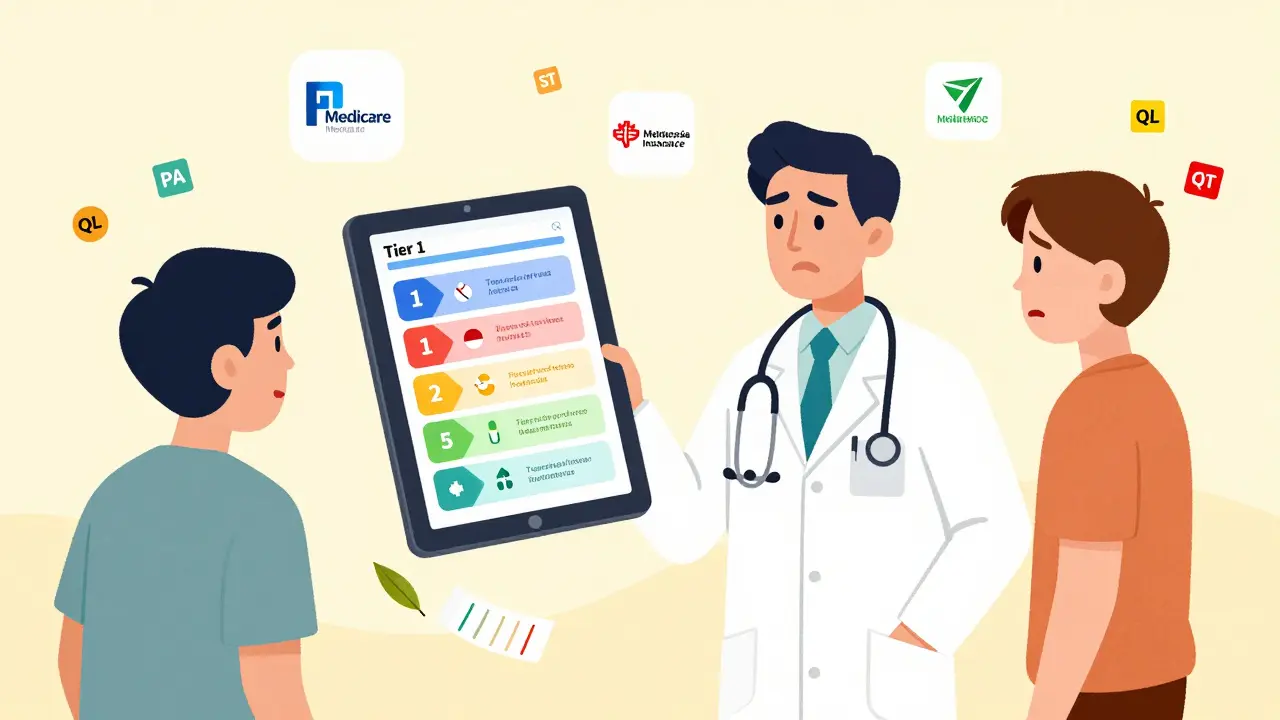
Before you write a prescription, you need to know if the drug is covered - and at what cost. It’s not just about what’s clinically right for the patient. It’s about whether they can actually afford it. A formulary, or Preferred Drug List (PDL), determines which medications your patient’s insurance will pay for, and how much they’ll pay out of pocket. Skip this step, and you risk a prescription being denied, a patient skipping doses, or worse - a trip to the ER because they couldn’t get their medicine.
What Exactly Is a Formulary?
A formulary is a list of drugs approved by a health plan for coverage. It’s not random. Every drug on the list has been reviewed by a committee of doctors and pharmacists who weigh clinical evidence, safety, and cost. These lists are updated regularly - sometimes monthly - to reflect new drugs, price changes, or clinical guidelines. For example, Medicare Part D plans must update their formularies with 60 days’ notice if they’re removing a drug or raising costs. HealthPartners, Aetna, and UnitedHealthcare all publish updated formularies on their websites every quarter.Formularies are designed to balance two things: getting patients the right treatment, and keeping overall drug spending under control. That’s why not all drugs are treated equally. The same medication might be on Tier 1 in one plan and Tier 4 in another. One patient might pay $3 for a generic, while another pays $80 for the same pill - because of their plan’s formulary.
Understanding the Tier System
Most formularies use a tier system to organize drugs by cost. The higher the tier, the more the patient pays. Here’s how it typically breaks down:- Tier 1: Preferred generics - cheapest options, often under $5 per prescription. Examples: metformin, lisinopril, atorvastatin.
- Tier 2: Non-preferred generics - slightly higher cost, maybe $10-$20. Usually older generics with less evidence of superiority.
- Tier 3: Preferred brand-name drugs - drugs with proven clinical benefits over generics. Cost: $30-$60. Examples: Januvia, Onglyza.
- Tier 4: Non-preferred brand-name drugs - more expensive, often with cheaper alternatives available. Cost: $70-$150. Examples: certain newer diabetes or cholesterol drugs.
- Tier 5: Specialty drugs - high-cost medications, often for cancer, autoimmune, or rare diseases. Costs can exceed $950/month. Patients pay a percentage (coinsurance), not a flat copay.
These tiers aren’t just about price. They also come with rules. Look for these codes next to each drug:
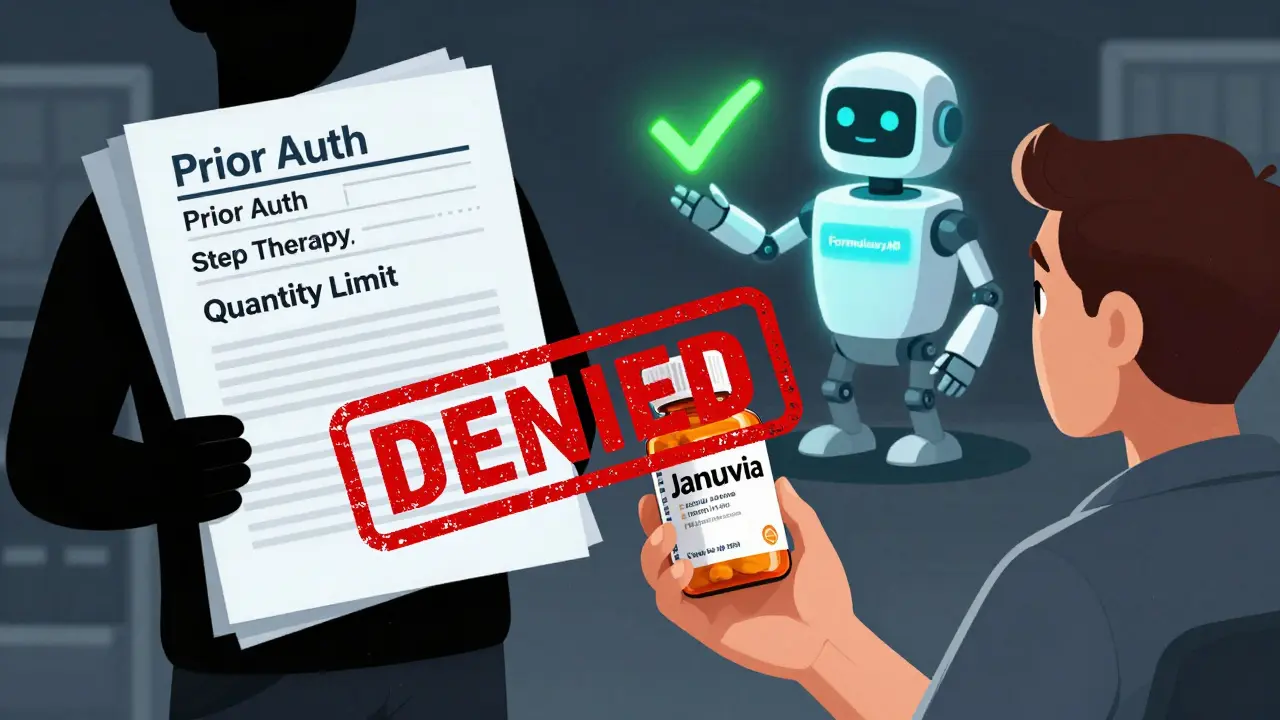
- PA: Prior Authorization - you must get approval before the plan will cover it.
- ST: Step Therapy - the patient must try a cheaper drug first, and fail it, before the plan pays for the one you want.
- QL: Quantity Limit - only a certain amount per month is covered. Example: 30 pills per 30 days.
Missing one of these flags can mean your prescription gets rejected. A 2024 AMA report found that 88% of physicians have seen delays in care because of prior authorization. In some cases, patients with cancer have waited over 48 hours for approval - time they don’t have.
How to Check a Formulary - Step by Step
You don’t need to memorize every plan’s list. But you do need a reliable system. Here’s how to do it quickly:- Ask the patient what plan they’re on. Medicare? Medicaid? Commercial? Each has a different formulary. Don’t assume. A patient might be on a Medicare Advantage plan from UnitedHealthcare, but their spouse is on Medicaid - two completely different lists.
- Go to the insurer’s provider portal. Most insurers have a searchable formulary tool. Aetna’s tool lets you search by drug name, and it shows tier, PA status, and step therapy rules in real time. HealthPartners and Excellus BCBS offer downloadable PDFs of their full 2024 formularies.
- Use your EHR. If your clinic uses Epic, Cerner, or another system with a formulary checker built in, use it. Northwestern Medicine cut prescription abandonment by 42% after integrating Epic’s Formulary Check module. These tools flag issues before you even hit “send.”
- Check for plan-specific variations. Even within Medicare, plans vary. One plan might list Januvia as Tier 3, another as Tier 4, and a third requires step therapy. A 2024 Sermo survey found that 68% of physicians spend 10-20 minutes per patient just checking coverage. Don’t guess. Verify.
- Bookmark key pages. Save direct links to the formulary pages for your most common insurers. UnitedHealthcare’s 2024 Commercial Drug List URL, for example, doesn’t change - bookmark it. Set calendar reminders for quarterly updates.

Differences Between Medicare, Medicaid, and Commercial Plans
Not all formularies are the same. Knowing the difference saves time and prevents errors.Medicare Part D: Follows strict CMS rules. Must have five tiers. Must cover at least two drugs per therapeutic category. Must allow exceptions. Formularies are updated January 1 each year, with mid-year changes allowed if the insurer gives 60 days’ notice. By 2026, all Medicare plans must use real-time benefit tools (RTBT) that show costs directly in the EHR.
Medicaid: State-run. 42 states use closed formularies - meaning if a drug isn’t on the list, it’s not covered unless you get prior authorization. Minnesota’s DHS, for example, uses a single PDL for all state program members. The process is more bureaucratic. Approval can take days.
Commercial Plans: More flexible. UnitedHealthcare uses four tiers. Some plans don’t have step therapy at all. Others have stricter quantity limits. They’re also quicker to adopt new drugs - but also quicker to drop them if prices spike.
Bottom line: Never assume. A drug covered by Medicare might not be covered by a commercial plan from the same insurer. Always check.
What to Do When a Drug Isn’t Covered
If your patient’s drug isn’t on the formulary, you have options:- Try an alternative. Is there a Tier 1 or Tier 3 drug that works just as well? Sometimes a different statin or different GLP-1 agonist does the job.
- File a prior authorization. Submit clinical notes, lab results, or evidence that cheaper alternatives failed. Medicare requires insurers to respond within 72 hours for standard requests - 24 hours if it’s urgent.
- Request a formulary exception. If no alternative exists, you can ask the plan to cover the drug anyway. CMS requires this for Medicare Part D. Include why the patient needs this specific drug - allergies, side effects, prior response.
- Use patient assistance programs. Many drug manufacturers offer free or low-cost programs for low-income patients. Check NeedyMeds.org or the manufacturer’s website.
Don’t just write a prescription and hope for the best. A 2023 study found that 34% of prior authorization delays led to serious adverse events. That’s not just a paperwork problem - it’s a safety issue.
How to Save Time in Your Practice
You’re busy. You don’t have 20 minutes per patient. Here’s how to make formulary checks faster:- Use EHR-integrated tools. If your clinic has them, use them. They auto-populate formulary info as you type the drug name.
- Train your staff. Have a medical assistant check coverage while the patient is in the exam room. Use a tablet to look up the plan while you’re talking to the patient.
- Create a cheat sheet. List your top 20 most prescribed drugs and their typical tiers across your most common plans. Update it quarterly.
- Call the insurer. Most Medicare Part D plans have 24/7 provider hotlines. If you’re stuck, call. The average wait time is under 3 minutes.
- Use CMS Plan Finder. It covers 99.8% of Medicare Part D plans. Search by drug, zip code, and plan. It’s free, official, and reliable.
The Bigger Picture: Why This Matters
Formularies aren’t just administrative hurdles. They’re part of how healthcare controls costs - and sometimes, they work too well. Dr. Aaron Kesselheim of Brigham and Women’s Hospital found that overly restrictive formularies delay cancer treatment. Meanwhile, Epic’s FormularyAI tool, launched in August 2024, uses machine learning to predict coverage likelihood with 87% accuracy. That’s the future: smart tools that do the legwork for you.But until then, you’re still the gatekeeper. The $601 billion U.S. drug market runs on these lists. If you ignore them, your patients pay the price - in dollars, in delays, in health.
Check the formulary. Every time. Before you write the script.
Frequently Asked Questions
What’s the difference between a formulary and a preferred drug list?
They’re the same thing. "Formulary" is the industry term; "Preferred Drug List" (PDL) is what Medicaid and some insurers call it. Both refer to the list of covered medications and their rules.
How often are formularies updated?
Medicare Part D plans update annually on January 1, but can make mid-year changes with 60 days’ notice. Commercial plans and Medicaid programs update quarterly or as needed. HealthPartners, for example, releases updates in January, April, July, and October each year.
Can I prescribe a drug not on the formulary?
Yes - but the patient will likely pay full price unless you file a prior authorization or formulary exception. Closed formularies (common in Medicaid) require approval before coverage. Open formularies (some commercial plans) allow more flexibility, but still charge higher coinsurance for non-preferred drugs.
Why does the same drug have different tiers in different plans?
Each insurer negotiates its own deals with drug manufacturers. One plan might get a better price on a brand-name drug, so they put it in Tier 3. Another plan might not have that deal, so they put it in Tier 4. It’s about pricing, not clinical value.
What should I do if a patient can’t afford their medication?
First, check if there’s a generic or lower-tier alternative. If not, help them apply for manufacturer patient assistance programs or nonprofit aid. Many drugmakers offer free or low-cost options for low-income patients. You can also file a formulary exception with the insurer, especially if the patient has tried and failed other options.
Are there tools that automate formulary checks?
Yes. Epic’s Formulary Check, Cerner’s Drug Coverage Tool, and new AI tools like FormularyAI (launched August 2024) predict coverage and costs in real time. Medicare Part D plans must integrate real-time benefit tools (RTBT) into EHRs by January 1, 2026. These tools show the patient’s exact copay before you even send the prescription.


dana torgersen
22 January / 2026i just spent 45 minutes on a prior auth for metformin... why does this still happen in 2024??? i mean, come on. we have ai that can write sonnets, but a generic diabetes med needs a petition??