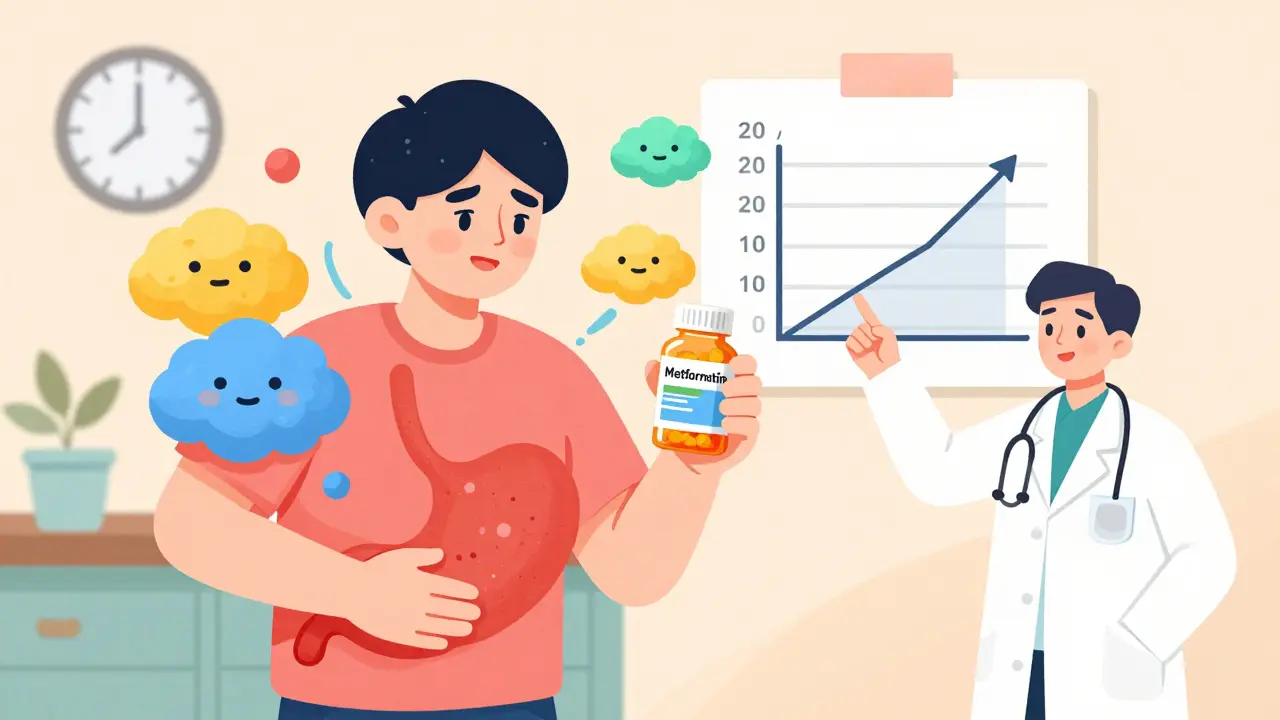
When you're first told you have diabetes, one of the first questions you'll likely have is: What am I going to take every day? And right after that: What kind of side effects will I get? The truth is, there's no one-size-fits-all answer. Diabetes medications vary wildly in how they work, what they cost, and how your body reacts to them. Some people barely notice a change. Others deal with nausea, low blood sugar, or infections that make them reconsider their treatment. This isn't about scaring you-it’s about preparing you.
Metformin: The First Line, But Not Always Easy
If you have type 2 diabetes, chances are your doctor will start you on metformin. It’s been around for decades, it’s cheap-often under $5 a month-and it actually lowers your risk of heart disease. But here’s what no one always tells you: about 1 in 3 people get stomach problems when they start it.
Nausea, diarrhea, cramps-these aren’t rare. A 2021 study in JAMA Internal Medicine found 26% of users had nausea, 23% had diarrhea. Most of the time, it fades after a few weeks. But for some, it doesn’t. That’s why doctors now recommend starting low: 500 mg once a day with dinner. Slowly increase over weeks. Or switch to the extended-release version. It cuts GI side effects by half. And if you’ve been on metformin for five years or more? Get your vitamin B12 checked. About 1 in 5 long-term users develop a deficiency, which can cause fatigue, numbness in hands and feet, or even memory issues. It’s easy to fix with a simple injection or pill.
Sulfonylureas: Effective, But Risky
Drugs like glyburide and glipizide have been around since the 1980s. They force your pancreas to pump out more insulin. They work. But they come with a big downside: low blood sugar.
A 2022 study in Diabetes Care found that 16% of people on sulfonylureas had at least one low-blood-sugar episode per year. For some, it’s dizziness. For others, it’s passing out. And because these drugs keep working even if you skip a meal, you’re at risk if you’re busy, stressed, or just forget to eat. They also cause weight gain-usually 2 to 4 kilograms. That’s why many patients switch once they learn about newer options. If you’re on one and you’ve ever felt shaky, sweaty, or confused after a meal, talk to your doctor. There are safer ways.
GLP-1 Receptor Agonists: Weight Loss With a Catch
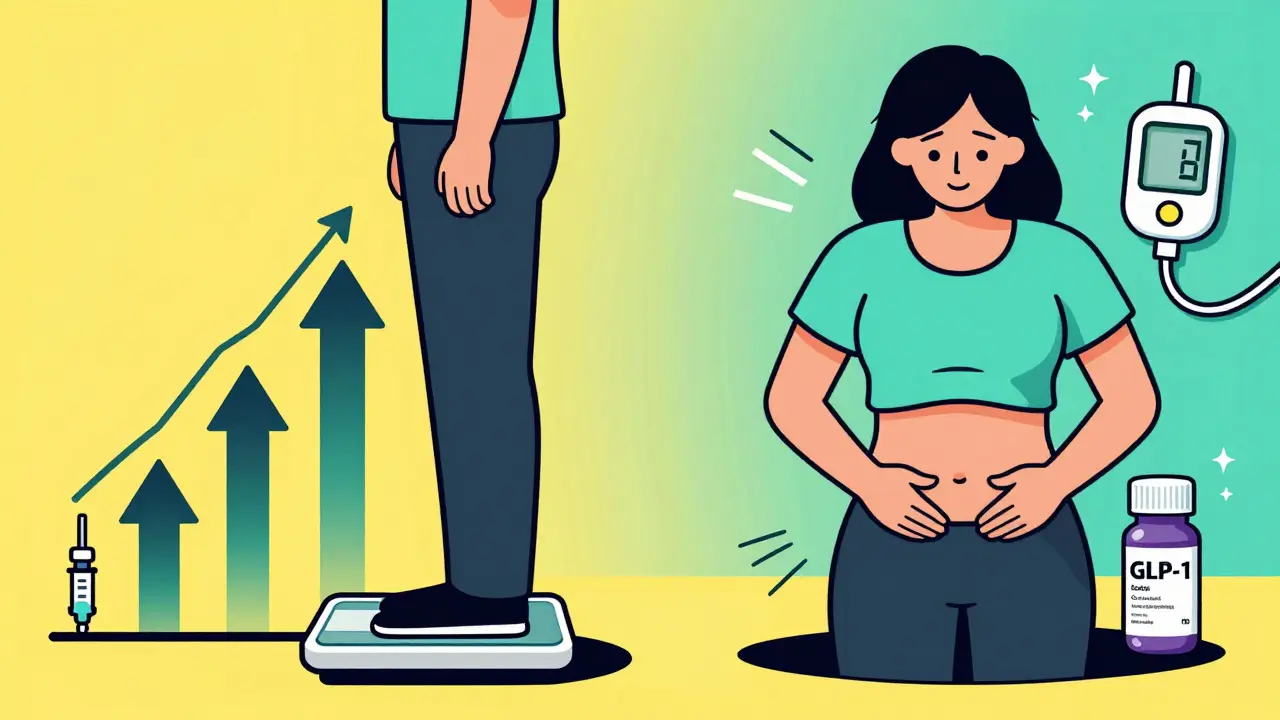
Drugs like semaglutide (Ozempic, Wegovy) and liraglutide (Victoza) were originally designed to help control blood sugar. Then, something surprising happened: people lost weight. A lot of it. In one 2023 study, users lost an average of 5.2 kg in six months. That’s why these drugs are now being used for obesity-even in people without diabetes.
But here’s the trade-off: up to half of users get nauseated. Vomiting and diarrhea are common too. In a study of 850 patients, 41% stopped because they couldn’t tolerate it. The nausea usually starts in the first week and improves over time. The trick? Start with the lowest dose. Don’t rush the increase. Eat smaller meals. Skip greasy or spicy foods. And don’t panic if you feel queasy-it’s not dangerous, just unpleasant. Many people stick with it because the benefits-better blood sugar, weight loss, lower heart risk-are worth it.
SGLT2 Inhibitors: Urine, Infections, and a Surprising Benefit
Drugs like empagliflozin (Jardiance), dapagliflozin (Farxiga), and canagliflozin (Invokana) work by making your kidneys dump sugar out in your urine. Sounds weird, right? But it works. And here’s the kicker: they lower your risk of heart failure and kidney disease. That’s why they’re now recommended for people with heart or kidney problems-even if their blood sugar is already under control.
But there’s a downside. Because you’re peeing out more sugar, you’re more likely to get infections. About 1 in 10 women and 1 in 20 men get yeast infections. Men get urinary tract infections more often too. Some users report dry mouth, dizziness, or feeling lightheaded-signs of dehydration. The fix? Drink more water. Don’t skip meals. Wear cotton underwear. Clean gently after using the bathroom. And if you ever feel sick, have nausea, or your breath smells fruity? Get checked for ketoacidosis. It’s rare-less than 0.3% of users-but it can be serious if ignored.
Insulin: The Old Standard With New Challenges
Insulin is the oldest diabetes medication. It’s also the most powerful. For type 1 diabetes, it’s life-saving. For type 2, it’s often the last resort. But it comes with two big problems: low blood sugar and weight gain.
The DCCT trial from 1993 showed that people on intensive insulin therapy had 15 to 30 low-blood-sugar episodes per year. That’s more than one every two weeks. And each one can be scary-shaking, sweating, confusion, even seizures. Many people avoid taking their full dose because they’re afraid of crashing. A 2022 survey found 34% of insulin users intentionally under-dosed to avoid lows. That’s dangerous. The solution? Use a continuous glucose monitor (CGM). Studies show CGMs reduce severe lows by 40%. And if you’re gaining weight? You’re not alone. Most gain 2 to 5 kg. It’s because insulin tells your body to store fat. Pair insulin with lifestyle changes-movement, portion control-and you can fight the weight gain.
What About the Newer Drugs? Tirzepatide and Beyond
In 2022, the FDA approved tirzepatide (Mounjaro), a new drug that mimics two hormones instead of one. It’s like a GLP-1 agonist on steroids. In trials, users lost 15-20% of their body weight. And nausea? Lower than with older GLP-1 drugs-only 24% vs. 35%. It’s not cheap-over $900 a month without insurance-but for many, the results are life-changing.
And the future? Oral GLP-1 pills are coming. One called orforglipron showed 10.5% weight loss in early trials. There’s even a once-weekly insulin in Europe that could replace daily shots. But none of these are magic. They still require diet, movement, and monitoring. And they’re not right for everyone.
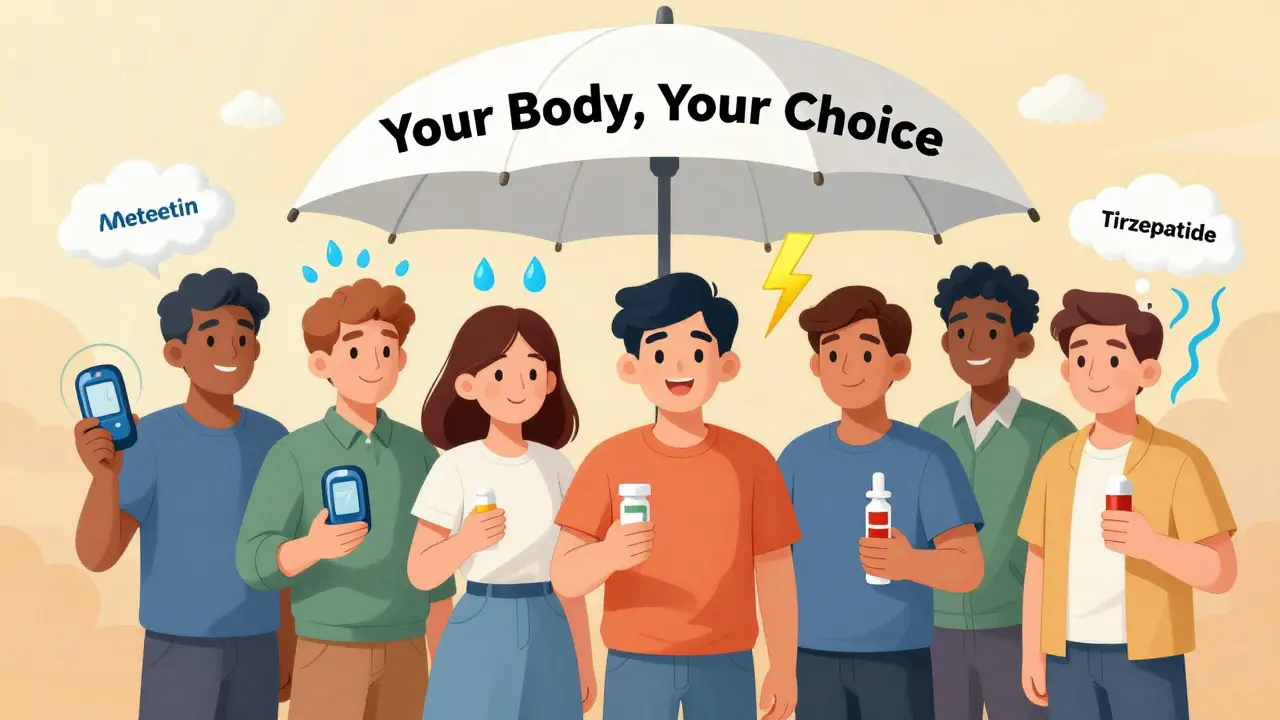
How to Know What’s Right for You
There’s no perfect drug. The best one is the one you can stick with. Ask yourself:
- Do I have heart or kidney disease? Then SGLT2 inhibitors or GLP-1 agonists might be your best bet.
- Am I worried about weight? GLP-1s and tirzepatide are the most effective.
- Do I hate pills or shots? Metformin is oral. Insulin is injection-only.
- Can I afford this? Metformin costs $4. Newer drugs cost $900. Ask about patient assistance programs.
- Do I have a history of yeast infections? Avoid SGLT2 inhibitors unless you’re prepared to manage them.
And remember: side effects don’t mean you failed. They mean your body is reacting. Talk to your doctor. Adjust the dose. Switch the drug. Try a different formulation. Many people go through three or four meds before finding their fit.
What to Do If Side Effects Hit
Here’s a quick guide:
- Nausea or diarrhea? Start low, go slow. Switch to extended-release metformin. Eat bland foods. Wait it out.
- Low blood sugar? Keep glucose tabs handy. Use the 15-15 rule: 15 grams of sugar (like juice or glucose tablets), wait 15 minutes, check again. Get a CGM.
- Yeast infection? Wear cotton underwear. Avoid tight clothes. Clean gently. Don’t use douches. Talk to your doctor about antifungal cream.
- Weight gain? Combine meds with movement-even 20 minutes of walking daily helps. Don’t stop your medicine unless your doctor says so.
- Cost too high? Ask about generics. Check patient assistance programs from drugmakers. Some pharmacies offer $4 metformin or $10 for GLP-1s.
Most side effects are manageable. They’re not reasons to quit. They’re signals to adjust.
Can diabetes medications cause long-term damage?
Most diabetes medications don’t cause long-term damage when used as directed. Metformin may lower vitamin B12 over time, but that’s easily fixed with supplements. SGLT2 inhibitors have rare risks like ketoacidosis, but these are preventable with proper hydration and monitoring. Insulin can cause weight gain, but not organ damage. The real danger isn’t the medication-it’s uncontrolled blood sugar over years, which leads to nerve, kidney, and heart damage. Medications are tools to prevent that.
Why do some people gain weight on insulin but lose it on GLP-1 drugs?
Insulin helps your body store energy as fat, especially if you eat more than your body needs. GLP-1 drugs do the opposite: they slow digestion, reduce appetite, and make you feel full faster. That’s why people on GLP-1s often lose weight-sometimes without even trying. It’s not magic. It’s biology. The same drug that helps control blood sugar also tells your brain: "You don’t need to eat more."
Is it safe to stop taking diabetes meds if my blood sugar improves?
Sometimes, yes-but only under medical supervision. If you lose weight, eat better, and move more, your body may need less medication. Some people with type 2 diabetes can stop metformin or even insulin after lifestyle changes. But never stop on your own. Stopping suddenly can cause your blood sugar to spike, damaging your organs. Always work with your doctor to adjust doses safely.
Do I need to take diabetes meds forever?
For type 1 diabetes, yes-you’ll always need insulin. For type 2, it depends. Some people can reduce or stop meds with major lifestyle changes. Others need them long-term because their pancreas can’t keep up. It’s not about willpower. It’s about biology. The goal isn’t to quit meds-it’s to prevent complications. Even if you’re on meds, healthy habits make them work better.
What’s the cheapest effective diabetes medication?
Metformin is the cheapest and most effective first-line option. Generic versions cost as little as $4 for a 30-day supply. It’s safe, proven, and reduces heart risk. If metformin doesn’t work alone, adding a second cheap drug like glimepiride (a sulfonylurea) is still cheaper than newer GLP-1s or SGLT2 inhibitors. But if you have heart or kidney disease, the higher-cost drugs may save you money long-term by preventing hospital stays.
Final Thought: You’re Not Alone
Diabetes meds can feel overwhelming. You might feel like you’re being handed a new identity: "I’m the person who takes pills every day." But you’re not just a patient. You’re someone managing a condition-with choices, with options, with support. Side effects aren’t failures. They’re feedback. Talk to your doctor. Try a different dose. Switch. Adjust. Keep going. The right medication isn’t the one with no side effects. It’s the one that lets you live well.


Mayank Dobhal
7 February / 2026Metformin made me puke for 3 weeks. Took me 2 tries to get the dose right. Now I'm fine. Just start low bro.