
Most people don’t think about HPV until they hear it’s linked to cancer. But here’s the truth: HPV is the most common sexually transmitted infection in the world. Nearly 80% of sexually active people will get at least one type in their lifetime. The scary part? Most won’t know they have it. And for some, that silent infection can lead to cervical cancer - or cancers of the anus, throat, penis, or vulva. The good news? We have powerful tools to stop it before it starts: vaccines, smarter screening, and better follow-up care. This isn’t science fiction. It’s happening right now.
What HPV Actually Does
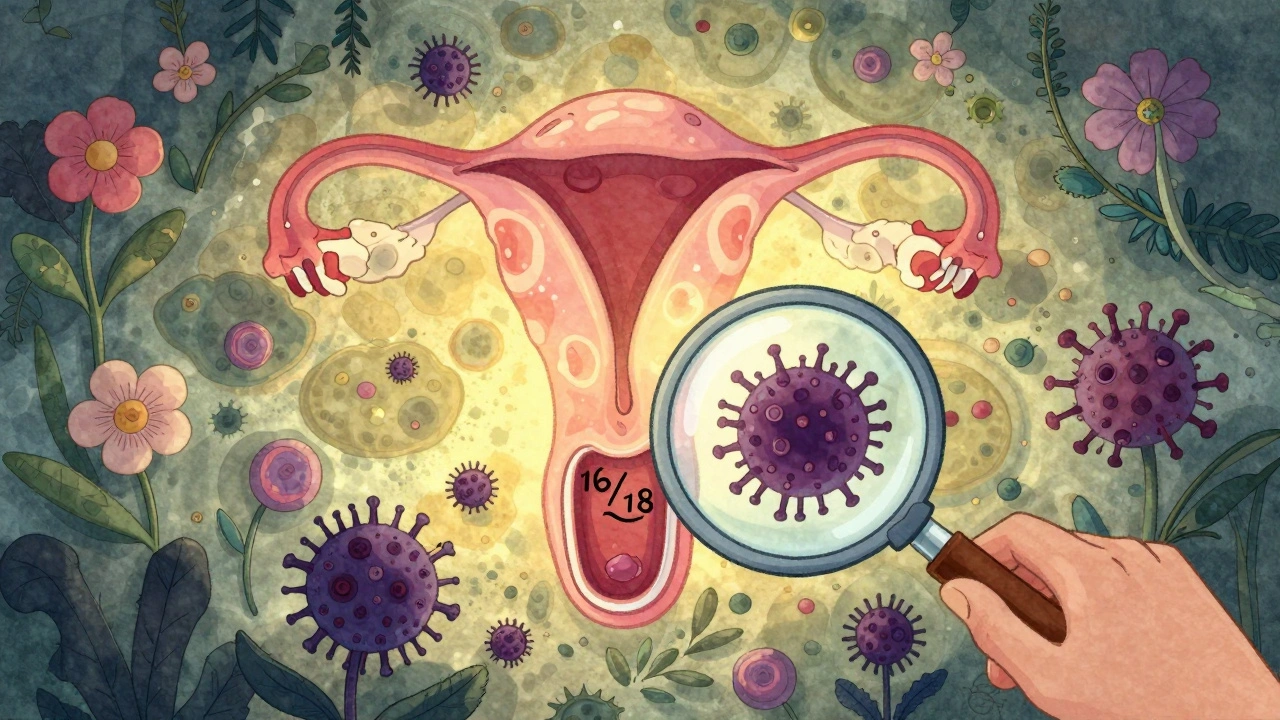
HPV isn’t one virus. It’s more than 200 types. Some cause harmless warts. Others? They quietly damage cells in the cervix, anus, or throat. The real danger comes from 14 high-risk types, especially HPV 16 and 18. These two alone cause about 70% of all cervical cancers. But here’s the key: it doesn’t happen overnight. It takes 10 to 20 years for an HPV infection to turn into cancer. That’s a long window - and it’s exactly why screening and vaccination work so well.
Most HPV infections clear on their own within one or two years. Your immune system handles it. But for a small group, the virus sticks around. That’s when cells start changing. These changes are called precancers. Left unchecked, they can become invasive cancer. The goal isn’t to eliminate every HPV infection. It’s to catch the dangerous ones early - before they turn deadly.
Vaccination: The Best First Line of Defense
The HPV vaccine is one of the most effective cancer prevention tools ever made. The first version, Gardasil, came out in 2006. Today’s vaccines protect against nine high-risk HPV types - including 16 and 18 - and two that cause genital warts. That’s 90% of cervical cancer cases covered.
It works best when given before anyone becomes sexually active. That’s why health groups recommend vaccination for kids aged 11 to 12. But it’s not too late for teens and young adults. The CDC says anyone up to age 26 should get it. For people 27 to 45, it’s still an option - talk to your doctor. The vaccine doesn’t treat existing infections. It prevents new ones.
Real-world data backs this up. In Australia, where vaccination started in 2007, cervical precancers in young women dropped by 85% by 2019. In the U.S., HPV infections in teen girls fell by 88% between 2006 and 2018. That’s not a trend. That’s prevention in action.
Screening: From Pap Tests to HPV Testing
For decades, the Pap test was the gold standard. A doctor scrapes cells from the cervix and looks for abnormalities under a microscope. It saved millions of lives. But it’s not perfect. It misses a lot. Studies show Pap tests detect only about 55% of serious precancers.
Now, we have something better: HPV testing. Instead of looking at cells, it checks for the virus itself. The test finds 14 high-risk HPV types - the ones that cause cancer. Two FDA-approved tests are used in the U.S.: the cobas HPV Test and the Aptima HPV Assay. Both are highly accurate.
Since 2020, the American Cancer Society has said primary HPV testing every five years is the best option for people aged 25 to 65. That’s a big shift. Why? Because HPV testing finds precancers earlier and more reliably than Pap tests. A 2018 JAMA study found HPV testing caught 94.6% of serious cell changes - compared to just 55.4% for Pap tests alone.
And here’s the kicker: if your HPV test is negative, you’re protected for five years. That’s longer than the three-year Pap test cycle. Fewer tests. Better protection.
Who Gets Screened and How Often
Screening guidelines vary slightly by group, but here’s the clear picture:
- Ages 21-24: No HPV testing. Pap test every 3 years if needed.
- Ages 25-65: Primary HPV test every 5 years (preferred). Pap test every 3 years is still acceptable.
- Ages 65+: Stop screening if you’ve had regular negative tests and no history of precancer.
Important note: Vaccination doesn’t mean you skip screening. Even if you got all your shots, you still need regular HPV tests. The vaccine doesn’t cover every cancer-causing type. And it doesn’t help if you were infected before vaccination.
For people with abnormal results, follow-up is precise. If HPV 16 or 18 is found, you get a colposcopy - a detailed exam of the cervix. If another high-risk type shows up, you might get a Pap test to check cell changes. This step-by-step approach avoids unnecessary procedures while catching real threats.
Self-Testing: Breaking Down Barriers
One of the biggest reasons people don’t get screened? Discomfort. Fear. Lack of access. Many skip appointments because they can’t get to a clinic, feel embarrassed, or don’t have time.
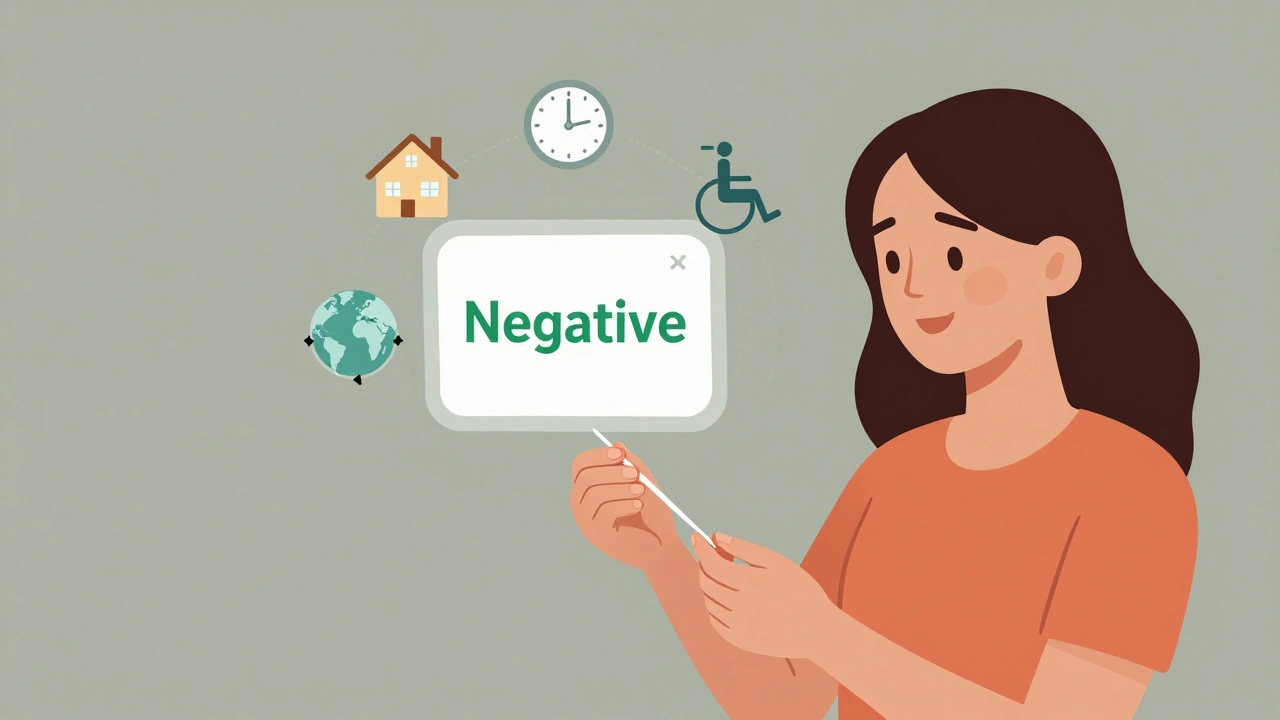
Self-collected HPV testing is changing that. You use a small swab to collect your own sample from the vagina - no speculum, no exam. Studies show it’s just as accurate as a sample taken by a doctor. Kaiser Permanente started offering it in January 2024. Australia and the Netherlands have seen screening rates jump 30-40% when self-collection is available.
The U.S. Preventive Services Task Force now says self-collected HPV tests are a valid option. For people who’ve never been screened - or who’ve fallen out of the system - this could be the lifeline that saves their life. CDC data shows 30% of cervical cancers happen in women who’ve never had a Pap test. Self-testing could cut that number in half.
Global Gaps and Local Realities
While the U.S. and Australia lead in prevention, the rest of the world is falling behind. In high-income countries, 80% of women have been screened at least once. In low-income countries? Only 19%. That’s why the World Health Organization launched its 90-70-90 plan in 2020:
- 90% of girls vaccinated by age 15
- 70% of women screened by 35 and again by 45
- 90% of women with disease treated
If we hit these targets by 2030, WHO says we could prevent 62 to 77 million cervical cancer cases over the next 100 years. That’s not a guess. It’s a mathematical certainty based on current data.
Here in the U.S., disparities still exist. Black women are 70% more likely to die from cervical cancer than white women. Why? Later diagnosis. Less access to follow-up care. Systemic gaps in the system. Vaccination and screening must reach everyone - not just those with good insurance or easy clinic access.
What’s Next
The future of cervical cancer prevention is getting smarter. AI is now being used to analyze Pap smears. Paige.AI got FDA approval in January 2023 - its software spots cell changes faster and more consistently than humans in some cases. Researchers are also testing whether screening every six years is safe after two negative HPV tests. Early data from Wayne State University suggests it might be.
And the cost? HPV tests are getting cheaper. The global market for HPV testing is expected to hit $2 billion by 2029. As prices drop, self-testing kits could become available over the counter - like a pregnancy test. Imagine a woman in a rural town ordering a kit online, collecting her sample at home, mailing it back, and getting results in a week. That’s not far off.
By 2025, primary HPV testing will be the standard in high-resource settings. That’s the prediction from Dr. Mark Schiffman of the National Cancer Institute. And if we keep going? Cervical cancer could become so rare that we stop calling it a public health problem. By 2060, WHO says global rates could fall below 4 cases per 100,000 women. That’s elimination.
What You Can Do Right Now
Don’t wait for symptoms. HPV doesn’t cause pain. It doesn’t cause bleeding until it’s advanced. Here’s your action plan:
- If you’re 11-12: Get the HPV vaccine. Two doses, six months apart.
- If you’re 13-26: Still can get the vaccine. Ask your doctor.
- If you’re 25-65: Ask for an HPV test - not a Pap test - every five years.
- If you’ve never been screened: Ask about self-collection. It’s safe, private, and effective.
- If you’ve had a hysterectomy: Talk to your doctor. You may not need screening anymore.
This isn’t about fear. It’s about control. You can’t change your past. But you can protect your future. One vaccine. One test. One conversation with your doctor. That’s all it takes to stop cervical cancer before it starts.
Is the HPV vaccine safe?
Yes. Over 15 years of global use and more than 135 million doses administered show no serious safety concerns. Common side effects are mild - soreness at the injection site, dizziness, or a slight fever. The benefits far outweigh any risks. It’s one of the most studied vaccines in history.
Do I still need a Pap test if I got the HPV vaccine?
Yes. The vaccine protects against the most common cancer-causing types, but not all. HPV testing is still the best way to catch the ones it doesn’t cover. Vaccination and screening work together - they’re not alternatives.
Can HPV cause cancer in men?
Yes. HPV can lead to cancers of the anus, throat, and penis. Men can also spread the virus to partners. Vaccination protects men too. The CDC recommends the vaccine for all boys and men up to age 26.
What if I test positive for HPV?
Don’t panic. Most HPV infections go away on their own. A positive result means you need follow-up - not treatment. Your doctor will check for cell changes. If none are found, you’ll likely be retested in a year. Only if precancer is found will you need further action - and even then, it’s highly treatable.
Is self-collected HPV testing reliable?
Yes. Studies show self-collected samples match clinician-collected ones in detecting high-risk HPV. Sensitivity is around 84%, specificity near 91%. This method has been validated in Australia, the Netherlands, and the U.S. It’s especially helpful for people who avoid exams due to trauma, disability, or lack of access.
Final Thoughts
Cervical cancer used to be a leading cause of death for women. Now, it’s one of the most preventable. We have the tools. We know how to use them. What’s missing isn’t science - it’s action. Get vaccinated. Get screened. Talk to your doctor. Don’t wait for a sign. The virus doesn’t warn you. But you can stop it before it ever starts.


Webster Bull
12 December / 2025Vaccines save lives. Period. Why are we still arguing about this in 2025?