
Recall Status Checker
Check Your Device or Medication Recall Status
Enter your lot number to verify if your specific product is affected by an active recall
Recall Information
Recommended Action:
Why Your Medical Safety Depends on a Code
In 2023 alone, there were 6,782 medical device recalls reported. That is a staggering number, and it means safety issues happen more often than we like to admit. If you have ever had surgery, received an implant, or take prescription medication, you are part of the system that these numbers track. The difference between a minor inconvenience and a serious health risk often comes down to one thing: can anyone find your specific product batch when something goes wrong?
Most patients assume their doctor handles everything. While healthcare providers play a huge role, the data shows that patients who keep their own records reduce recall response time by 72 hours on average. That is three full days where you could be exposed to a risk that was already known. Today, we are going to walk through exactly how to track lot numbers and what you need to do if a recall affects you.
What Exactly Is a Lot Number?
Think of a lot number like a birth certificate for your medicine or device. It is a unique identifier assigned to a specific production batch. You might see it on a pill bottle or a device package looking like 'L20230105'. This code often tells you when the item was made, in this case, January 5, 2023. Manufacturers use these codes to trace products through the entire distribution chain.
When a safety issue emerges, regulators and manufacturers need to know exactly which units are affected. Without a lot number, a recall might have to cover millions of units, causing panic and disruption. With accurate tracking, they can target specific patients. For example, during the 2021 recall of specific lots of Sapien 3 Ultra and Evolut PRO TAVR valves, lot-specific tracking allowed the manufacturer to identify 2,807 affected patients from a potential pool of hundreds of thousands. That precision saves lives and prevents unnecessary surgeries.
Where to Find Your Lot Number
Finding this information is the first step to protecting yourself. The FDA and medical device manufacturers recommend that patients receiving implants should immediately photograph and store their implant identification card. This card contains the device name, model, serial or lot number, and manufacturer contact information. If you do not have the card, check your surgical records. Surgeon's office records typically include the lot number in the operative report.
Unfortunately, finding this info is harder than it sounds. FDA consumer research from 2022 found that 68% of surveyed patients with implanted devices couldn't locate their implant identification cards when asked. Another 42% didn't know how to check for recalls affecting their devices. This gap is dangerous. If you cannot find the card, call your surgeon's office. They are required to keep these records, and they can provide you with a copy.
For medications, the lot number is printed on the box and sometimes on the bottle label. Keep the original box if possible. If you have a chronic condition requiring regular refills, ask your pharmacist to note the lot number in your personal file. This becomes crucial if a specific batch is found to be contaminated or defective.
Understanding Recall Classes
Not all recalls are the same. When you see a news alert about a recall, you need to know how serious it is. The FDA distinguishes between three classes based on the risk to health. Understanding these categories helps you decide how urgently you need to act.
| Recall Class | Risk Level | Typical Action Required |
|---|---|---|
| Class I | High | Stop use immediately. Contact provider. |
| Class II | Medium | Monitor symptoms. Follow up with provider. |
| Class III | Low | Usually no immediate action needed. |
Class I recalls pose a reasonable probability of serious adverse health consequences or death. These represent approximately 12% of all medical device recalls in 2023. If you are in this category, you need to act fast. Class II recalls involve temporary or medically reversible consequences. Class III recalls are unlikely to cause adverse health effects but still require tracking for quality control.
Your Action Plan for Safety
Waiting for a letter in the mail is not a strategy. Manufacturers often struggle to reach patients directly, which is cited in 57% of negative reviews about device recalls. You need to take control of your own safety data. Here is a simple checklist to follow.
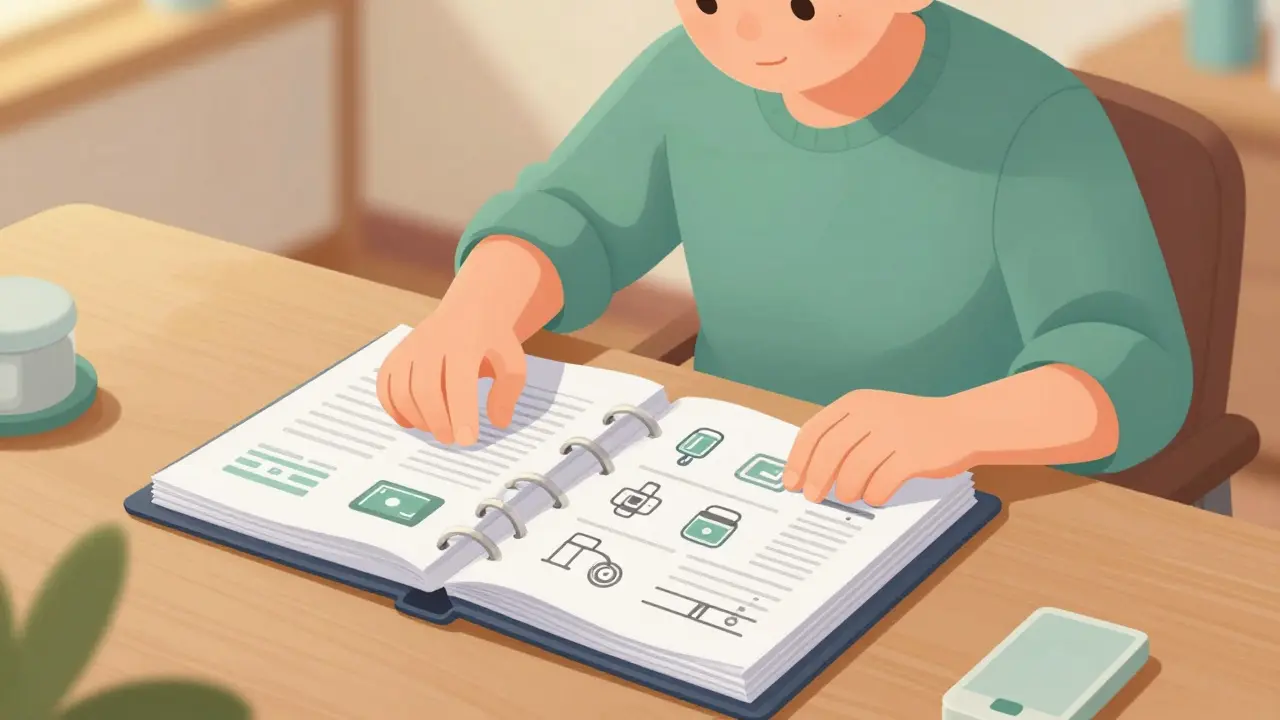
- Create a Dedicated Medical File: Keep all implant identification cards, surgical reports, and device manuals in one place. You can use a physical binder or a secure digital folder. The FDA notes that patients who maintain these records reduce their recall response time significantly.
- Register Your Device: If the manufacturer offers a registration program, sign up. This allows them to notify you directly if an issue arises with your specific model.
- Sign Up for Alerts: Register for FDA email notifications at fda.gov/medwatch. This ensures you get updates on recalls relevant to your location and interests.
- Check Quarterly: Don't wait for a notification. Check the FDA's Medical Device Recalls database every three months. It is updated daily and contains complete details about affected devices and recall reasons.
- Update Your Records: If you move or change doctors, ensure your new provider has access to your implant information. This is vital for future care.
Industry experts at the Association for Healthcare Resource & Materials Management (AHRMM) assert that practices should have systems in place to track inventory by lot number and identify patients who received or used the affected products. However, relying solely on the clinic is risky. A study analyzing 47 medical device recall cases from 2020-2023 found that patients who proactively tracked their device information were 3.2 times more likely to receive timely notification about recalls affecting their specific units.

How Technology Is Changing Tracking
The system is getting better, but it is not perfect yet. In January 2024, the FDA launched its 'Recall Modernization Initiative' to improve patient notification processes. They are testing a pilot program where patients can text their device lot number to 311-FDA for immediate recall status. This removes the need to search complex databases.
Electronic Health Records (EHR) are also evolving. The 21st Century Cures Act's interoperability provisions, fully implemented in 2023, now require electronic health records to include device lot information in patient-accessible portals. As of Q1 2024, 87% of major EHR systems like Epic and Cerner have implemented this feature. This means you might be able to log into your patient portal and see your lot numbers directly.
Looking ahead to 2026 and beyond, we are seeing AI-powered recall systems that will automatically identify at-risk patients by cross-referencing EHR data with lot tracking databases. Industry analysts project these systems could prevent an estimated 1,200 to 1,800 adverse events annually in the United States alone. However, until these systems are universal, you must rely on your own diligence.
What to Do If You Find a Recall
Let's say you check the database and find your lot number. Don't panic, but do act. First, verify the information. Make sure the model number and lot number match exactly. Sometimes similar models are recalled, but not yours.
Second, contact your healthcare provider. Do not attempt to remove an implant yourself or stop medication without advice. Your doctor needs to assess the risk based on your specific health situation. Third, contact the manufacturer if you need replacement parts or refunds. The FDA's Enforcement Report includes manufacturer contact information for all recalls.
Remember, the FDA's 2024 Strategic Plan identifies 'enhancing patient access to recall information' as a top priority. They aim to reduce the median time from recall initiation to patient notification from the current 18.7 days to under 7 days by 2027. Until then, your proactive monitoring fills the gap.
Where can I find my implant lot number?
Your implant lot number is usually on the implant identification card given to you after surgery. If you lost it, check your operative report or contact your surgeon's office, as they are required to keep these records.
Do I need to worry about Class III recalls?
Class III recalls are unlikely to cause adverse health effects. While you should still be aware of them, they typically do not require immediate medical action or device removal.
How often should I check for recalls?
Experts recommend checking the FDA's Medical Device Recalls database quarterly. This ensures you catch any new issues without having to monitor daily news feeds.
Can I text the FDA to check my lot number?
Yes, the FDA launched a pilot program in 2024 allowing patients to text their device lot number to 311-FDA for immediate recall status verification.
What if I don't have my implant card?
Call your surgeon's office immediately. They have a legal requirement to keep surgical records, including the device lot number, and can provide you with the necessary details.
Are medical device recalls common?
Yes, there were 6,782 medical device recalls reported in 2023 alone. However, most are Class II or III, which pose lower risks to patients.
How does tracking help during a recall?
Tracking enables manufacturers to rapidly identify and notify affected patients. For example, specific lot tracking helped identify 2,807 affected patients from hundreds of thousands during a 2021 valve recall.
Should I register my device with the manufacturer?
Yes, registering your device allows the manufacturer to notify you directly. Patients who register receive recall notifications an average of 14 days faster than non-registered individuals.
Next Steps for Your Safety
You have the information you need to take control. Start by gathering your records today. If you don't have them, make the call to your doctor. Set a reminder on your phone to check the recall database every three months. It takes less than 20 minutes to set up this system, but it could save you from significant health risks later.
Remember, 31% of Americans surveyed in 2023 didn't understand what a lot number is. By reading this, you are already ahead of the curve. Keep your file safe, stay informed, and don't hesitate to ask questions when you are unsure about your medical devices. Your health is worth the effort.




Grace Kusta Nasralla
25 March / 2026It feels like we are living in a time where trust is a commodity we can no longer afford. The idea that a piece of paper or a digital code holds the weight of our safety is unsettling. We place so much faith in systems that are designed to fail eventually. It makes one wonder if the real product being sold is our peace of mind. I find myself questioning the ethics of leaving this burden on the patient. The emotional toll of constant vigilance is something we rarely discuss. Safety should not require a personal audit from the recipient. We are becoming our own quality control departments. It is a strange evolution of the patient provider relationship. I suppose this is the price of modern medicine.