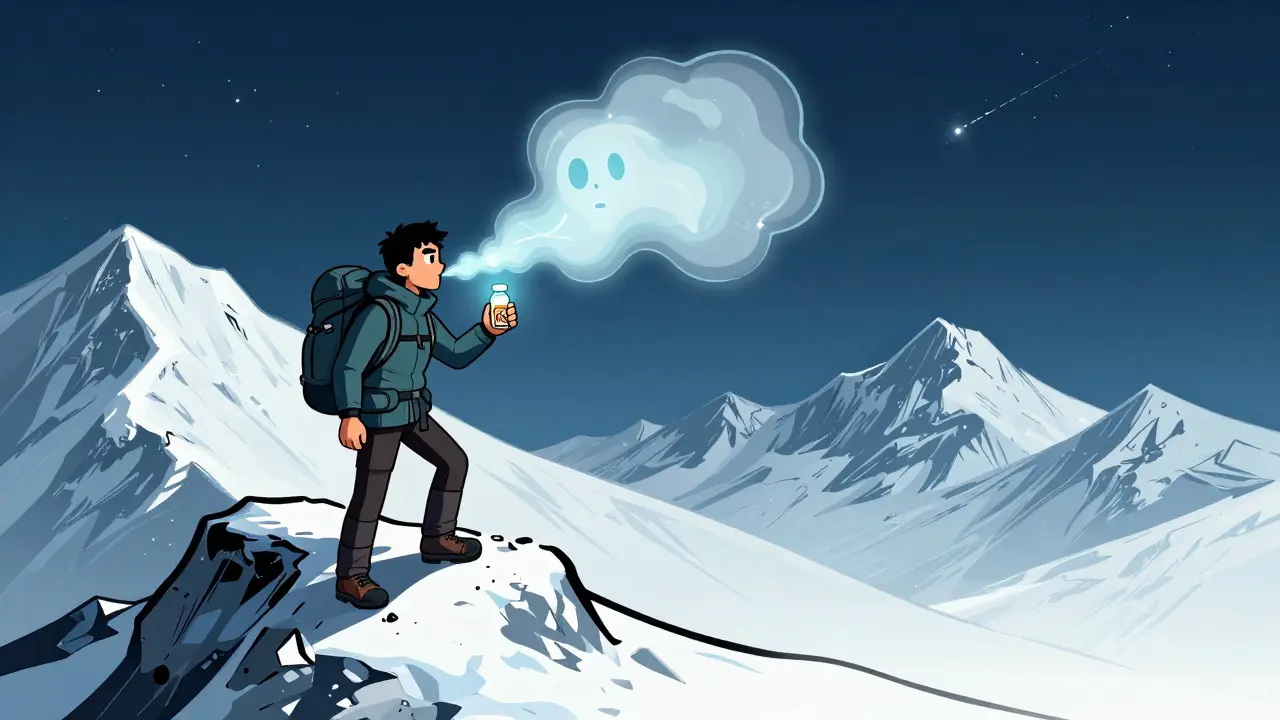
High-Altitude Sedative Risk Calculator
Going high up in the mountains can be breathtaking-literally. But if you’re planning to take a sedative to help you sleep at 3,000 meters or higher, you could be putting your life at risk. It’s not just a myth. It’s not just a warning from overly cautious doctors. It’s science-and it’s backed by decades of research, real-world cases, and hard data from climbers, trekkers, and medical professionals around the world.
Why Altitude Changes Everything
At elevations above 2,500 meters (8,200 feet), the air gets thinner. That means less oxygen in every breath you take. For every 1,000 meters you climb, oxygen availability drops by about 6.5%. At 4,500 meters, you’re breathing air with only about half the oxygen you’d get at sea level. Your body knows this. It tries to compensate by breathing faster and deeper-this is called the hypoxic ventilatory response. It’s your body’s natural survival mechanism. But here’s the problem: sedatives like alcohol, benzodiazepines, and opiates blunt that response. They don’t just make you drowsy. They slow down your breathing. And at altitude, that’s not just uncomfortable-it’s dangerous. Studies show that even a single drink can reduce your body’s ability to respond to low oxygen by 25%. A 2005 study in the Journal of Applied Physiology found that at a blood alcohol level of just 0.05% (about one standard drink), people at high altitude had significantly lower oxygen saturation. That’s not a typo. One beer can make a measurable, dangerous difference.The Silent Danger: Respiratory Depression
Sedatives don’t just make you sleepy. They suppress the part of your brainstem that controls breathing-the medulla. At high altitude, your body is already struggling to keep oxygen levels stable. When you add a respiratory depressant, you’re essentially putting a hand over your own airway. The result? A dangerous cycle:- Low oxygen triggers faster breathing
- Faster breathing blows off too much CO₂, making your blood too alkaline
- Your brain responds by slowing breathing to correct the pH
- Sedatives push that slowdown even further
- You stop breathing long enough for oxygen to plunge dangerously low
Not All Sedatives Are Created Equal
Some people think, “I just took a small dose of melatonin-it’s natural, right?” Or, “I’ve used zolpidem before and it worked fine.” But the risks vary wildly depending on the drug.- Alcohol: Reduces oxygen saturation by 5-10% points. One study of 1,247 trekkers found that 68% who drank alcohol during acclimatization had worse symptoms of altitude sickness.
- Benzodiazepines (like diazepam, lorazepam, alprazolam): Decrease ventilation by 15-30%. One climber reported their SpO₂ dropped from 88% to 76% after taking 0.5 mg lorazepam at 4,200 meters.
- Opiates (like codeine, oxycodone): Extremely dangerous. Even small doses can cause oxygen levels to crash. Avoid completely at altitude.
- Zolpidem (5 mg): This is the exception, but only under strict conditions. A 2017 study found it caused only a 2.3% drop in oxygen saturation at 3,500 meters. The CDC says it’s “generally safe” if you wait at least 8 hours before any activity and avoid combining it with alcohol or other depressants.
- Melatonin (0.5-5 mg): No evidence of respiratory depression. Small studies suggest it may even improve sleep quality and oxygenation slightly. But the CDC notes it hasn’t been formally studied for altitude-specific use.
What the Experts Say
There’s near-unanimous agreement among top authorities:- The CDC Yellow Book 2024 explicitly warns against “respiratory depressants such as alcohol and opiates” at high altitude.
- The American Academy of Family Physicians says sedative hypnotics “should be avoided” during high-altitude travel.
- Dr. Peter Hackett, director of the Institute for Altitude Medicine, states: “Any medication that depresses respiration is contraindicated above 2,500 meters.”
- Healthdirect Australia and the Cleveland Clinic both advise: “Do not take sedatives or sleeping pills.”
- The Wilderness Medical Society updated its guidelines in April 2024, reinforcing that respiratory depressants can worsen periodic breathing and trigger acute mountain sickness.
Real Stories, Real Consequences
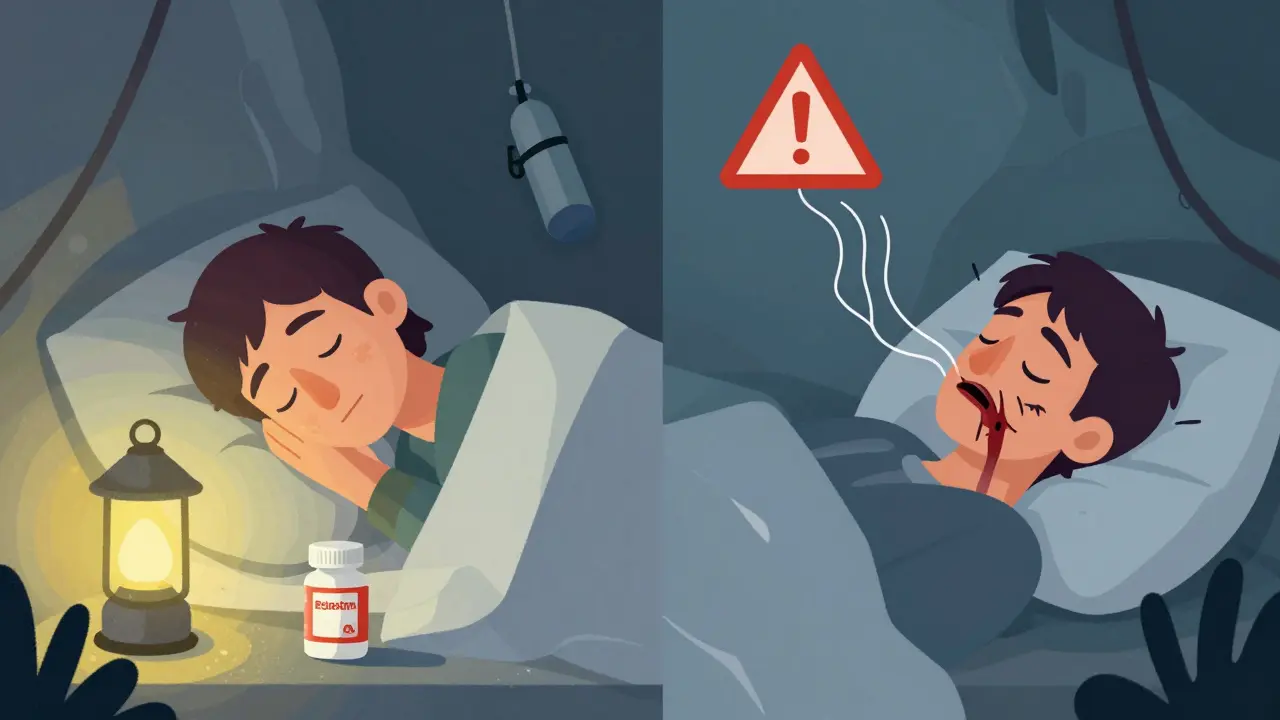
Online forums are full of warnings from people who ignored the advice-and paid for it. On SummitPost, a user named “MountainMedic87” described a night at 4,200 meters where their oxygen saturation fell from 88% to 76% after taking lorazepam. They ended up in a tent with a portable oxygen canister, barely able to speak. On Reddit’s r/climbing, someone reported their SpO₂ dropped to 79% after one 5 mg zolpidem tablet at 4,000 meters-even though the CDC calls it “generally safe.” They didn’t know they needed to wait 8 hours before any activity. They tried hiking the next morning and nearly passed out. And it’s not just pills. A traveler on the Lonely Planet forum described how two beers at 3,500 meters turned a mild headache into full-blown nausea, dizziness, and vomiting. They were evacuated the next day. These aren’t rare cases. They’re predictable outcomes.What Should You Do Instead?
You don’t need sedatives to sleep at altitude. Here’s what actually works:- Acclimatize slowly. Don’t go from sea level to 3,500 meters in one day. Spend 24-48 hours at 2,500 meters before going higher.
- Avoid alcohol for the first 48 hours. Even if you’re a heavy drinker, your body needs time to adjust.
- Use acetazolamide. This is a prescription medication that helps your body adapt faster. It increases breathing, improves oxygen levels at night, and reduces the risk of altitude sickness. The CDC recommends 125 mg twice daily for prevention.
- Try melatonin. 0.5-3 mg at bedtime may help with sleep without affecting breathing.
- Carry a pulse oximeter. A simple device that clips onto your finger and shows your oxygen saturation. If it drops below 85% while resting, you’re in danger. Many climbers now carry them-sales jumped 22% in 2023.
- Consult a travel medicine specialist at least 4-6 weeks before your trip. Most pharmacies don’t know the risks. A specialist will know which medications are safe and which aren’t.
Why People Still Take the Risk
Despite all the warnings, 41% of high-altitude travelers still drink alcohol during acclimatization. 8% use prescription sedatives. Why? Because they think:- “I’ve taken this before and it was fine.”
- “I’m not that high up.”
- “It’s just one pill.”
- “I need to sleep.”
The Bottom Line
If you’re traveling to high altitude, your number one priority isn’t sleep. It’s survival. Your body is already under stress. Don’t add a drug that makes it harder to breathe. Alcohol? Avoid it. Benzodiazepines? Avoid them. Opiates? Absolutely not. If you need help sleeping, melatonin is your safest bet. Acetazolamide helps you adapt faster and improves sleep naturally. Zolpidem? Only if you’re desperate, only if you wait 8 hours, and only if you’ve tested it at lower altitudes first. And always, always carry a pulse oximeter. It’s not expensive. It’s not fancy. But it could save your life.What to Do If You’ve Already Taken a Sedative
If you’ve taken a sedative and you’re at altitude:- Stop immediately. Don’t take another dose.
- Stay put. Don’t go higher.
- Monitor your oxygen with a pulse oximeter.
- If your SpO₂ is below 85% at rest, descend at least 500 meters.
- Seek medical help if you feel confused, dizzy, or have trouble breathing.
Can I take melatonin at high altitude?
Yes, melatonin is considered safe at high altitude. Studies show it doesn’t suppress breathing and may even help improve sleep and slightly increase oxygen levels. A dose of 0.5 to 5 mg at bedtime is commonly used. However, the CDC notes it hasn’t been formally studied for altitude-specific sleep issues, so use it cautiously and avoid combining it with alcohol or other sedatives.
Is zolpidem safe for sleep at high altitude?
Zolpidem 5 mg is generally considered safer than benzodiazepines or alcohol at high altitude, according to the CDC. A 2017 study found it caused only a 2.3% drop in oxygen saturation at 3,500 meters. But you must wait at least 8 hours after taking it before doing any physical activity. Never combine it with alcohol or other depressants. If you’ve never taken it before, test it at low altitude first.
Why is alcohol so dangerous at high altitude?
Alcohol reduces your body’s hypoxic ventilatory response by up to 25%, even at low blood alcohol levels like 0.05%. This means you breathe less deeply and less often when oxygen is low. It also dehydrates you and worsens symptoms of altitude sickness like headache and nausea. Studies show 68% of trekkers who drank alcohol during acclimatization had worse symptoms than those who didn’t.
What are the signs I’m having a bad reaction to a sedative at altitude?
Signs include unusually deep or slow breathing, confusion, dizziness, extreme fatigue, worsening headache, nausea, or a pulse oximeter reading below 85% while resting. If you’re using a sedative and your symptoms get worse instead of better, assume it’s the drug-not just altitude sickness. Descend immediately and seek help.
Should I bring a pulse oximeter on my high-altitude trip?
Yes. A portable pulse oximeter is one of the most useful tools for high-altitude travelers. It tells you your oxygen saturation in real time. Normal is 95-100%. Below 90% is hypoxemia. Below 85% is dangerous, especially if you’re resting. Sales of these devices increased 22% in 2023, and IFMGA-certified guides now require them on expeditions. They’re affordable, easy to use, and could save your life.
Can I use sleeping pills if I have a medical condition that requires them?
If you have a diagnosed condition requiring sedatives, consult a travel medicine specialist at least 4-6 weeks before your trip. Never stop prescribed medication without medical advice. In some cases, alternatives like melatonin or acetazolamide may be combined with lower doses of sedatives under supervision. But in most cases, the risk outweighs the benefit. Your safety at altitude depends on your body’s natural response-and sedatives suppress that response.


Alexandra Enns
23 January / 2026This article is pure fearmongering wrapped in scientific jargon. I’ve summited Denali three times with a six-pack in my pack and never once needed a pulse oximeter. My body adapted. Your body adapts. Stop treating people like fragile lab rats. The CDC doesn’t know squat about real mountain life. I’ve seen more climbers die from hypothermia than from melatonin.