Drug Absorption: How Your Body Takes in Medications and Why It Matters
When you swallow a pill, it doesn’t just disappear and start working. Drug absorption, the process by which a medication enters your bloodstream from its site of administration. Also known as bioavailability, it’s the make-or-break step that decides whether your drug will help, hurt, or do nothing at all. A drug might be perfectly formulated, but if your gut won’t absorb it, or your liver breaks it down too fast, you’re paying for nothing. This isn’t theoretical—people switch to generics and wonder why they don’t feel the same, and often, it’s because absorption changed.
Bioavailability, the percentage of a drug that actually reaches circulation is what regulators like the FDA measure when approving generics. But even small differences in how a drug dissolves or moves through your system can matter—especially for drugs with a narrow therapeutic index, like warfarin or levothyroxine. That’s why keeping a medication journal, a record of when you take pills, what you ate, and how you felt can catch subtle shifts before they become problems. Your stomach acid, liver function, even the time of day you take your pill—all of these tweak absorption. Opioids, for example, can build up dangerously if your liver function, the organ responsible for breaking down most drugs is damaged. And if you’re on metformin long-term, you might be quietly losing vitamin B12 because absorption in your gut is being blocked.
It’s not just about pills. Eye drops, patches, even inhalers rely on absorption—just in different places. A drug meant to enter through your skin won’t work if you apply it over a scar. A capsule designed to dissolve in your small intestine might break open too early if you take it with a big fatty meal. That’s why some meds say "take on an empty stomach"—it’s not a suggestion, it’s science. Generic manufacturers don’t just copy the active ingredient; they have to match how it’s absorbed. That’s why multiple generic makers can drive prices down, but also why sometimes one brand feels better than another—because absorption isn’t always identical.
Understanding drug absorption helps you ask better questions. Why does this new generic make me dizzy? Did I take it with grapefruit juice? Is my liver okay? Did I forget to space it from my antacid? These aren’t small details—they’re the reason some people get relief and others don’t. The posts below dig into real cases: how lamotrigine and valproate interact through absorption pathways, why timolol eye drops pollute waterways because they’re not fully absorbed by the eye, and how switching antidepressants can trigger serotonin syndrome if absorption rates don’t line up. You’ll find practical tips on tracking your response, avoiding dangerous combos, and knowing when a change in how you feel isn’t in your head—it’s in your bloodstream.

Learn how to time your medications correctly to avoid dangerous interactions and side effects. Simple changes in when you take pills can boost effectiveness and prevent hospital visits.
View Details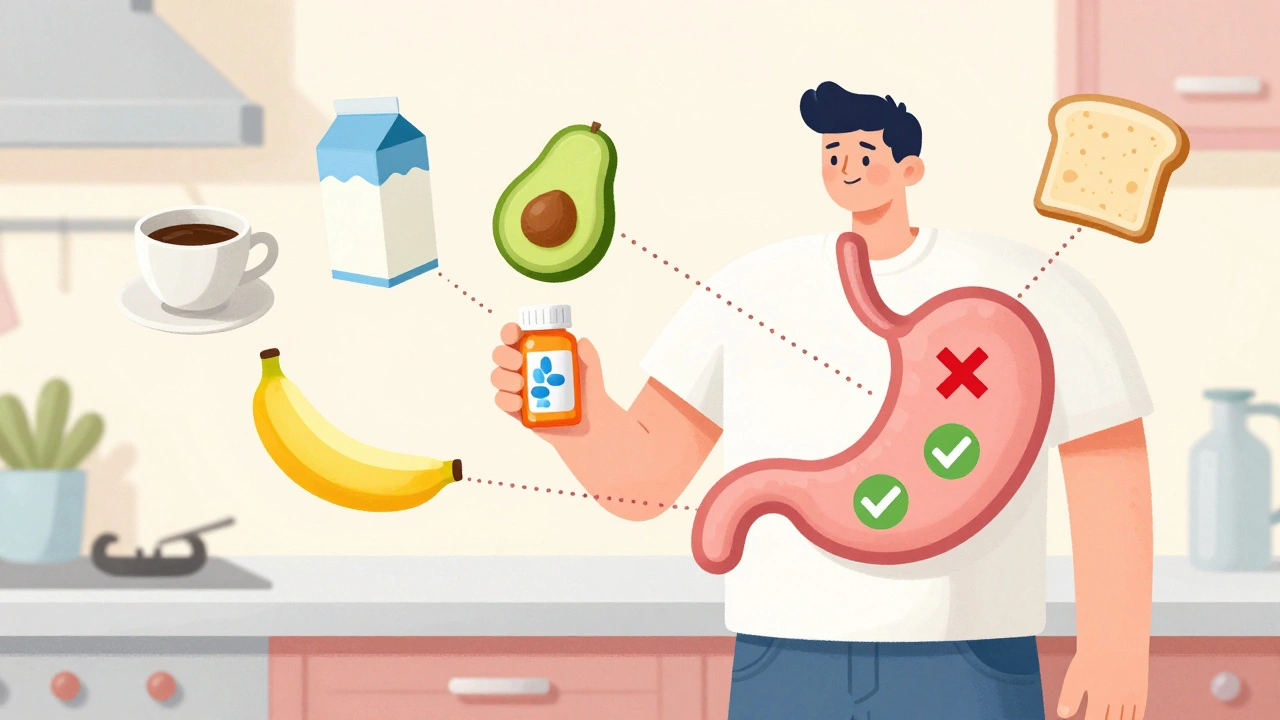
Learn when to take your medications with or without food to ensure proper absorption. Discover which drugs need fat, which are blocked by dairy, and how timing affects your health.
View Details