For years, cochlear implants were seen as a last resort - something only considered when hearing aids stopped working completely. But that mindset is outdated. Today, if you’re struggling to understand speech even with hearing aids, you might be a candidate for a cochlear implant - and waiting too long could cost you more than just sound.
What Really Makes Someone a Candidate?
The old rules said you needed to be profoundly deaf, with no usable hearing left. That’s not true anymore. The updated guidelines from the American Cochlear Implant Alliance (ACIA), released in late 2023, flipped the script. Now, if you understand less than 50% of words in a quiet room while wearing properly fitted hearing aids, you should be referred for a full evaluation. It doesn’t matter if you still hear a little. It doesn’t matter if you’ve had hearing loss for 20 years. What matters is whether your brain can still make sense of sound with help.
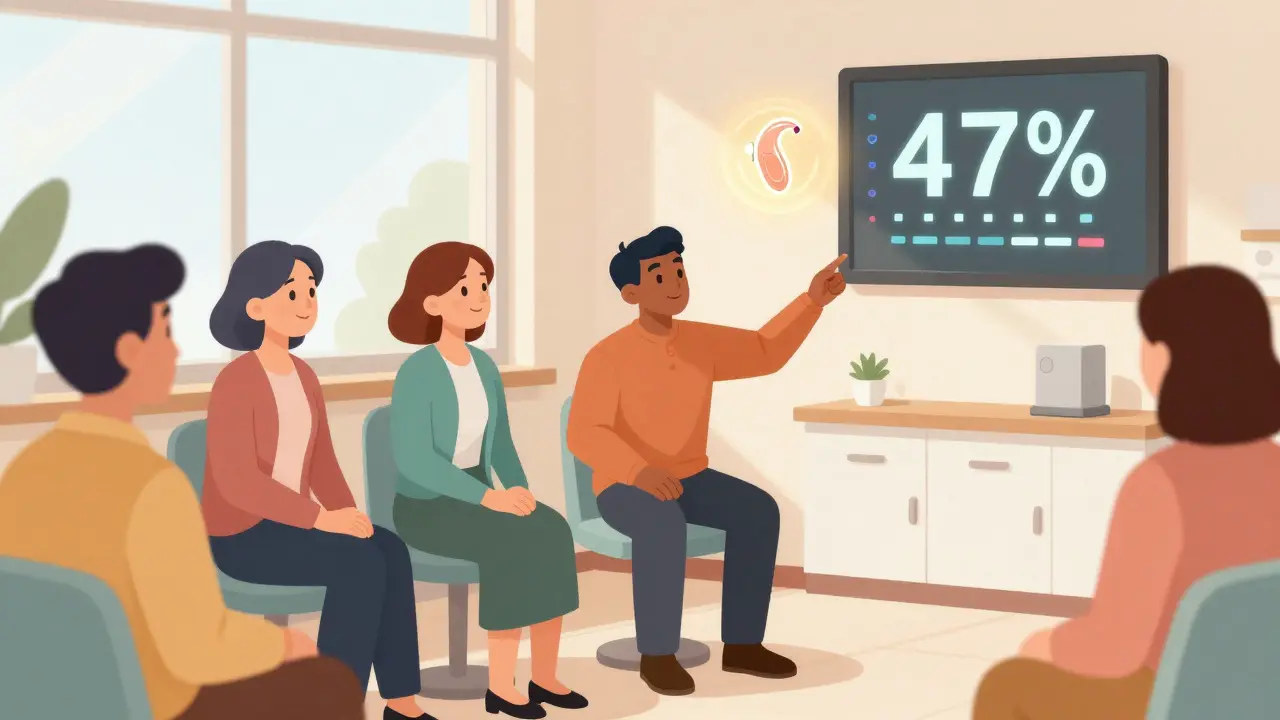
This shift came from hard data. A 2022 study tracking over 1,200 implant recipients found that people who scored below 50% on sentence recognition tests improved by an average of 47 percentage points after surgery. That’s not a small gain - it’s the difference between hearing muffled voices and joining a family dinner without asking people to repeat themselves.
Even people with asymmetric hearing loss - where one ear is nearly normal and the other is severely impaired - are now being considered. This includes those with single-sided deafness. These cases were ignored for decades, even though they cause real problems: trouble locating where sound comes from, constant fatigue from straining to listen, and difficulty in noisy places like restaurants or meetings. The 2023 guidelines specifically say: evaluate each ear separately. If one ear isn’t working well enough, the implant can help - even if the other ear still has some function.
The Evaluation Process: What Happens During Testing?
A cochlear implant evaluation isn’t one appointment. It’s a full picture of your hearing, your health, and your life. You’ll spend 4 to 6 hours across multiple visits. Here’s what it looks like:
- Hearing aid check: First, they’ll confirm your hearing aids are working right. Too many referrals get rejected because the aids aren’t properly fitted. Real-ear measurements - where a tiny microphone checks sound inside your ear canal - are the gold standard. If your aids aren’t delivering the right volume, you won’t get an accurate idea of whether you’d benefit from an implant.
- Unaided and aided speech tests: You’ll listen to words and sentences without hearing aids, then with them. Standard tests use CNC words (like "bat," "ship") and AzBio sentences (like "The cat jumped over the fence"). AzBio is now the preferred tool because it mimics real speech better than older tests.
- Noise testing: Can you understand speech with background noise? This matters more than quiet-room scores. A 2022 study in the Journal of the Acoustical Society of America found that people who did well in quiet but poorly in noise had the most to gain from implants.
- Functional assessment: Tools like the SSQ (Speech, Spatial, and Qualities of Hearing Scale) ask you how well you hear in real life - in cars, at parties, on the phone. Some people score okay in the clinic but can’t follow conversations at home. That’s a red flag.
- Imaging: A CT scan checks the structure of your inner ear. An MRI looks at the auditory nerve. If the nerve is damaged or the cochlea is fused, an implant might not work. But these are rare.
- Medical and psychological review: Are you healthy enough for surgery? Do you have the support system to attend follow-ups and therapy? Motivation matters. People who are eager to relearn how to hear tend to do better.
One key point: there’s no such thing as a "bad" referral. Even if you don’t qualify, you’ll get a full hearing baseline - useful for future decisions. Audiologists say many patients are turned away because doctors are afraid of "wasting" a referral. The new guidelines say: refer early. Refer often.

Outcomes: What Can You Really Expect?
Most people who get cochlear implants experience dramatic improvements - but not everyone gets the same result. Here’s what the data shows:
- Speech understanding: On average, sentence recognition improves from 30% before implant to 80% after. For those who were just below the 50% threshold before surgery, 78% in the ERID trial hit over 50% after - meaning they could finally follow conversations without lip-reading.
- Quality of life: In a 2022 survey of 1,247 recipients, 89% said they had "substantial improvement" in daily communication. Phone use jumped from 12% before to 92% after. Listening fatigue dropped by 87%.
- Long-term benefits: Studies now show that even people with 10+ years of deafness do just as well as those with shorter losses - as long as they’re cognitively healthy and committed to rehabilitation. Age isn’t a barrier. A 78-year-old with good memory and motivation often outperforms a younger person who skips therapy.
But there are limits. Music still sounds robotic to most users - 63% of survey respondents say they struggle with melody and tone. Background noise remains challenging, though it’s better than before. You won’t hear like you did at 20. But you’ll hear well enough to reconnect with people.
Why So Few People Get Implants?
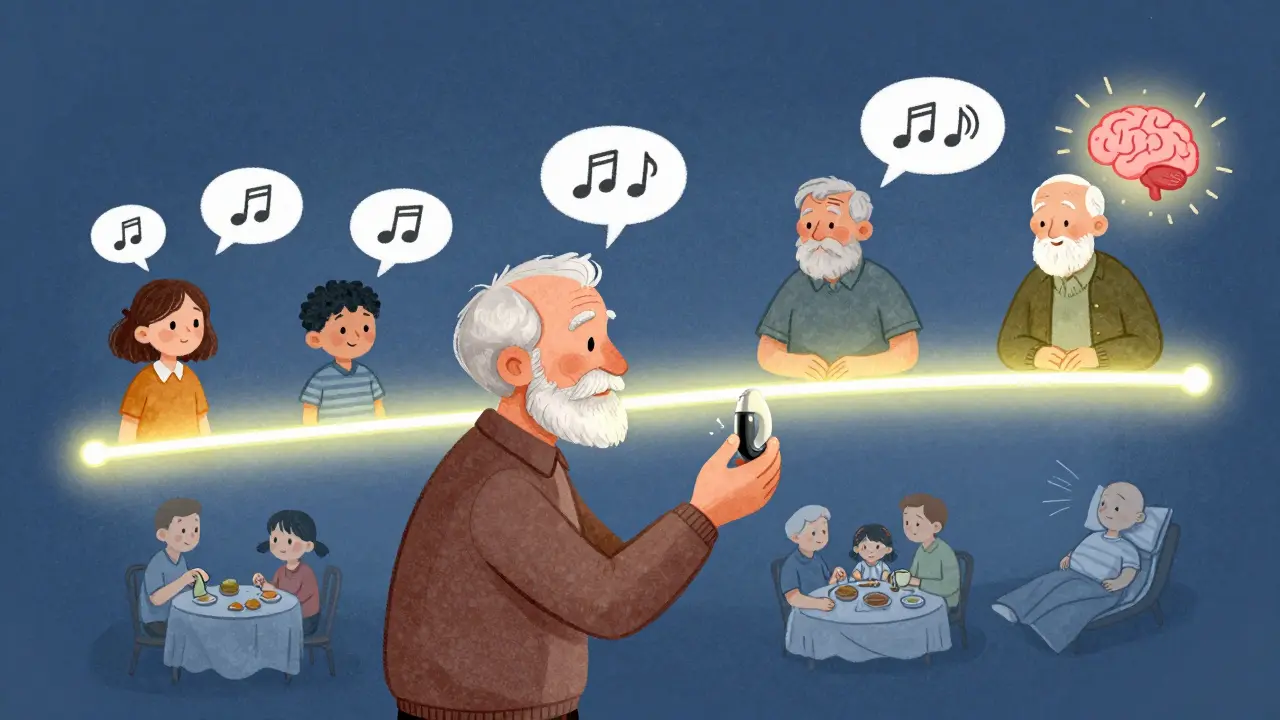
Here’s the shocking part: 38 million American adults have disabling hearing loss. In 2022, only 128,000 cochlear implants were done. That’s less than 1% of those who could benefit.
Why? Three big reasons:
- Doctors don’t know the criteria. A 2021 JAMA Otolaryngology survey found only 32% of primary care doctors understood when to refer someone for an implant.
- No clear referral path. Most people never hear about implants until they’re desperate. Hearing loss creeps in slowly. No one says, "You should get tested for a cochlear implant."
- Cost and access. While Medicare and most insurers cover implants now, finding a center with experienced staff is still hard. Only 127 U.S. centers are officially designated to follow the 2023 ACIA guidelines.
The economic cost of ignoring this is huge. Untreated hearing loss costs the U.S. $56 billion a year in lost productivity and increased dementia risk. Cochlear implants pay for themselves in 3 years - through better jobs, fewer falls, and lower healthcare use.
What’s Next?
The FDA is reviewing new labeling that would officially adopt the 50% word recognition threshold as a standard. By 2030, experts predict cochlear implants will be the standard treatment for anyone with hearing loss over 55 dB and speech understanding below 60% - even if they still use hearing aids. That could open the door to over 7 million adults.
But progress won’t happen unless we change how we think. Hearing loss isn’t just about volume. It’s about understanding. And if you’re struggling to understand - even with hearing aids - you deserve to be evaluated. You don’t need to wait until you hear nothing. You just need to realize: you’re not failing. The technology has changed. And so should your options.
Can I still get a cochlear implant if I use hearing aids?
Yes. In fact, many people who get implants still wear hearing aids in their other ear. The 2023 guidelines specifically say that having some residual hearing doesn’t disqualify you. If your hearing aids aren’t giving you clear speech - even if you hear sounds - you may be a candidate. The goal isn’t to replace hearing aids completely, but to improve understanding when they’re no longer enough.
Is there an age limit for cochlear implants?
No. There’s no upper age limit. People in their 80s and 90s have received implants successfully. What matters more than age is cognitive health, motivation, and willingness to participate in rehabilitation. Studies show older adults who are mentally active and committed to therapy often do as well as younger patients.
How long does it take to hear well after surgery?
It takes time. The implant is turned on about 2 to 4 weeks after surgery. At first, sounds may seem robotic or strange. Most people notice improvement within 1 to 3 months, but full adaptation can take 6 to 12 months. Regular therapy with an audiologist and consistent listening practice are key. Don’t expect instant results - but do expect steady progress.
Do cochlear implants restore normal hearing?
No. They don’t restore natural hearing. Instead, they bypass damaged hair cells in the inner ear and send electrical signals directly to the auditory nerve. The brain learns to interpret these signals as sound. Most users understand speech clearly, especially in quiet settings. Music, background noise, and tone differences remain challenging for many, but these improve with time and training.
What if I’ve had hearing loss for over 10 years?
You can still benefit. A 2021 study in Ear and Hearing found no major difference in outcomes between people implanted after 10+ years of deafness and those with shorter losses - as long as they had good cognitive function and followed through with rehab. The myth that "longer deafness = worse results" has been disproven. What matters is your brain’s ability to relearn sound, not how long you’ve been without it.
Are cochlear implants covered by insurance?
Yes. Medicare, Medicaid, and most private insurers cover cochlear implants when they meet clinical guidelines. Coverage includes surgery, the device, and follow-up care. The 2023 ACIA guidelines have helped standardize coverage criteria across providers. Always check with your insurer, but don’t assume you’re ineligible because of age or residual hearing.


Ivan Viktor
3 March / 2026So let me get this straight - we’re telling people with hearing aids that if they can’t understand half the words in a quiet room, they’re eligible for a $100k brain hack? Cool. I’ll be waiting for the bill. No emoticons. Just facts. And a very loud sigh.