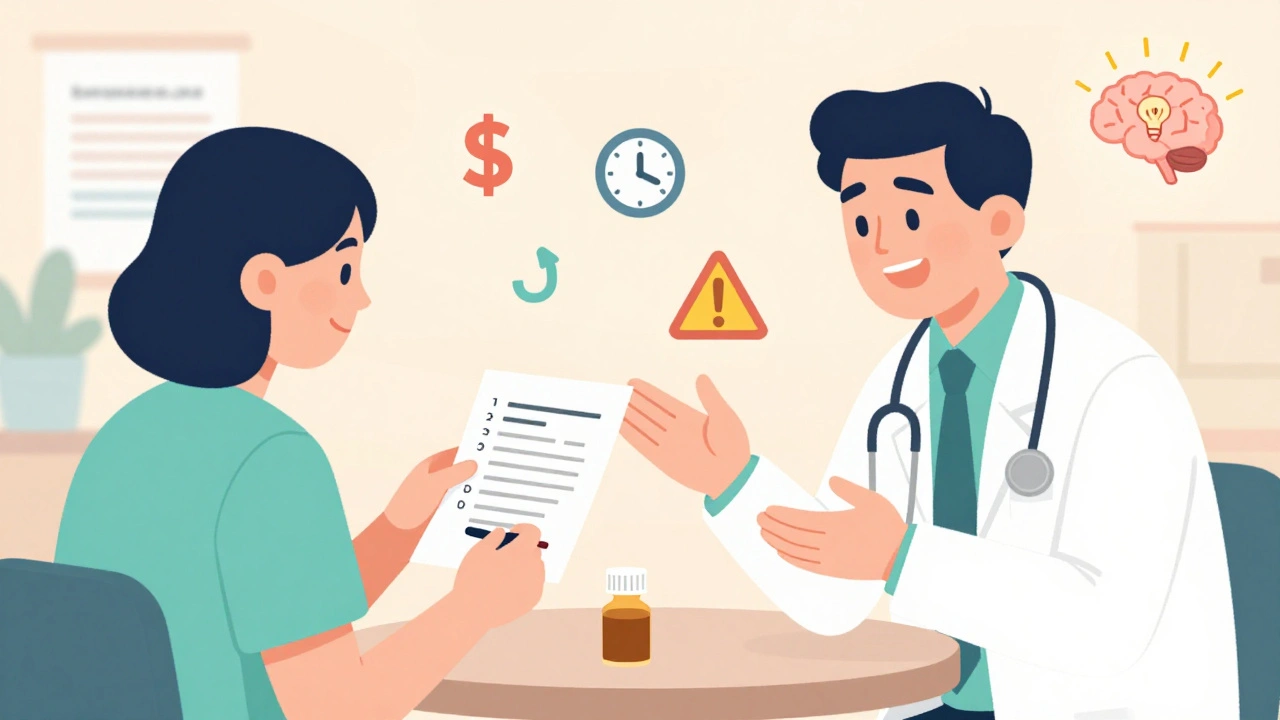
Starting a new medication can feel overwhelming. You’re handed a prescription, told how many pills to take, and sent on your way. But what if you don’t fully understand why you’re taking it? What if you’re worried about side effects but don’t know which ones are normal and which are dangerous? What if the cost is too high and you’re too embarrassed to say so? These aren’t rare concerns-they’re common. And they’re fixable. The key isn’t just listening to your doctor. It’s asking the right questions.
What is this medicine, and why am I taking it?
Start with the basics. Don’t assume the doctor knows you remember the name. Ask for both the brand name and the generic name. Many people mix up medications because names sound similar. For example, Hydroxyzine and Hydrochlorothiazide are completely different drugs-one treats anxiety, the other high blood pressure. A 2020 report found that 23% of medication errors happen because of name confusion.Then ask: Which condition is this meant to treat? Not just “high blood pressure,” but “to lower your systolic pressure below 130.” Not just “depression,” but “to help with low energy and sleep issues you’ve described.” The more specific the answer, the better you’ll know if it’s working later.
How and when do I take it?
Dosage instructions are often misunderstood. People think “take once daily” means “whenever I remember.” But timing matters. Some pills must be taken on an empty stomach. Others need food to reduce nausea. Some are best taken in the morning to avoid sleep disruption. Others need to be spaced evenly-like every 8 hours.Ask: Exactly how many milligrams should I take, and how many times a day? Should I take it with food, water, or avoid certain drinks? How long will I be on this? A 2021 study found that 34% of patients misremember their dosage instructions within days of leaving the office. Writing it down helps-but even better, ask your doctor to repeat it slowly. Then say it back to them.
How will I know if it’s working?
Many people stop taking meds because they don’t feel better right away. But most medications take time. Antidepressants can take 4-6 weeks. Blood pressure meds may need 2-3 weeks to show full effect. Thyroid meds? Often 6-8 weeks.Ask: When should I start noticing a change? What signs should I look for? If you’re on a statin for cholesterol, you won’t “feel” it. But your next lab test should show lower LDL. If you’re on a painkiller, you should feel relief within hours. If you don’t, you need to know when to call back.
One study found that 68% of patients quit their meds early because they didn’t know what “working” looked like. Don’t be one of them.
What side effects should I expect?
Side effects scare people. But not all side effects are bad. Some are mild and go away. Others mean you need to stop.Ask: What side effects are common and likely to fade after a few days? Which ones require me to call you immediately? For example, dizziness on a new blood pressure med might be normal at first-but if you faint, that’s an emergency. Nausea from an antibiotic might pass in 3 days-but if you develop diarrhea with blood, you need help now.
One in four hospital admissions for older adults is caused by bad drug reactions. Many of these could’ve been avoided if patients knew what to watch for. Write down the red flags. Keep them on your phone or in your wallet.
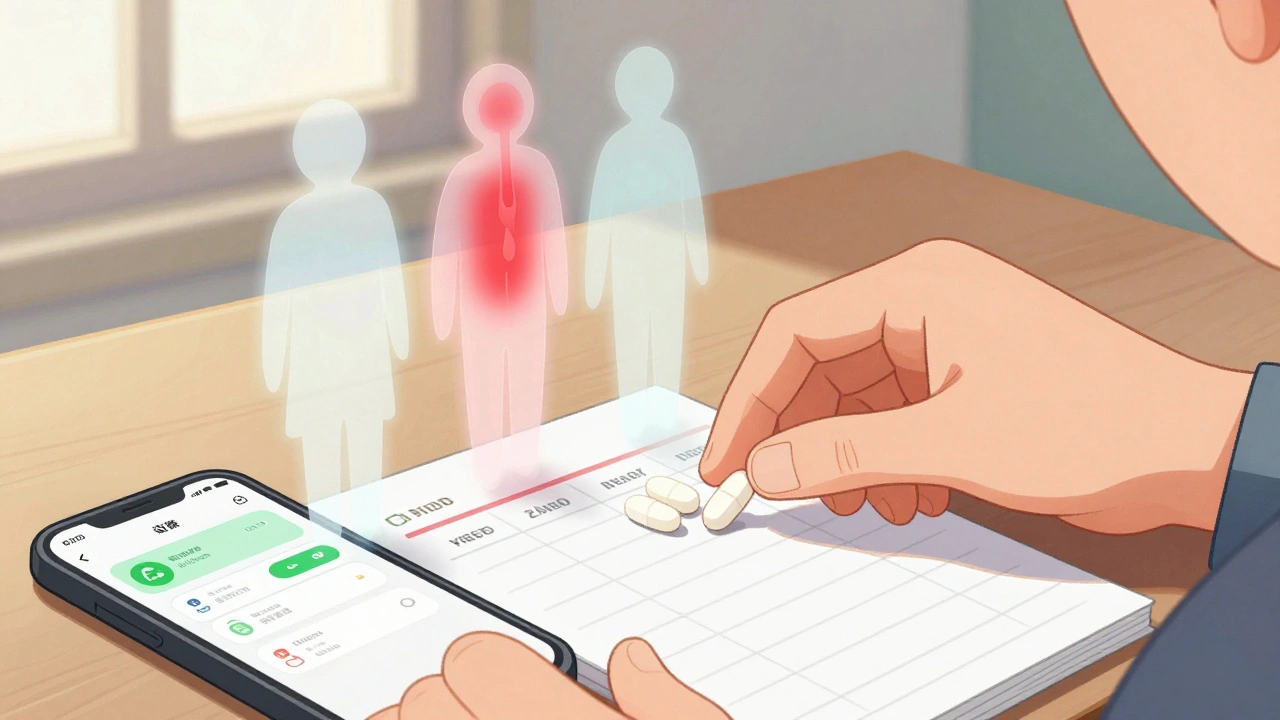
Will this interact with anything else I’m taking?
You’re probably not just on one medication. Maybe you take aspirin for heart health, ibuprofen for joint pain, a vitamin D supplement, and an herbal tea for sleep. None of these are “harmless.”Ask: Does this interact with any of my current prescriptions, over-the-counter drugs, or supplements? Should I avoid alcohol, grapefruit, or caffeine? The FDA says 40% of adults take five or more medications at once. That multiplies the risk of dangerous interactions.
One Reddit user shared how asking this question saved them: their new blood pressure pill dangerously amplified the effect of their antidepressant. Their doctor hadn’t known they were taking the supplement. They’d forgotten to mention it. Don’t assume your doctor knows everything. Bring a list.
Are there other options?
Doctors pick one medication based on guidelines, experience, and cost. But that doesn’t mean it’s the only option. Maybe there’s a cheaper generic. Maybe a different class of drug has fewer side effects for your body type.Ask: Why this one and not another? Is there a similar drug that’s less expensive? Have you considered my age, weight, or other conditions when choosing this?
Some people benefit from pharmacogenetic testing-blood or saliva tests that show how your genes process certain drugs. It’s not for everyone, but if you’ve had bad reactions before, it’s worth asking. Studies show this testing can predict 60-80% of how you’ll respond to a drug.
What if this doesn’t work?
Medications don’t always work. That’s not your fault. But you need a plan.Ask: When will we check if it’s working? What’s the next step if it doesn’t help? Will I need more tests, or will we just switch?
Almost half of patients never schedule a follow-up. That’s dangerous. If your medication isn’t working, waiting weeks or months to say something can lead to worsening symptoms-or worse, complications. Get a timeline: “Let’s talk again in 3 weeks,” or “Call me if you don’t feel better by next month.”
How much will this cost?
Cost is one of the biggest reasons people skip doses. A 2023 study found that 1 in 4 Americans skip pills because they can’t afford them.Ask: What’s the cash price without insurance? Is there a generic version? Do you have samples? Can you help me find a patient assistance program?
Many drug companies offer coupons or free programs. Pharmacies sometimes have $4 generic lists. But you won’t know unless you ask. Don’t be embarrassed. Doctors want you to take your meds-not skip them because of cost.
How do I keep track of everything?
If you’re on multiple meds, keeping them straight is hard. A 2023 study showed people forget half of what their doctor says within one hour.Ask: Can you give me a written list? Is there an app you recommend? Can you send this info to my pharmacy?
Write down the answers. Use a pill organizer. Set phone reminders. Use apps like Hero Health or Medisafe. These tools reduce missed doses by up to 38%. If you’re older or have memory issues, ask a family member to help you set it up.
What if I feel worse before I feel better?
Some meds cause temporary side effects that feel worse than the original problem. SSRIs can increase anxiety at first. Blood pressure meds can make you dizzy. Thyroid meds can cause heart palpitations.Ask: Will these early side effects get better? How long should I wait before deciding this isn’t right for me?
People with mental health conditions especially benefit from this question. A 2023 survey found that 72% of patients who asked this avoided quitting effective meds too soon. Knowing the timeline-“This anxiety will peak in 5 days and fade by day 10”-makes all the difference.
Final tip: Bring your list
Before your appointment, write down your questions. Bring a list of everything you take-prescriptions, supplements, OTC meds, even herbal teas. Include doses and how often you take them. This cuts interaction risks by 63%.Don’t wait until you’re in the exam room to think of questions. You’ll forget. You’ll feel rushed. The average doctor visit lasts just over 15 minutes. You need to use that time wisely.
And if your doctor seems annoyed you’re asking questions? That’s a red flag. Good doctors welcome them. If you’re not getting clear answers, ask again. Or ask for a pharmacist to explain. You have the right to understand your treatment.
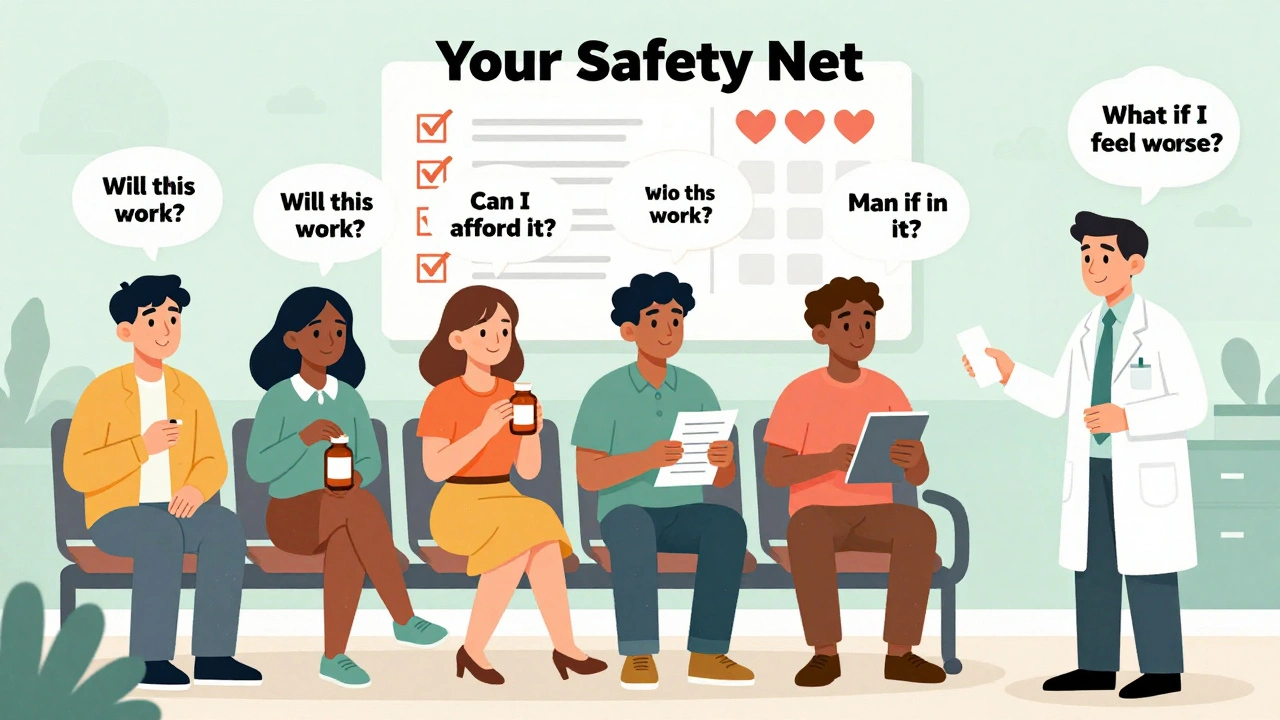
Medications save lives. But only if you take them correctly. And you won’t take them correctly unless you understand them. Asking questions isn’t being difficult. It’s being smart. It’s your safety net.
What if I forget to ask a question during my appointment?
Call your doctor’s office or pharmacy within 24-48 hours. Most clinics have a nurse line for medication questions. You can also use secure messaging through your patient portal. Don’t wait until you’re having side effects-ask sooner.
Should I bring someone with me to the appointment?
Yes, especially if you’re starting a complex new regimen or have memory issues. A second person can help remember details, ask questions you didn’t think of, and take notes. Studies show people retain 70% more information when they write it down or have someone else hear it.
Can I ask for a cheaper alternative even if my doctor prescribed a brand-name drug?
Absolutely. Many brand-name drugs have equally effective generics. Ask: “Is there a generic version?” or “Is there another drug in the same class that costs less?” Pharmacists can also suggest alternatives. Insurance often covers generics at a much lower copay.
What if I experience a side effect after I leave the office?
Don’t ignore it. Call your doctor or pharmacist immediately if you have trouble breathing, chest pain, swelling, severe dizziness, or signs of an allergic reaction. For milder side effects like nausea or drowsiness, check your notes from the appointment. If you’re unsure, call the pharmacy-they’re trained to help with these questions.
Do I need to tell my doctor about vitamins and herbal supplements?
Yes. Many people think supplements are “natural” so they’re safe. But St. John’s Wort can interfere with antidepressants. Vitamin K can cancel out blood thinners. Garlic and ginkgo can increase bleeding risk. Always list everything-even if you think it’s “not important.”



Larry Lieberman
8 December / 2025THIS. I literally printed this out and taped it to my fridge. I went to my doc last week and used the list. She actually smiled and said, 'Finally, someone who comes prepared.' 🙌