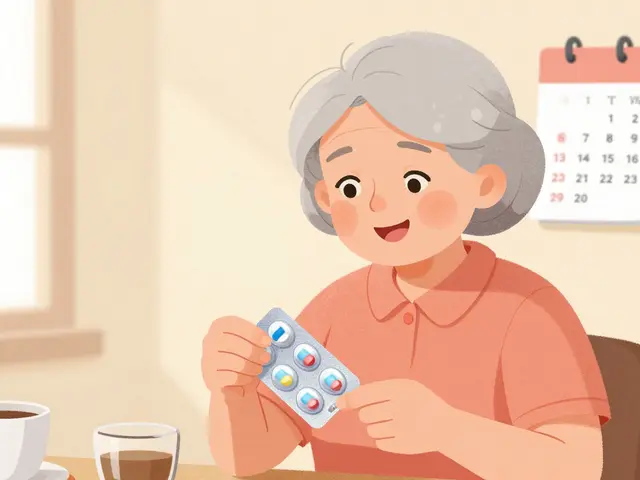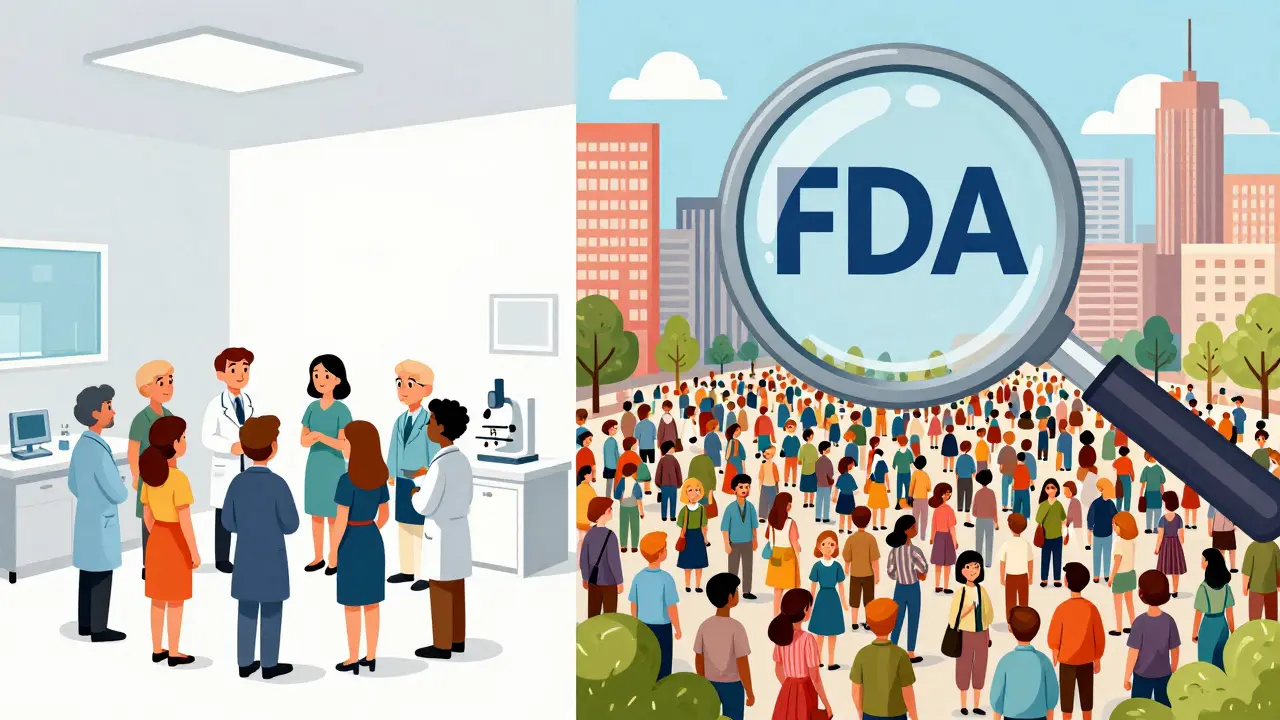
You might think that once a drug gets the green light from the FDA, the hard part is over. But for the agency, approval is actually just the beginning of a lifelong observation period. Think of it this way: clinical trials are like a dress rehearsal with a few thousand people. They are great, but they can't predict how a drug will behave when millions of people with different health histories, diets, and other medications start taking it. This is where post-market surveillance is the systematic monitoring of pharmaceutical products after they hit the shelves to ensure they remain safe and effective for the general public comes into play.
For generic drugs, this process is even more critical. Unlike brand-new drugs, generics don't go through massive new clinical trials to prove they work. Instead, they use a shortcut called bioequivalence-essentially proving they work the same way as the original brand-name drug. Because the barrier to entry is lower, the FDA has to be extra vigilant to make sure that a generic version from one company doesn't behave differently than one from another, or the original Reference Listed Drug the brand-name drug that the FDA approved first and which serves as the standard for generic comparisons (RLD).
The Big Picture: Why Generics Need Special Attention
To understand why this matters, look at the numbers. By 2020, roughly 90% of all prescriptions filled in the U.S. were generics. That is a staggering amount of medicine moving through the population. The framework for this was set back in 1984 with the Hatch-Waxman Act a landmark law that created the modern generic drug industry by allowing companies to seek approval based on bioequivalence. While this act made medicine much more affordable, it shifted a lot of the safety-checking burden from the pre-approval phase to the post-approval phase.
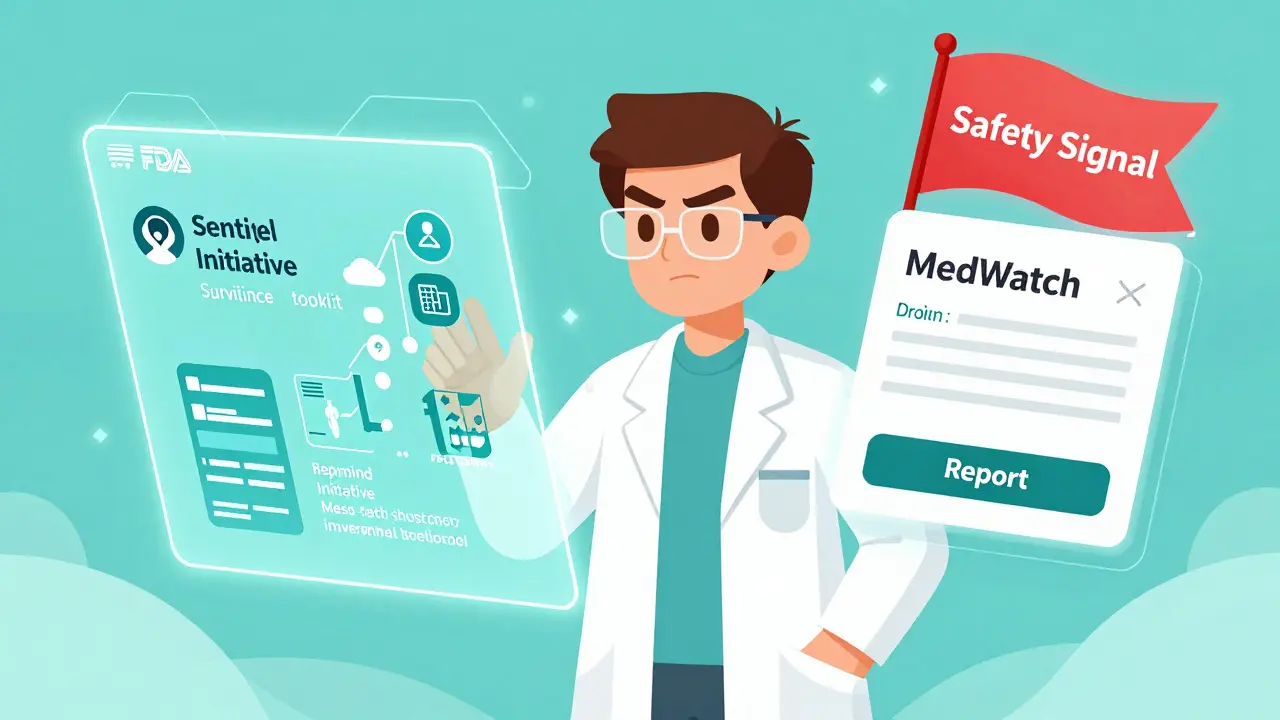
The FDA's Center for Drug Evaluation and Research the division of the FDA responsible for regulating the safety and efficacy of brand-name and generic drugs (CDER) employs a team of epidemiologists and scientists to watch for "safety signals." A signal isn't a proven danger yet; it's more like a red flag-a pattern of reports that suggests something might be wrong. If a hundred people suddenly report the same unusual side effect from a specific generic blood pressure med, the FDA doesn't just ignore it; they dive in to see if the drug is the cause.
The Tool Kit: How the FDA Actually Tracks Safety
The FDA doesn't just wait for the phone to ring. They use a combination of passive reporting and active data mining to keep tabs on drugs. The primary hub for this is FAERS the FDA Adverse Event Reporting System, a database that contains information on adverse events, medication errors, and product quality complaints. This is a massive computerized database where doctors and patients report bad reactions. However, FAERS is mostly "spontaneous," meaning it relies on people remembering to report a problem.
To get a more proactive view, the FDA uses the Sentinel Initiative a national electronic system for monitoring the safety of approved medical products using real-world data. Instead of waiting for a report, Sentinel looks at insurance claims and electronic health records for millions of people in real-time. It's like moving from a suggestion box to a live surveillance camera. By 2023, this system expanded to cover over 200 million Americans, allowing the FDA to spot trends much faster than they could with manual reports.
Then there is MedWatch the FDA's voluntary reporting program that allows healthcare professionals and consumers to report serious adverse events. This is the direct line for users to report medication errors or therapeutic failures. If a patient feels their generic medication just isn't working as well as the brand name, MedWatch is where that complaint lands.
| Tool | Method | Primary Data Source | Key Strength |
|---|---|---|---|
| FAERS | Passive | Spontaneous reports | Captures rare, unexpected side effects |
| Sentinel | Active | Insurance claims/EHRs | Real-time monitoring of millions |
| MedWatch | Passive | Patient/Provider reports | Direct feedback on product quality |
| Field Inspections | Physical | Manufacturing sites | Ensures consistent production quality |
The Challenge of Complex Generics
Not all generics are created equal. A simple tablet is easy to replicate. But "complex generics"-like inhalers, topical creams, or modified-release tablets-are a different story. For these, just proving the drug gets into the blood at the same rate (bioequivalence) isn't enough. The way a cream absorbs through the skin or how an inhaler delivers particles to the lungs can vary wildly based on the inactive ingredients used.
The FDA has admitted that traditional surveillance isn't always enough for these complex products. Because of this, they've started investing heavily in AI and machine learning. In 2023 alone, they allocated $5.2 million to research AI-driven surveillance. The goal is to reduce the time it takes to detect a safety signal from months to just a few weeks. By using algorithms to scan real-world data, the FDA hopes to catch subtle differences between a complex generic and its brand-name counterpart before they cause widespread harm.
When a Signal Becomes a Problem: Regulatory Action
So, what happens when the FDA finds a real issue? It doesn't always mean the drug is banned. There is a scale of responses depending on the risk. If the issue is minor, the FDA might just require the company to update the product labeling to include a new warning. If it's more serious, they might issue a "Dear Healthcare Provider" letter, which is basically a formal warning to doctors telling them to be cautious with a specific batch or product.
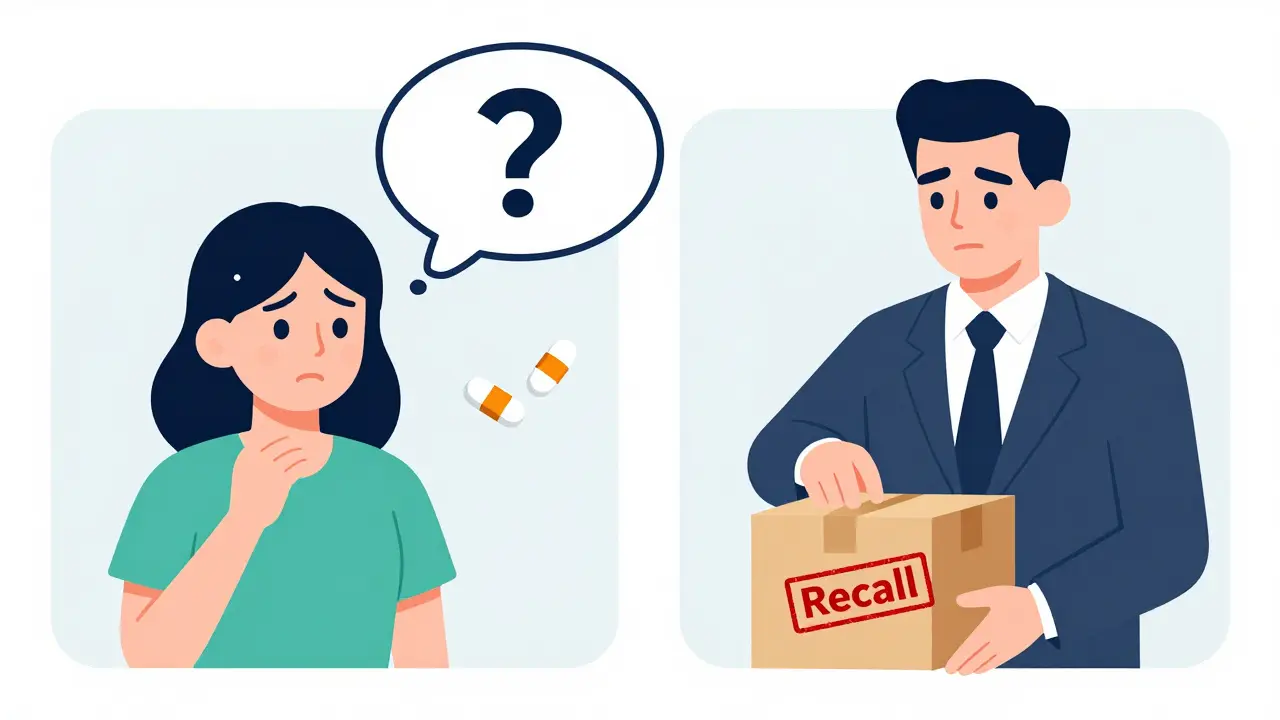
In the worst cases, the FDA triggers a voluntary product recall. This happens when the surveillance data shows a consistent manufacturing defect or a dangerous side effect that outweighs the drug's benefit. The Office of Generic Drugs the FDA office specifically tasked with the approval and oversight of generic pharmaceutical products (OGD) works with the Office of Surveillance and Epidemiology to decide when a trend is dangerous enough to pull a product from the market.
The Human Element: Perception vs. Reality
One of the weirdest parts of monitoring generics is the "nocebo effect." This happens when a patient believes a generic drug is inferior to a brand-name one, and as a result, they actually experience negative side effects, even if the chemicals in the drug are identical. A study in JAMA Internal Medicine analyzed 47,000 reports and found that about 15% of generic drug complaints were about perceived differences in efficacy rather than actual pharmacological failures.
This creates a huge headache for the FDA. When a report comes in through MedWatch saying "this generic doesn't work," the scientists have to figure out: is this a manufacturing problem, a bioequivalence failure, or is it just the patient's perception? This is why they rely on epidemiological follow-ups-looking at the data across thousands of people to see if the failure rate is higher than normal or if it's just a few unlucky (or skeptical) patients.
Do generic drugs undergo the same safety tests as brand-name drugs?
Not exactly. Brand-name drugs go through extensive clinical trials. Generics only need to prove they are bioequivalent to the original drug. Because of this, the FDA relies more heavily on post-market surveillance to catch any differences that didn't show up during the bioequivalence phase.
How can I report a problem with my generic medication?
The best way is through the MedWatch program. You can submit a report online via the FDA website, detailing any unexpected side effects, product quality issues (like pill discoloration), or if the drug doesn't seem to be working as intended.
What are "complex generics" and why are they harder to monitor?
Complex generics include products like inhalers, eye drops, and topical gels. They are harder to monitor because their effectiveness depends not just on the active ingredient, but on how the drug is delivered into the body, which can vary between manufacturers.
What happens if the FDA finds a safety issue after a drug is approved?
Depending on the severity, the FDA can mandate a labeling change, issue a warning letter to healthcare providers, or request a voluntary product recall to remove the affected batches from pharmacies.
Does the FDA use AI to track drug safety?
Yes. The FDA is currently implementing AI and machine learning models to analyze real-world data more quickly. This is especially focused on complex generics, aiming to reduce the time it takes to detect safety "signals" from months to weeks.
Next Steps for Patients and Providers
If you are a patient, the best thing you can do is keep a log of your medications, including the specific manufacturer of your generic. Not all generics are made by the same company, and knowing which one you're taking helps the FDA pinpoint a problem if a specific batch is faulty. If you notice a change in how your medication works after a pharmacy switch, don't just ignore it-report it to MedWatch.
For healthcare providers, the key is to distinguish between a patient's perception of a drug and a clinical failure. When reporting to FAERS, provide as much specific data as possible: the lot number, the dosage, and the exact nature of the adverse event. This specificity is what allows the FDA to separate the "nocebo effect" from a genuine safety crisis.