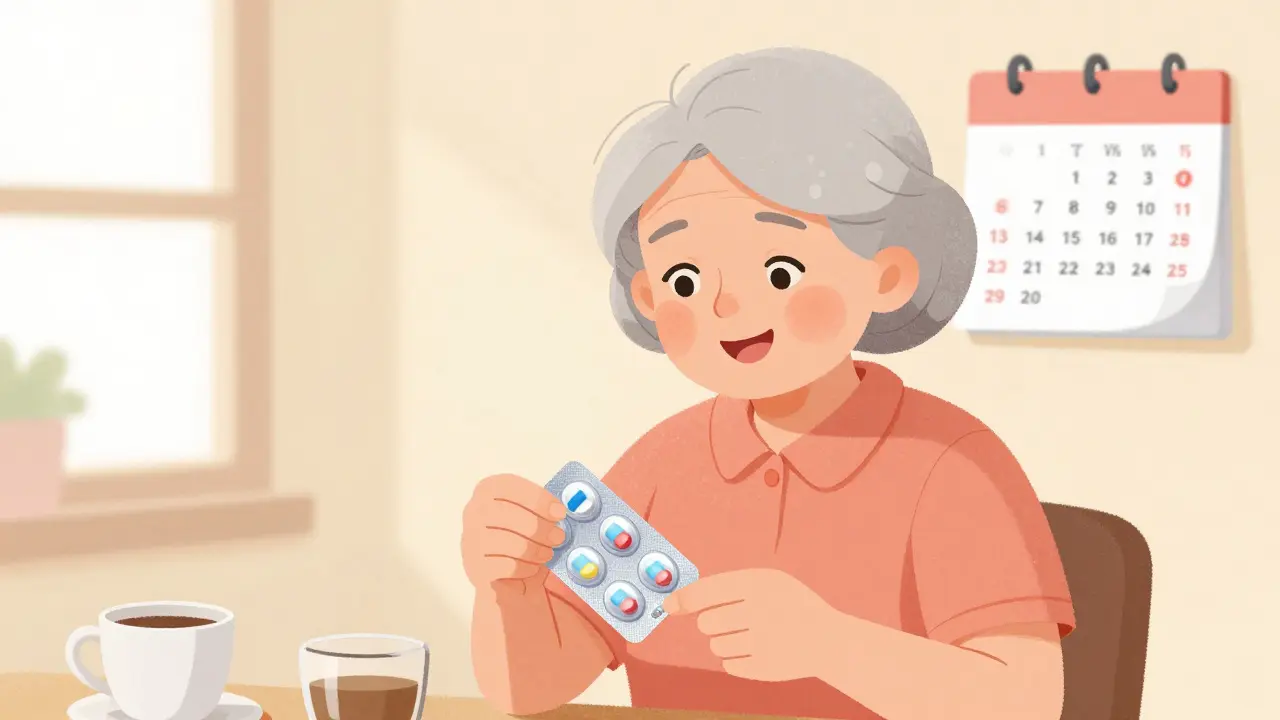
Why Medication Mistakes Happen-and How to Stop Them
Imagine taking your morning pills and not remembering if you already took your blood pressure medicine. Or worse-accidentally grabbing two doses because the bottles look too similar. This isn’t rare. Around half of people with chronic conditions miss doses or take meds wrong, according to the American Journal of Epidemiology. That’s not just inconvenient-it’s dangerous. Mistakes like these lead to hospital trips, emergency room visits, and even overdoses. The good news? Simple tools like blister packs and pill organizers can cut those risks dramatically.
What Blister Packs Really Do
Blister packs aren’t just fancy packaging. They’re designed to remove guesswork. Each pill goes into its own sealed bubble, labeled with the day and time it’s meant to be taken-morning, noon, evening, bedtime. You don’t count pills. You don’t sort them. You just peel open the next bubble when it’s time.
These aren’t new. The first patent was filed in 1950, but they became widely used in senior care in the 1990s when pharmacies noticed how often elderly patients messed up their schedules. Today, they’re standard in nursing homes-78% of U.S. long-term care facilities use them. And for good reason: studies show blister packs reduce medication errors by 67% compared to regular pill bottles. One 2022 study tracked 180 patients with high blood pressure. Those using blister packs took their meds correctly 87% of the time. Those using regular bottles? Only 64%.
How Pill Organizers Work (and Where They Fall Short)
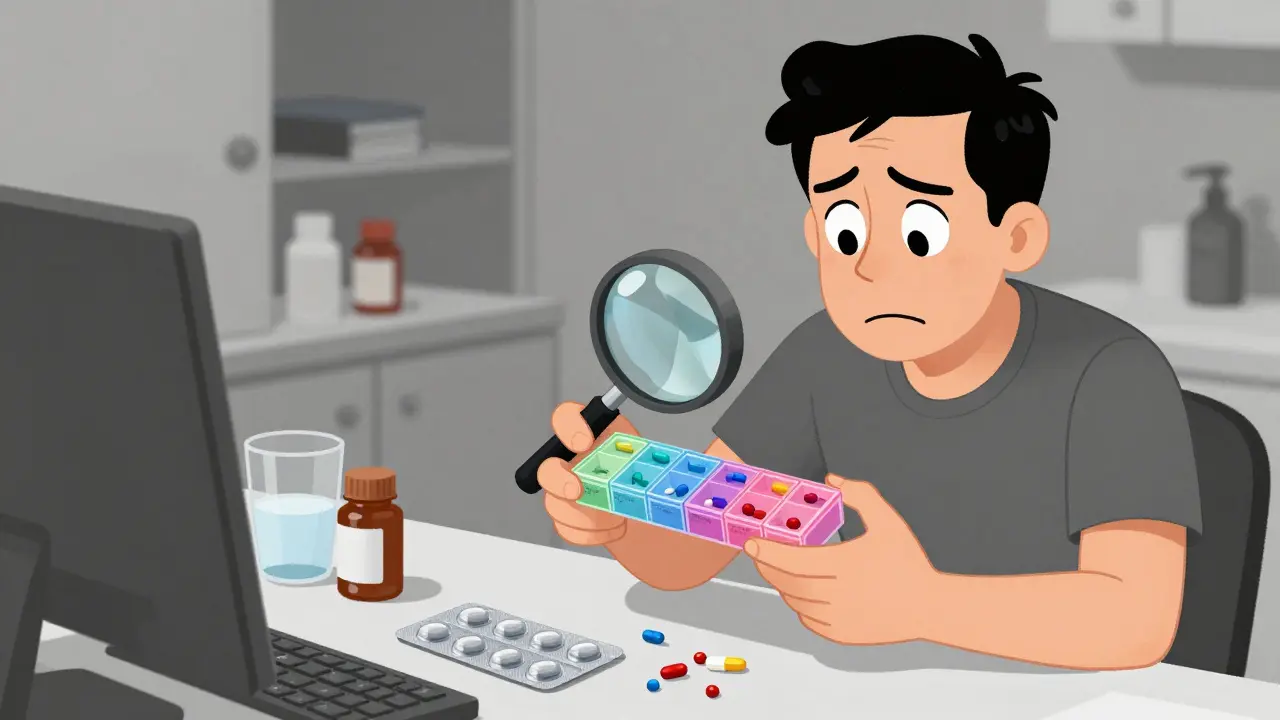
Pill organizers are simpler. You fill them yourself-usually once a week-with compartments for each day, and sometimes for each time of day. Basic ones have seven slots. Better ones have 28, with four slots per day: AM, noon, PM, bedtime. They’re cheap-$5 to $13 online-and easy to find.
But here’s the catch: you have to fill them. And that’s where mistakes creep in. A 2021 study found that 37% of users who relied on pill organizers admitted to mixing up pills while refilling. One caregiver on AgingCare.com shared that her dad with dementia kept taking extra doses because he thought he’d missed one. Switching to blister packs stopped those episodes entirely.
Organizers work well if you’re sharp, organized, and have steady hands. But if you’re tired, forgetful, or have arthritis, they’re a recipe for error. Blister packs don’t ask you to sort anything. They just show you what’s next.
Blister Packs vs. Pill Organizers: The Real Difference
Let’s be clear: blister packs win for accuracy. A 2022 study showed they improved adherence by 23% over standard bottles. Pill organizers? No statistically significant improvement. Why? Because blister packs are pre-filled by pharmacists using verified prescriptions. No human error in packing. No confusion between similar-looking pills.
Here’s another key point: blister packs show you what you’ve taken. Empty bubbles are obvious. You can’t accidentally double-dose. Pill organizers? You might forget you already took your pill-or think you didn’t, and take another. That’s how overdoses happen.
But blister packs aren’t perfect. If your meds need refrigeration, they won’t work. If your doctor changes your dose mid-month, you have to get a whole new pack. That’s where organizers shine-they’re flexible. You can swap out pills anytime. But that flexibility comes at a cost: you’re responsible for getting it right.
Who Should Use Blister Packs?
If you take four or more medications daily, blister packs are strongly recommended by the American Society of Health-System Pharmacists. They’re especially helpful for:
- Seniors managing multiple prescriptions
- People with memory issues or mild dementia
- Caregivers juggling meds for someone else
- Anyone who’s ever taken the wrong pill or missed a dose
One user on Reddit shared that her 82-year-old mother went from missing 3-4 doses a week to just 1-2 a month after switching. That’s not luck-it’s design.
Even better: many Medicare Advantage plans cover blister packs. You pay little or nothing if your pharmacy offers them. Ask your pharmacist. If they don’t offer it, ask why. Most can, but they don’t always push it.
How to Get Started with Blister Packs
Getting started is easier than you think:
- Call your pharmacy and ask if they offer custom blister pack services. Many chain pharmacies like CVS, Walgreens, and independent ones do.
- Bring a list of all your meds-including doses and times. Include vitamins and supplements.
- They’ll review your regimen and build a pack for 7 to 30 days. Setup takes 3-5 business days.
- When you pick it up, they’ll show you how to open it. Some have easy-open tabs for arthritic hands.
- Check the label on each bubble: medication name, dose, time. Make sure it matches your prescription.
Cost? Around $1.50 to $3.50 per day. For a month of 4-5 meds, that’s $45-$105. Compare that to the cost of one ER visit for a medication error: often over $3,000.
Choosing the Right Pill Organizer
If you go with a pill organizer, don’t just grab the cheapest one. Look for these features:
- Four compartments per day (AM, noon, PM, bedtime)
- Transparent sides so you can see what’s inside
- Color-coded labels (blue for morning, red for evening, etc.)
- Lid that locks to prevent spills
- Large print labels
Some come with alarms or apps that remind you. But alarms don’t help if you’ve filled the wrong compartment. The best tool is still visual confirmation-seeing the empty slot tells you what’s missing.

Common Problems and How to Fix Them
Blister packs: Some people with arthritis can’t open them. Solution? Ask for easy-open packs. They have perforated edges or come with a little tool. Many pharmacies offer them for free.
Pill organizers: People mix up pills when refilling. Solution? Use a pill splitter with a tray. Fill one day at a time. Don’t do the whole week at once. Keep your meds in their original bottles until you’re ready to fill.
Both: You still don’t know why you’re taking a pill. That’s a bigger problem. Blister packs don’t fix bad prescribing. Always ask your doctor or pharmacist: “What is this for? What happens if I skip it?”
What’s New in Medication Safety
Technology is catching up. In 2023, the FDA approved blister packs with QR codes. Scan one, and your phone shows a video of how to take that pill. AdhereTech launched smart blister packs with sensors that track when you open them-and send alerts to caregivers if you miss a dose.
Pharmacies are also using AI to update blister packs automatically when your doctor changes your meds. No more waiting for a new pack. It’s done behind the scenes.
These aren’t sci-fi. They’re here. And adoption is growing fast. By 2025, nearly half of Medicare beneficiaries are expected to use blister packs. That’s up from 29% in 2023.
Final Thought: Safety Isn’t About Willpower
It’s not about being more careful. It’s not about remembering better. It’s about designing systems that make mistakes hard to make. Blister packs do that. They turn a complex, high-risk task into something visual, simple, and foolproof.
If you’re taking multiple meds, don’t wait for a mistake to happen. Talk to your pharmacist today. Ask for blister packs. It’s not just about saving time. It’s about staying safe. One less missed dose. One less overdose. One less trip to the hospital. That’s worth the effort.


Melissa Melville
31 January / 2026I used to think these blister packs were for old folks until my grandma started taking 12 pills a day and accidentally swallowed her blood thinner twice. Now I get it. She hasn't been to the ER in 14 months. Simple wins.