What Exactly Is Earwax Impaction?
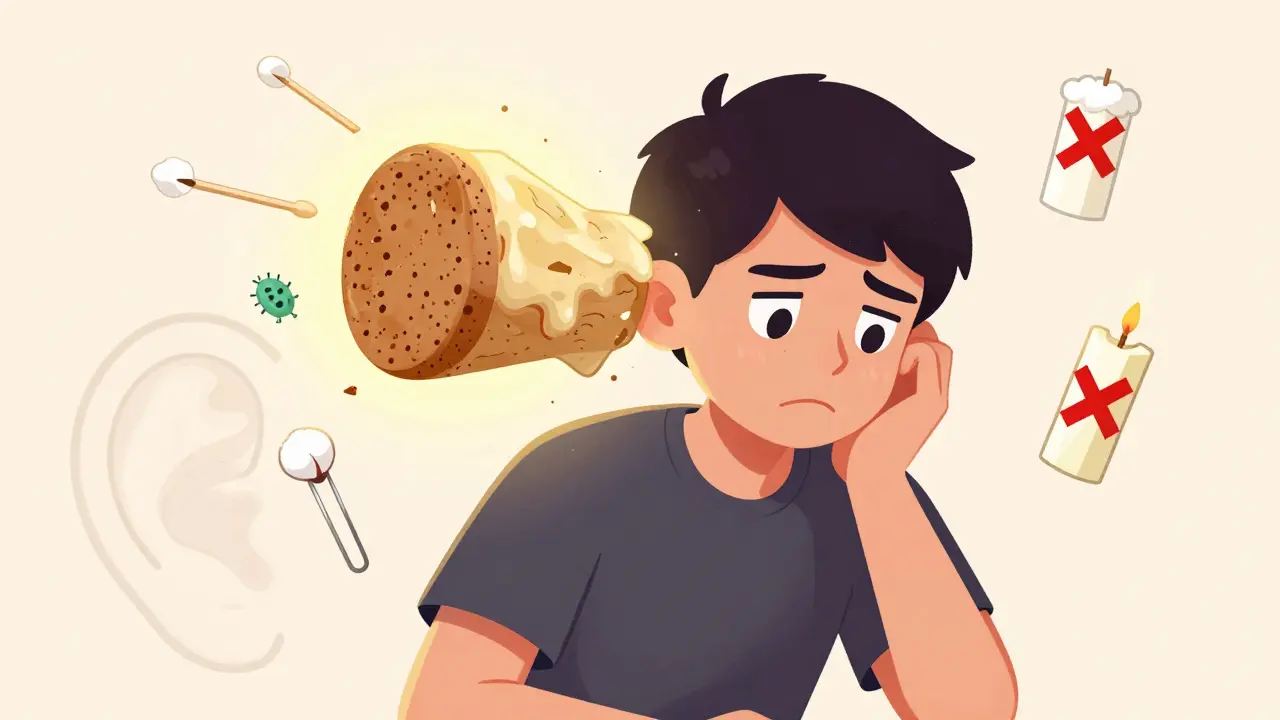
Earwax, or cerumen, isn’t dirt. It’s a natural substance made by glands in your ear canal to trap dust, bacteria, and tiny particles before they reach your eardrum. Most of the time, your ears clean themselves-jaw movement from talking and chewing slowly pushes old earwax out. But sometimes, it builds up, hardens, and blocks the canal. That’s earwax impaction. It’s not rare. About 6% of adults deal with it, and for people over 65, the rate jumps to 14%. If you use hearing aids, your risk goes up even higher-nearly 40% of users experience it.
The problem isn’t the wax itself. It’s when it gets stuck. You might not notice at first. But as the blockage grows, you start to feel it: muffled hearing, a strange pressure, maybe even a ringing in your ear. These aren’t just annoyances. Left untreated, they can lead to infections, dizziness, or worse-damage to your eardrum.
How Do You Know It’s Impacted Earwax and Not Something Else?
Not every ear feeling is earwax. That’s why doctors don’t treat every bit of wax they see. They look for two things: visible blockage and symptoms. If your ear looks full of wax but you hear fine and feel nothing, you don’t need treatment. But if you have any of these signs, it’s likely impaction:
- Hearing loss (reported in 65% of cases)
- Earache or pain
- Feeling like your ear is plugged or full
- Ringing in the ear (tinnitus)
- Dizziness or balance issues
- Itching inside the ear
- Drainage or bad smell coming from the ear
Many people assume their hearing is getting worse with age-but it could just be wax. One study found that after professional removal, 89% of patients reported immediate improvement in hearing. That’s not just a trick. It’s physics-sound can’t travel through a solid block.
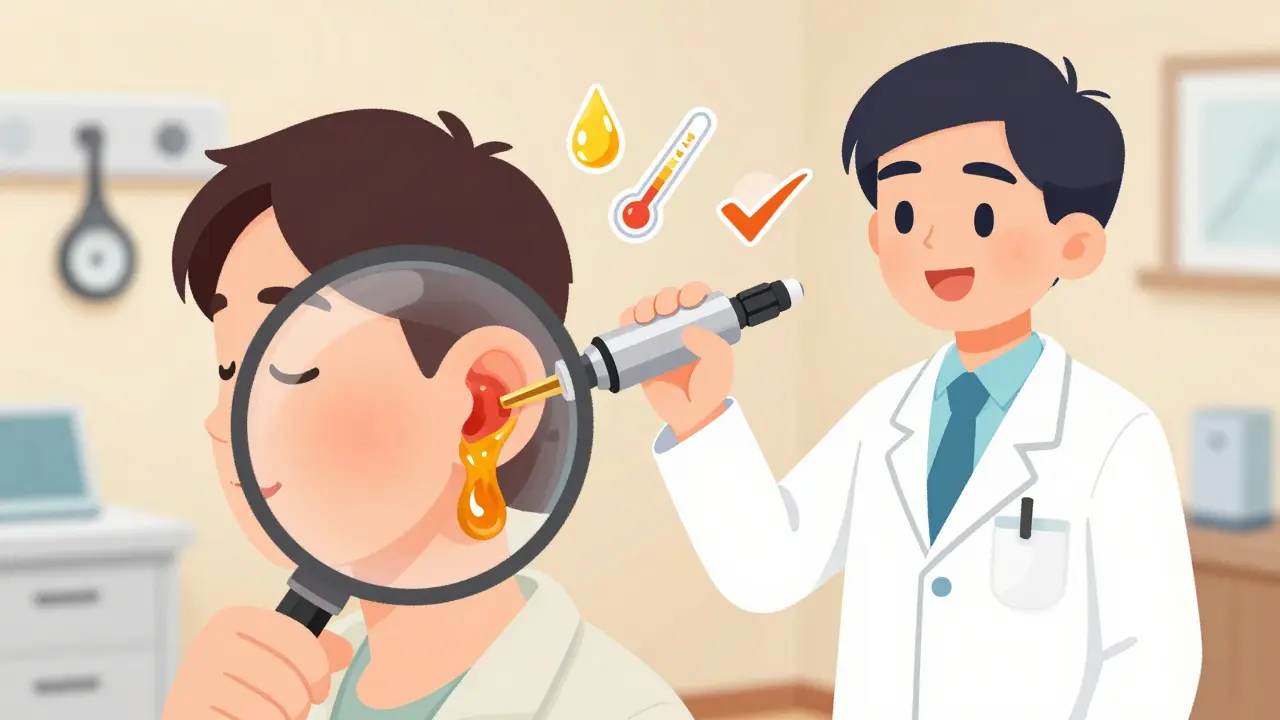
But here’s the catch: about 22% of people who think they have earwax impaction actually have something else-like an ear infection, a skin growth, or even jaw joint problems. That’s why self-diagnosis is risky. A doctor uses a special magnifying tool called an otoscope to see inside. If they can’t clearly see your eardrum because of wax, that’s confirmation.
Why Cotton Swabs Make It Worse
You’ve probably been told not to stick anything in your ear. But how many of us still do it? The truth is, cotton swabs are the #1 cause of earwax impaction. Not because wax is bad, but because swabs push it deeper. Every time you insert a swab, you’re not cleaning-you’re compacting. NHS England data shows 60-70% of all cases caused by self-cleaning are from cotton swabs.
It’s not just about pushing wax in. Swabs can also scratch the canal, cause inflammation, or even puncture the eardrum. Emergency rooms see hundreds of cases each year from people who thought they were just cleaning. One Reddit user wrote: “I used a Q-tip to dig out wax. Next day, my ear felt like it was full of water. I couldn’t hear out of it. Took me three weeks and $800 to fix.”
And it’s not just swabs. Ear scoops sold online, bobby pins, keys, even napkin corners-people try everything. TikTok is full of videos showing people pulling out huge chunks of wax. But those aren’t real-life cases. They’re curated clips. Most people don’t have that much wax. And if they did, it wouldn’t come out like that without medical tools.
What Safe At-Home Methods Actually Work?
If you’re not in pain and your hearing isn’t badly affected, you can try gentle, safe methods before seeing a doctor. But only if you don’t have a history of ear surgery, perforated eardrums, or tubes in your ears.
The best option? Oil drops. Olive oil, almond oil (if you’re not allergic), or mineral oil. Here’s how:
- Lie on your side with the affected ear facing up.
- Put 2-3 drops into the ear.
- Stay like that for 5-10 minutes so the oil soaks in.
- Repeat 3-4 times a day for 3-5 days.
- After that, gently wipe the outer ear with a damp cloth. Don’t stick anything inside.
This method works in about 58-65% of cases. The oil softens the wax so it can move out naturally. It’s not magic, but it’s safe and backed by the NHS and Mayo Clinic.
Some people use hydrogen peroxide drops. They fizz-that feels like it’s working. But it can irritate the skin inside your ear and dry it out. About 15% of users report burning or discomfort. It’s less effective than oil and not recommended as a first step.
Never use ear candles. They don’t work. The FDA has warned against them for years. They’re not just useless-they’re dangerous. Between 2018 and 2022, over 12,500 injuries were reported from ear candling, including 3,000 cases of eardrum perforation.
When You Need a Doctor: Professional Removal Methods
If home methods don’t help after a week, or if you’re in pain, dizzy, or losing hearing fast, see a professional. You don’t need to wait until it’s unbearable. ENT specialists have three main ways to remove wax-and they’re all safe when done right.
1. Irrigation - Warm water or saline is gently flushed into the ear using a controlled device. It’s effective in 85% of cases. But if you’ve ever had a ruptured eardrum, this isn’t for you. The pressure can cause infection or damage.
2. Manual Removal - Using tiny tools like curettes or forceps under a microscope. This is done by trained clinicians. Success rate? 92% in one visit. It’s quick, quiet, and doesn’t involve water. Great for people with narrow ear canals or those who can’t tolerate irrigation.
3. Microsuction - The gold standard. A small vacuum gently sucks out the wax while the doctor watches through a magnifying scope. It’s dry, precise, and has the highest success rate: 96%. Complications are rare. Patients often say it’s “instant relief.” Trustpilot reviews show 92% satisfaction with this method.
Most visits take 15-20 minutes. You’re usually done in one appointment. And yes, it’s covered by most insurance plans if it’s medically necessary.
What to Avoid at All Costs
There’s a lot of misinformation out there. Here’s what you should never do:
- Don’t use cotton swabs, bobby pins, or any small object-even if it’s labeled “ear cleaner.”
- Don’t try ear candling-it’s fake, dangerous, and banned by the FDA.
- Don’t use home suction devices-they’re unregulated and can cause serious injury.
- Don’t ignore symptoms-if your hearing changes suddenly, get checked.
- Don’t assume it’s just “old age”-hearing loss from wax is often reversible.
One patient on HealthyHearing.com put it simply: “Never insert anything smaller than your elbow.” It’s crude, but it’s true.

Who’s Most at Risk?
Some people are more likely to get impacted wax than others:
- People over 65 - Wax gets drier and harder with age.
- Hearing aid users - The device blocks the natural exit path.
- People with excessive ear hair - Hair can trap wax inside.
- Those with narrow or oddly shaped ear canals - Some people are just born with canals that don’t shed wax well.
- People with developmental disabilities - They may not be able to communicate discomfort or self-clean.
If you fall into one of these groups, consider scheduling a check-up every 6-12 months. Prevention is easier than fixing damage.
What’s Changing in Earwax Care?
Things are evolving. In 2023, the FDA cleared the first prescription home device that uses ultrasonic waves to soften wax-called Eareto OtoSonic. Early trials showed 78% effectiveness. It’s not available over the counter yet, but it’s a sign that science is finally catching up to the problem.
Also, telehealth is becoming part of the solution. A 2023 study showed doctors could accurately diagnose earwax impaction over video calls 89% of the time. That means you might not need to go in person unless you need removal.
But the biggest threat? Social media. TikTok videos showing “ear scooping” have over 1.2 billion views. These aren’t medical professionals. They’re influencers. And people are copying them. Johns Hopkins researchers call this the “ear scoop epidemic.” It’s not just silly-it’s a public health risk.
Final Takeaway: Your Ears Don’t Need Cleaning
The most important thing to remember? Your ears clean themselves. You don’t need to do anything. Most people never have a problem. The real issue isn’t earwax-it’s what we do trying to get rid of it.
If you feel fine, leave it alone. If you notice symptoms, try oil drops for a few days. If nothing changes, or if you’re in pain, see a doctor. Don’t wait. Don’t experiment. Don’t listen to YouTube tutorials.
Earwax impaction is common. It’s treatable. And with the right approach, it’s completely preventable.
Can earwax impaction cause permanent hearing loss?
No, earwax impaction doesn’t cause permanent hearing loss. The hearing loss it causes is temporary and fully reversible once the wax is removed. However, if left untreated for a long time, it can lead to infections or eardrum damage, which might result in lasting issues. That’s why prompt treatment matters.
Is it safe to use hydrogen peroxide for earwax removal?
Hydrogen peroxide can help soften earwax, but it’s not the safest option. About 15% of users report irritation, burning, or itching inside the ear. It’s less effective than oil drops and can dry out the skin. If you use it, dilute it with equal parts water and don’t use it more than once a day for two days. Oil is a better first choice.
Why do I keep getting earwax buildup even though I don’t use cotton swabs?
Some people naturally produce more wax, or their ear canals are shaped in a way that doesn’t let wax exit easily. Aging, hearing aids, ear hair, or genetics can all play a role. It’s not about hygiene-it’s biology. If you’re prone to buildup, see a doctor every 6-12 months for a check-up and cleaning.
Can I use baby oil to remove earwax?
Yes, baby oil is a safe and effective option. It’s a type of mineral oil, which is recommended by the NHS and Mayo Clinic. Use 2-3 drops in the ear, lie on your side for 10 minutes, and repeat 3-4 times daily for up to 5 days. It softens wax without irritating the skin.
How long does professional earwax removal take?
A typical appointment takes 15-20 minutes per ear. Most people get complete relief in one visit. Microsuction and manual removal are quick because they’re direct. Irrigation might take a little longer if the wax is very hard and needs pre-treatment.
Are over-the-counter earwax removal kits worth it?
Some kits with carbamide peroxide (like Debrox or Murine) work well for mild cases-about 65% effective. But they’re not for everyone. If you have ear tubes, a perforated eardrum, or pain, don’t use them. Also, many kits come with instructions that are poorly written. If you’re unsure, skip them and see a doctor.
Can earwax impaction cause dizziness?
Yes. When wax presses against the eardrum, it can affect the balance organs in your inner ear. About 18% of people with impacted wax report dizziness or lightheadedness. This usually goes away within hours after the wax is removed. If dizziness lasts longer, you may need further evaluation.
Is earwax removal covered by insurance?
Yes, if it’s medically necessary. Most insurance plans cover professional earwax removal when performed by a doctor, audiologist, or ENT specialist. You may need to pay a copay. Over-the-counter drops are not covered, but they’re inexpensive and often effective for mild cases.



Prajwal Manjunath Shanthappa
3 February / 2026I can't believe people still use cotton swabs. Honestly, it's like watching someone try to clean a fish tank with a toothbrush. You're not 'cleaning'-you're engineering a blockage. The NHS data is clear: 60-70% of cases? That's not a statistic-it's a public health indictment. And don't even get me started on TikTok 'ear scooping' videos-those aren't medical procedures; they're performance art for the gullible. Someone needs to start a petition to ban Q-tips from pharmacies. Seriously. #EarWaxEmergency