Steroid-Induced Hyperglycemia Calculator
How Steroids Affect Blood Sugar
Corticosteroids like prednisone and dexamethasone can cause blood sugar spikes by increasing liver glucose production and reducing insulin sensitivity. Up to 50% of people on high-dose steroids develop high blood sugar, even without prior diabetes.
This tool estimates your risk and provides guidance based on your steroid dosage, duration, and personal risk factors. Always consult your healthcare provider before making treatment adjustments.
Input Your Details
Results
Important Notes
These estimates are based on clinical guidelines. Always follow your healthcare provider's advice for monitoring and treatment adjustments. Steroid-induced hyperglycemia can develop rapidly—monitor blood sugar at least twice daily as recommended by the NIH.
When you take corticosteroids like prednisone or dexamethasone for asthma, arthritis, or an autoimmune flare-up, your body doesn’t just fight inflammation-it also starts spiking your blood sugar. This isn’t a side effect you can ignore. Up to 50% of people on high-dose steroids develop dangerously high blood glucose levels, even if they’ve never had diabetes before. This isn’t just a numbers game. Left unchecked, it can lead to diabetic ketoacidosis, hospitalization, or even death. And here’s the twist: most patients aren’t warned about it.
How Corticosteroids Turn Your Body Into a Sugar Factory
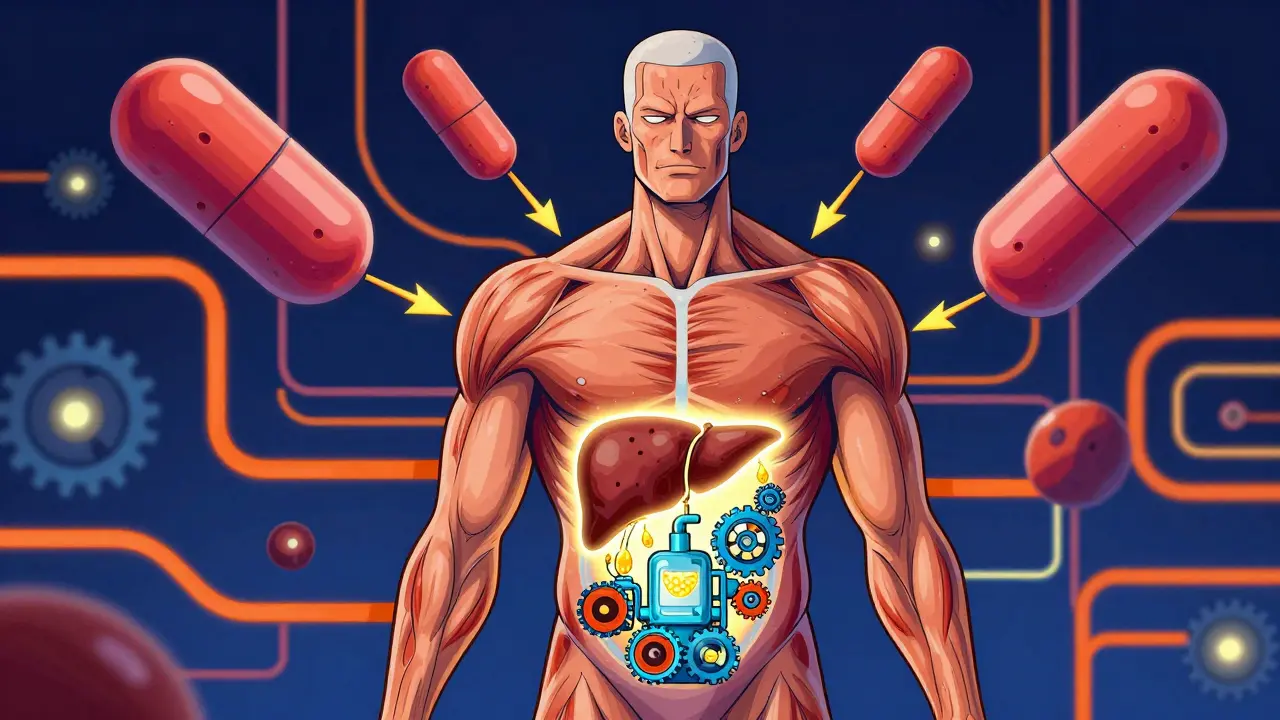
Corticosteroids don’t just reduce swelling. They hijack your body’s natural glucose control system. Think of your liver as a sugar-making factory. Normally, it releases glucose slowly when you’re fasting. But when you take steroids, that factory goes into overdrive, producing 35-40% more glucose than usual. Why? Because steroids turn on enzymes like phosphoenolpyruvate carboxykinase and glucose-6-phosphatase-tools your liver uses to make sugar from scratch, even when you don’t need it.
Then there’s your muscle. Insulin normally tells muscle cells to soak up glucose from your blood. But steroids block that signal. Glucose transporters (GLUT4) stop responding. Your muscles end up starving for fuel while your blood turns syrupy. Studies show this cuts glucose uptake by 30%. At the same time, fat cells break down faster, dumping free fatty acids into your bloodstream. These fats clog up insulin signaling even more, creating a perfect storm of resistance.
And your pancreas? It’s not just ignored-it’s silenced. Steroids reduce the number of glucose sensors (GLUT2 and glucokinase) on insulin-producing beta cells. Less glucose detection means less insulin released. Some patients see insulin output drop by 20-35%. On top of that, the flood of fatty acids from fat tissue poisons these cells over time. The result? A double whammy: your body can’t use insulin properly, and it can’t make enough of it.
Who’s Most at Risk?
Not everyone on steroids gets high blood sugar-but some people are walking into a minefield. The biggest red flags:
- Taking 7.5 mg or more of prednisone daily (3.2x higher risk)
- Using dexamethasone at 0.75 mg or more (2.8x higher risk-dexamethasone is 6-8x more potent than prednisone)
- Being over 50 years old (3.1x higher risk)
- Having a BMI of 25 or higher (2.5x higher risk)
- Having a family history of diabetes (2.7x higher risk)
- Having had gestational diabetes (4.3x higher risk)
- Having kidney disease (eGFR under 60, 3.8x higher risk)
Even more alarming: each extra 5 mg of prednisone increases your risk by 18%. And the longer you’re on it, the worse it gets. After two weeks, every additional week raises your risk by 12%. That’s why someone on a 3-week course of 40 mg prednisone for a flare-up might see their fasting blood sugar jump from 90 mg/dL to 180 mg/dL in just days.
Symptoms You Can’t Afford to Miss
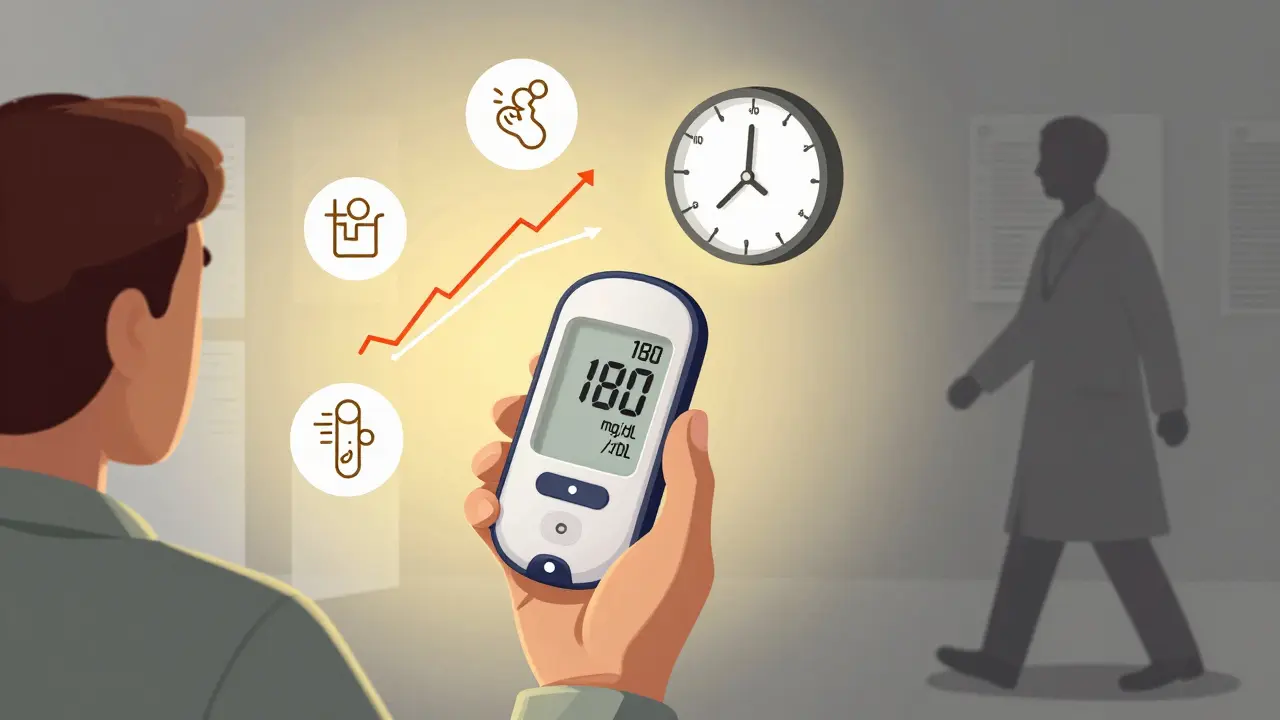
Some people feel it right away. Thirst so bad you’re chugging water all day. Urinating every hour-even at night. Fatigue that doesn’t go away with sleep. Headaches that come and go. But here’s the catch: 40% of people have no symptoms at all. Their blood sugar climbs silently, and they don’t know until a routine test or an emergency room visit.
And it gets messy. Steroids themselves cause hunger, weight gain, blurred vision, and mood swings. So when you’re already feeling bloated and irritable from the medication, how do you know if it’s the steroid or high blood sugar? You can’t. That’s why monitoring isn’t optional-it’s lifesaving.
How Doctors Should Monitor You
If you’re on prednisone 20 mg/day or more, or any equivalent high-dose steroid, your blood sugar should be checked at least twice a day. Fasting in the morning, and again 2 hours after your largest meal. The NIH recommends starting treatment if your fasting glucose hits 140 mg/dL (7.8 mmol/L) or random levels go above 180 mg/dL (10.0 mmol/L).
For people with existing type 2 diabetes, insulin needs often double during steroid therapy. One patient I spoke with-on 60 mg prednisone for a lupus flare-saw her insulin dose jump from 30 units to 75 units overnight. Her doctor didn’t warn her. She ended up in the ER with a glucose reading of 480 mg/dL.
The key is timing. Steroids don’t spike glucose right away. It peaks 4 to 8 hours after you take the dose. So if you take your steroid in the morning, your blood sugar will climb through the afternoon and evening. That’s why checking glucose only at breakfast won’t catch the worst spikes.
How to Manage It-Medically
There’s no one-size-fits-all fix. But here’s what works:
- Basal insulin is the go-to for most patients. It’s steady, long-acting, and handles the background glucose surge. For every 10 mg increase in prednisone above 20 mg/day, insulin should be raised by 20%.
- Mealtime insulin (rapid-acting) covers spikes from food. A common rule: 1 unit for every 5-10 grams of carbs.
- Sulfonylureas (like glipizide) can help by forcing the pancreas to release more insulin. But they’re risky. When steroids are tapered, insulin production doesn’t bounce back fast enough. This can cause dangerous lows. In fact, 37% of hypoglycemia events linked to steroid use happen during tapering.
- GLP-1 agonists (like semaglutide) are emerging as a safer alternative. They reduce glucose production, slow digestion, and help insulin work better-all without causing lows. Early trials show a 28% lower risk of hypoglycemia compared to insulin.
The big mistake? Trying to use oral meds designed for type 2 diabetes. Metformin helps with insulin resistance, but it doesn’t fix the lack of insulin. And if your pancreas is already shut down? Metformin won’t help. That’s why insulin is often the only real solution.
What Happens When You Stop the Steroids?
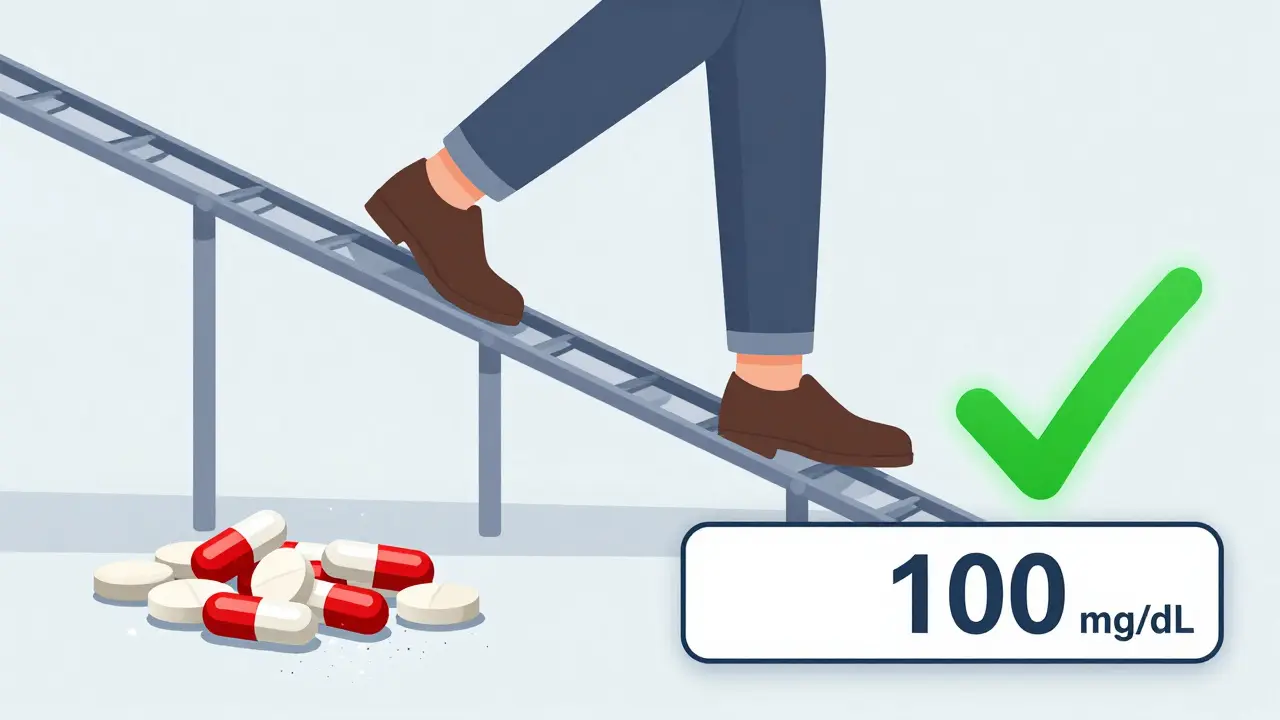
Here’s the good news: steroid-induced diabetes usually reverses. Once you stop the steroid, glucose levels start dropping within 3 to 5 days. Insulin resistance fades. Pancreatic function returns. Many people never need medication again.
But here’s the danger: doctors often don’t tell patients this. So patients keep taking metformin or sulfonylureas long after steroids are gone. That leads to repeated low blood sugar episodes-dizziness, confusion, fainting. One patient in a Reddit thread said she kept taking glimepiride for 6 months after stopping prednisone. She had three hypoglycemic seizures. No one told her the diabetes was temporary.
That’s why follow-up is critical. A fasting glucose test 1 week after stopping steroids should be standard. If it’s under 100 mg/dL, you’re likely in the clear.
What You Can Do Right Now
If you’re prescribed corticosteroids:
- Ask your doctor: “Am I at risk for high blood sugar?”
- Request a glucometer and learn how to use it.
- Check your blood sugar twice daily-morning and 2 hours after dinner.
- Keep a log: note your steroid dose, food intake, and glucose numbers.
- Don’t assume symptoms are just from the steroid. Thirst? Frequent pee? Fatigue? These could be high sugar.
- Ask if insulin or another medication should be started preemptively.
- After stopping steroids, get your glucose checked again in 7 days. Don’t assume you’re fine.
And if you’re a caregiver or family member: watch for changes. Confusion, extreme thirst, or unusual fatigue aren’t just “being tired from meds.” They could be signs of a medical emergency.
The Bigger Picture
This isn’t rare. About 1-2% of people take systemic steroids every year. That’s millions. In hospitals, up to 60% of patients on high-dose steroids develop hyperglycemia. It adds over two days to hospital stays and costs thousands per case. Primary care doctors miss it in 35% of long-term users. And the problem is growing. Steroids are now used in cancer therapies like CAR-T, where hyperglycemia hits 75-85% of patients.
There’s hope on the horizon. New drugs called tissue-selective glucocorticoid modulators (like XG-201) are in trials. They block inflammation without wrecking metabolism. Early results show a 65% drop in hyperglycemia. But until those are widely available, we’re stuck managing the damage.
The bottom line: corticosteroids save lives. But they also create a silent metabolic crisis. Awareness, monitoring, and timely intervention aren’t optional. They’re the difference between a manageable side effect and a life-threatening complication.
Can corticosteroids cause diabetes in someone who’s never had it before?
Yes. This is called steroid-induced diabetes. It happens when steroids disrupt insulin production and increase insulin resistance. Up to 50% of people on high-dose steroids develop high blood sugar-even if they had no prior history of diabetes. It’s not permanent in most cases, but it can be dangerous if not caught early.
How soon after starting steroids does blood sugar rise?
Blood sugar can start climbing within 24-48 hours of starting a high dose. The peak effect usually occurs 4-8 hours after taking the steroid, especially if taken in the morning. That’s why checking glucose in the afternoon or evening is often more telling than just fasting levels.
Is insulin the only treatment for steroid-induced hyperglycemia?
Insulin is the most reliable and widely used treatment, especially for moderate to severe cases. Oral medications like metformin or sulfonylureas are less effective because steroids suppress insulin production. Sulfonylureas can even cause dangerous low blood sugar when steroids are tapered. GLP-1 agonists are emerging as a safer alternative, but insulin remains the gold standard for rapid control.
Do I need to keep taking diabetes meds after I stop steroids?
Usually not. In most people, blood sugar returns to normal within 3-5 days after stopping steroids. But many patients are never told this, so they keep taking pills like metformin or glipizide-leading to low blood sugar. Always get a fasting glucose test 1 week after stopping steroids. If it’s under 100 mg/dL, you likely don’t need medication anymore.
Why don’t doctors always warn patients about this risk?
Many providers focus on the primary condition being treated-like asthma or arthritis-and overlook the metabolic side effects. Studies show 35% of primary care patients on long-term steroids aren’t monitored for glucose. Also, symptoms overlap with steroid side effects (hunger, fatigue, weight gain), making it easy to miss. But patient surveys show 68% weren’t warned at all. Proactive monitoring saves lives.
Are there any new treatments on the horizon?
Yes. New drugs called tissue-selective glucocorticoid receptor modulators are being tested. One, XG-201, reduces inflammation without triggering high blood sugar-cutting hyperglycemia risk by 65% in early trials. Also, GLP-1 agonists are proving safer than insulin for some patients, with fewer lows. These aren’t widely available yet, but they represent a major shift toward preventing the problem instead of just treating it.



Gloria Ricky
10 February / 2026I was on prednisone for 3 weeks for my lupus and had no idea my blood sugar was climbing. I thought I was just extra tired from the meds. Started chugging water like it was waterpark season and peeing every 20 mins. My doc never mentioned it. I wish I’d known to grab a glucometer. Now I’m paranoid about every side effect lol.