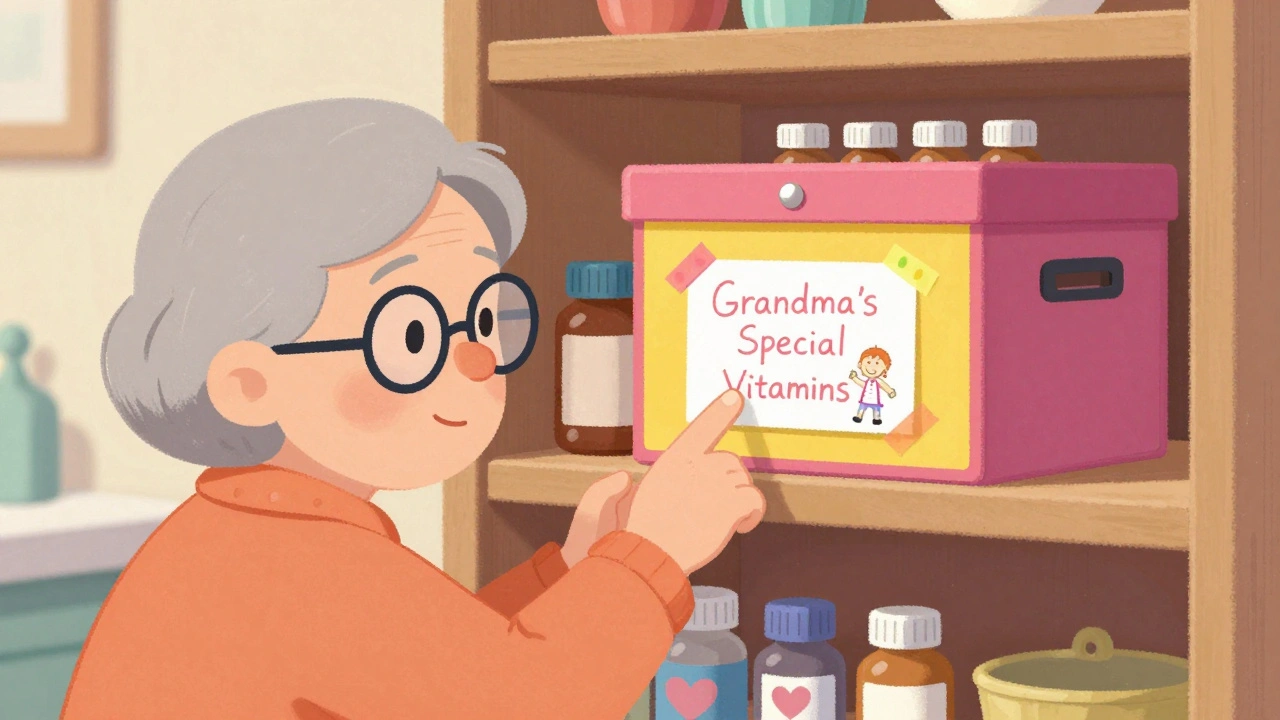
Every year, more than 58,000 children under five end up in the emergency room because they got into medicine they weren’t supposed to. And in nearly four out of ten of those cases, the medicine came from a grandparent’s purse, nightstand, or kitchen counter. It’s not because grandparents are careless-it’s because they don’t realize how easily a curious toddler can find and open a pill bottle. Most grandparents take multiple medications daily. They keep them where it’s convenient: next to their coffee mug, in their purse, on the bathroom counter. To them, it’s just part of daily life. But to a child, those bottles look like candy. And they can open them faster than you think.
Why Grandparents Are at the Center of This Problem
Grandparents are more than just babysitters-they’re caregivers. One in eight U.S. grandparents lives with a grandchild under 18. And nearly 34% of them take prescription medications every day. That’s more than double the rate of parents in their 30s and 40s. With an average of 4.7 medications per day, it’s easy for bottles to pile up. Many don’t even realize their own meds are a danger. A 2023 survey found that 36% of grandparents believe child-resistant caps are enough to keep kids safe. But here’s the truth: 30% of 4-year-olds can open those caps in under five minutes. That’s not a flaw in the cap-it’s a flaw in the assumption.And it’s not just prescriptions. Over-the-counter painkillers, cough syrups, vitamins, and even topical creams can be deadly if swallowed. One teaspoon of liquid acetaminophen can cause liver failure in a toddler. A single aspirin tablet can trigger Reye’s syndrome. These aren’t hypothetical risks-they’re real, documented emergencies.
What Grandparents Are Doing Right (and Wrong)
It’s easy to blame, but the data shows most grandparents want to do better. In fact, 87% say they’re deeply concerned about their grandchild’s safety. That’s higher than the 63% of parents who say the same. The problem isn’t motivation-it’s knowledge and habits.Here’s what’s happening:
- 29% transfer medications from original bottles into weekly pill organizers-often without child-resistant caps.
- 12% keep prescriptions on nightstands or dressers-right within arm’s reach of a crawling baby.
- 31% carry pills in purses, backpacks, or tote bags during visits.
- Only 22% use locked storage, compared to 58% of parents.
But here’s the good news: when grandparents get clear, simple, non-judgmental guidance, they change. In one study, after a 15-minute conversation with a nurse using the PROTECT campaign’s materials, safe storage jumped from 39% to 78% in just two months. And the changes stuck.
The Four Safe Storage Rules Every Grandparent Needs to Know
There’s no need for complicated systems. Just four rules, repeated often, make all the difference.- Keep it high and locked. Medicine should be stored above 4 feet-out of reach and out of sight. Use a cabinet with a latch that requires 15 pounds of force to open. That’s more than most toddlers can manage. A simple $10 childproof lock from the hardware store works better than most expensive safes.
- Keep it in the original bottle. Never move pills into pill organizers, snack bags, or empty candy containers. Those are death traps. Original bottles have child-resistant caps, clear labels, and expiration dates. They’re designed for safety.
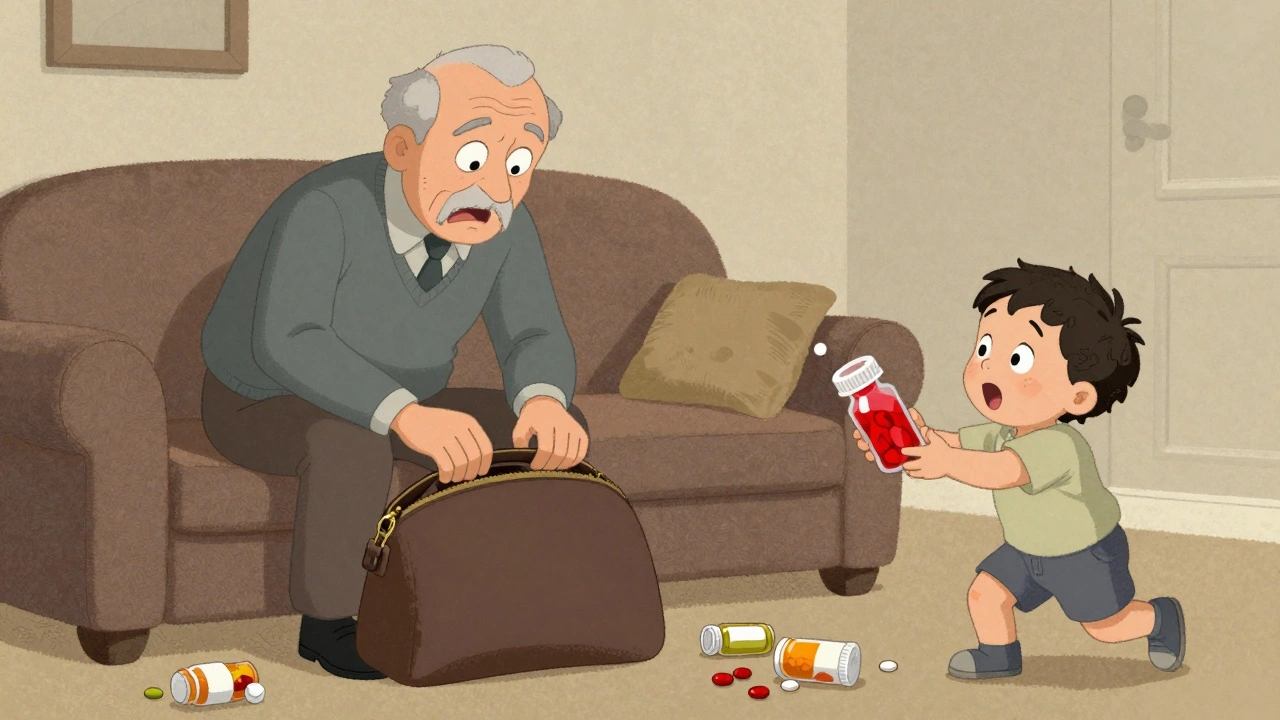
- Never leave it in a purse or bag. Grandparents often carry meds on the go. But if your purse is on the floor, on a chair, or in the backseat of a car, it’s not safe. Use a small lockbox that fits in a drawer or on a high shelf. Many pharmacies give them out for free.
- Dispose of what you don’t need. Expired, broken, or unused meds are just waiting to be found. Take them to a pharmacy drop-off box-don’t flush them or toss them in the trash. Most pharmacies offer free disposal, and it only takes five minutes.
How to Talk to Grandparents Without Making Them Feel Guilty
The biggest barrier isn’t ignorance-it’s defensiveness. Many grandparents hear “you’re putting the kids at risk” and shut down. That’s why the most successful programs avoid blame and focus on teamwork.Use phrases like:
- “Let’s make sure our grandkids are safe when they visit.”
- “I know you’ve been doing this for years-let’s make it even safer.”
- “I found this great tip from the pharmacist-wanna try it together?”
Parents, you can help by offering to install a lockbox during your next visit. Bring one along. Show them how it works. Say, “I got this for you-no charge. I just want you to feel confident when the kids come over.” That kind of support changes behavior faster than any warning.
Teach Kids, Too-But the Right Way
You might think, “I’ll just teach my grandchild not to touch medicine.” But that’s not enough. Kids don’t understand “don’t touch.” They understand “this is for adults.”Use the CDC’s three-step safety talk:
- “Medicine is not candy.” (Say it with a serious face. Don’t joke about it.)
- “Only adults give medicine.” (Even if Grandma says it’s OK, it’s not.)
- “If you find medicine, tell an adult immediately.” (Reward them for telling-don’t punish them for finding.)
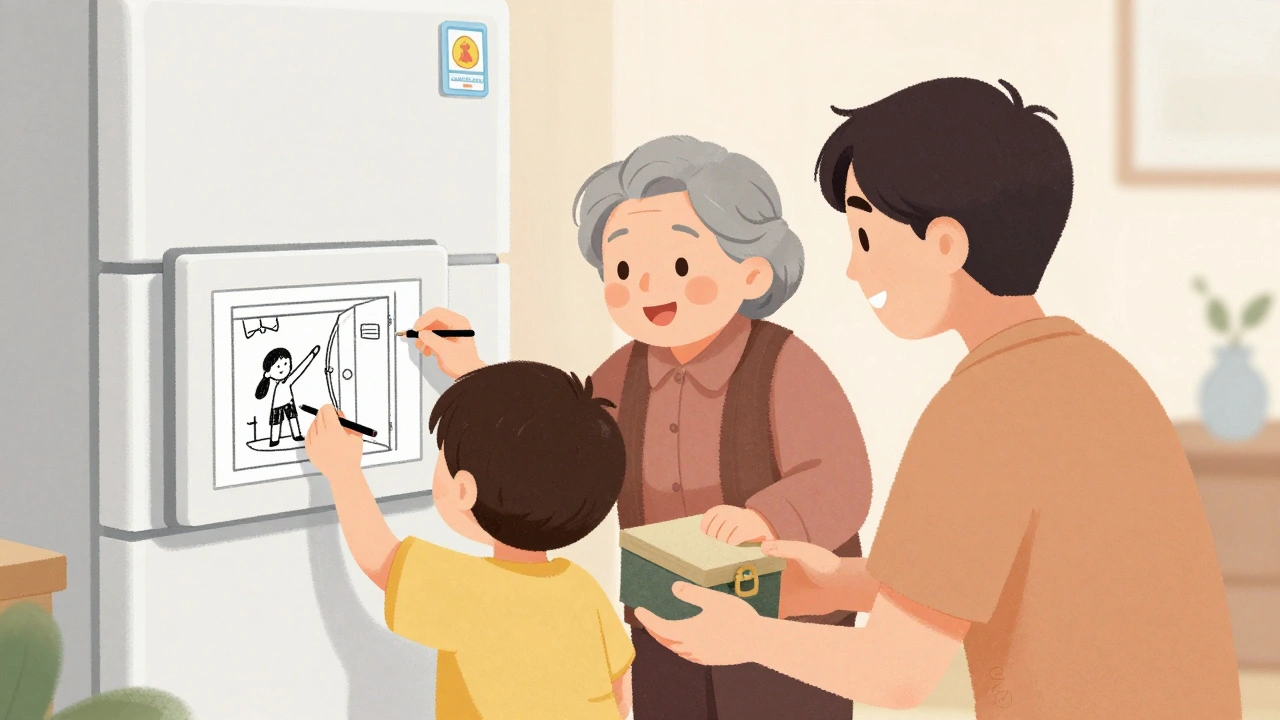
Make it fun. Let them draw a picture of “Grandma’s special vitamins” in a locked box. Hang it on the fridge. Turn it into a game: “Who can find the medicine safe?” (Hint: it’s the one with the lock.) Kids remember what they see-and what they help create.
What Works: Real Stories from Real Families
One grandmother, ‘GrandmaJen42,’ shared on Reddit: “My 3-year-old grabbed my blood pressure pills from my purse. I caught him just in time. Now I keep them in a locked box in the closet. I tell him they’re my special vitamins-only for grown-ups. He actually checks with me now before touching anything.”Another grandfather, ‘PapaRay77,’ resisted at first. “My wife said it was insulting to lock up our meds,” he said. But after a pharmacist showed him how many kids get hurt every day, he changed his mind. “I didn’t realize how many bottles I had lying around. Now we have three lockboxes. My grandkids don’t even ask anymore.”
AARP’s ‘Safety at 65+’ workshops saw participation jump 79% in six months after adding simple lockboxes and printed reminders. Pharmacists who offer free storage kits during medication pickups report a 78% adoption rate among seniors.
What to Do If Your Grandchild Gets Into Medicine
Even with the best precautions, accidents happen. Know what to do:- Don’t wait. If you suspect your grandchild swallowed medicine, call Poison Control immediately: 1-800-222-1222. It’s free, confidential, and available 24/7.
- Don’t induce vomiting. That can make things worse.
- Have the container handy. Tell the poison specialist what was taken, how much, and when.
- Keep the number posted. Tape it to the fridge. Save it in your phone. Give it to every caregiver.
Most poisonings are treated at home. But if your child is drowsy, vomiting, having trouble breathing, or acting strangely-go to the ER. Don’t wait. Seconds matter.
What’s Being Done-And What You Can Do Today
The CDC, AARP, and major pharmacy chains are rolling out free lockboxes, educational videos, and pharmacist-led safety checks. But these programs only work if grandparents know about them.Here’s what you can do right now:
- Ask your pharmacist for a free childproof lockbox when picking up prescriptions.
- Download the CDC’s ‘Grandparent Guardian’ toolkit-it has videos in Spanish, Mandarin, and other languages.
- Have a 5-minute conversation with your grandchild: “These aren’t candy. Only adults touch them.”
- Check your own medicine cabinet. Get rid of anything expired or unused.
- Send a quick text to your child: “I’ve put all my meds in the locked box. Let me know if you want me to send you a photo so you know where they are.”
This isn’t about fear. It’s about love. Grandparents want to protect their grandchildren. They just need the right tools-and the right words-to do it.
Why are grandparents more likely to cause pediatric medication poisonings than parents?
Grandparents often take more medications daily-on average 4.7 compared to 2.1 for parents. They’re also more likely to store pills in convenient but unsafe places like nightstands, purses, or kitchen counters. Many believe child-resistant caps are enough, but 30% of 4-year-olds can open them in under five minutes. Plus, grandparents are less likely to use locked storage (only 22% do) compared to parents (58%).
Can I just rely on child-resistant caps to keep my grandkids safe?
No. Child-resistant caps are designed to slow kids down-not stop them. Testing shows that 30% of 4-year-olds can open them in under five minutes. Many toddlers learn to twist, push, or even use a spoon to pop them open. The only reliable way to keep medicine safe is to store it in a locked container, out of reach and out of sight.
What should I do if my grandchild swallows medicine?
Call Poison Control immediately at 1-800-222-1222. Don’t wait for symptoms. Don’t try to make them vomit. Have the medicine container ready so you can tell them what was taken and how much. Most poisonings can be treated at home, but if your child is drowsy, vomiting, having trouble breathing, or acting strangely, go to the ER right away.
How can I talk to my grandparent about medicine safety without offending them?
Avoid blame. Use phrases like, “Let’s keep our grandkids safe,” or “I found this great tip from the pharmacist-want to try it together?” Offer to install a lockbox during your next visit. Bring one as a gift. Grandparents respond better to support than criticism. Most want to do the right thing-they just need help remembering how.
Are there free resources to help grandparents store medicine safely?
Yes. Many pharmacies give out free childproof lockboxes when you pick up prescriptions. The CDC offers a free ‘Grandparent Guardian’ digital toolkit with videos in multiple languages. AARP and the PROTECT Initiative also provide printable guides and refrigerator magnets with Poison Control’s number. Check with your local pharmacy or senior center-they often have these materials on hand.



Paul Dixon
10 December / 2025Man, I never thought about this until my niece almost swallowed my grandma’s blood pressure pills. She thought they were Skittles. Now I keep all meds in a locked box on the top shelf. Best $12 I ever spent. 🤦♂️