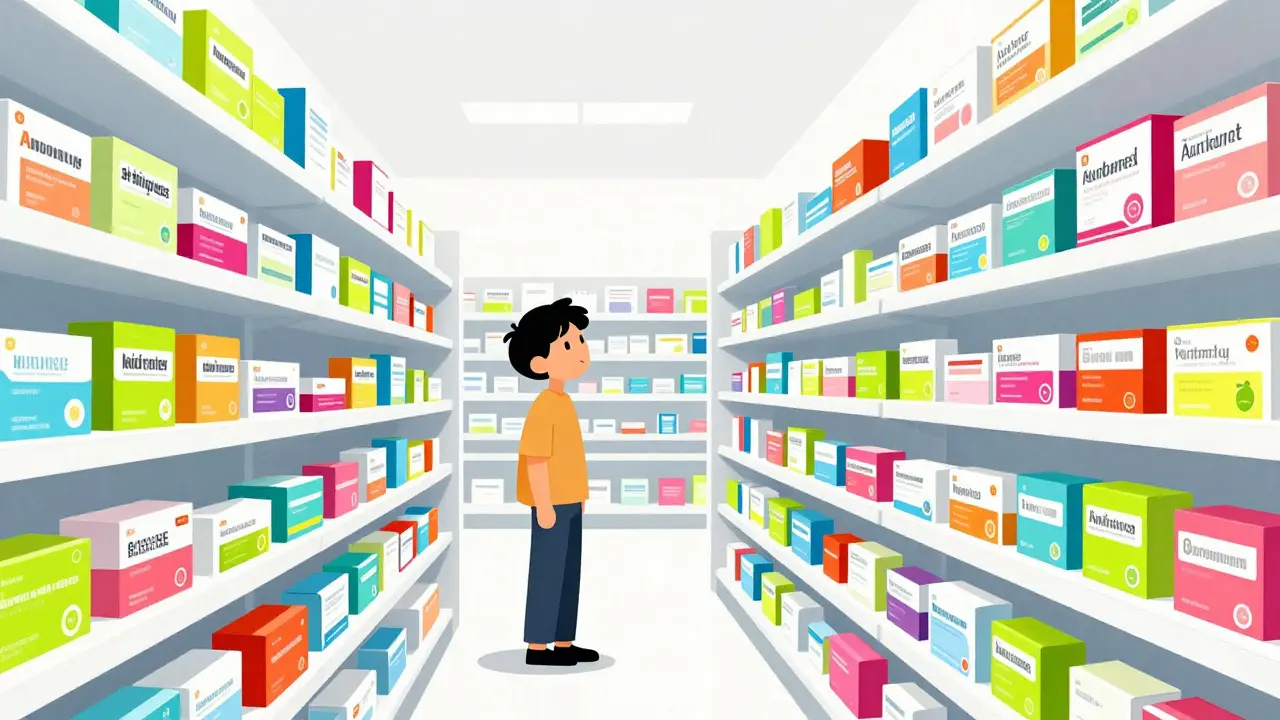
You're standing in the pharmacy aisle, staring at a wall of colorful boxes, wondering if a $10 bottle of pills can do the same job as a medication your doctor would prescribe. It's a common dilemma. Do you just grab the otc medications and hope for the best, or is it time to make an appointment and get a professional script? The choice isn't just about cost or convenience; it's about the strength of the drug, how it's regulated, and whether your symptoms are actually what you think they are.
The basic split comes down to a simple question: does this require a professional diagnosis to be safe and effective? If the answer is no, you're in the realm of over-the-counter options. If the answer is yes, you need a prescription. Understanding where that line is drawn can save you from a wasted trip to the store or, more importantly, a dangerous medical mistake.
The Big Difference: How Drugs Get to Your Shelf
Before looking at specific illnesses, it's worth understanding why some drugs are locked behind a pharmacy counter while others are sold next to the greeting cards. The FDA is the federal agency responsible for protecting public health by ensuring the safety, efficacy, and security of pharmaceuticals. They handle these two categories very differently.
Prescription drugs go through a rigorous process called the New Drug Application (NDA). This is basically a deep dive into clinical trials to prove the drug works and to map out every possible side effect. Because these drugs are often more potent, the FDA requires a licensed provider to oversee their use.
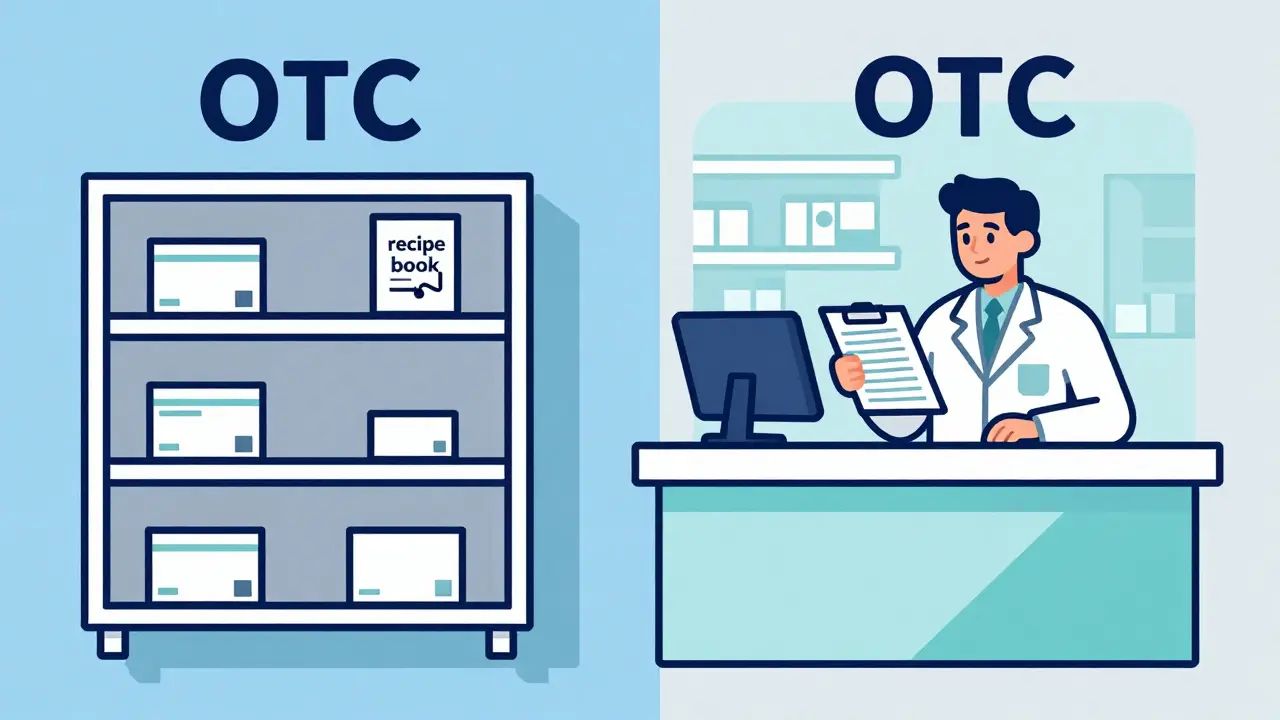
On the other hand, most OTC medications are governed by the OTC Drug Monograph system. Think of a monograph as a public "recipe book." If a manufacturer follows the approved formula, ingredients, and labeling for a specific condition, they don't need a separate new application for every product. This is why you see dozens of different brands of ibuprofen that all do exactly the same thing.
Strength and Potency: More Isn't Always Better
One of the biggest misconceptions is that a prescription version of a drug is just a "stronger" version of the OTC one. While often true, it's more about the concentration of the active ingredient. Take Hydrocortisone, a common steroid used for skin rashes. You can buy a 1% concentration at any drugstore. But if you have a severe inflammatory reaction, a doctor might prescribe a 2.5% version. That small jump in percentage makes a massive difference in how effectively the drug penetrates the skin and suppresses inflammation.
The same logic applies to heartburn relief. An OTC dose of certain acid blockers might be 75 mg, whereas a prescription dose could be 150 mg or even 300 mg. If you try to treat a severe, chronic condition with the OTC dose, you might find it doesn't touch the pain, leading you to take more than the recommended dose-which is where things get risky.
| Feature | OTC Medications | Prescription Drugs |
|---|---|---|
| Accessibility | Supermarkets, gas stations, pharmacies | Licensed pharmacies only |
| Approval Process | FDA Monographs (Standardized recipes) | New Drug Application (NDA) |
| Potency | Lower concentration of active ingredients | Higher concentration / Specialized formulas |
| Oversight | Self-managed by consumer | Monitored by healthcare provider |
| Cost | Out-of-pocket (often cheaper generics) | Variable (often insurance-covered) |
When to Stick With OTC Options
You should reach for the OTC shelf when your symptoms are mild, moderate, and easy to identify. If you've had a cold before and you recognize the scratchy throat and runny nose, an Antihistamine like Claritin or Zyrtec is usually plenty. These are designed for "self-diagnosable" conditions-things that aren't life-threatening and don't require a blood test to identify.
For example, the American Migraine Foundation suggests using OTC analgesics like Acetaminophen (Tylenol) or Ibuprofen (Advil) if your headaches happen less than 10 days a month. These options are great for the occasional tension headache or the mild pain that comes with a flu. They are accessible, generally safe when used as directed, and get the job done without needing a doctor's visit.
When It's Time to Call the Doctor
The danger of the "DIY" approach is misdiagnosis. If you treat a persistent cough with OTC syrup for two weeks and it doesn't go away, you aren't solving the problem; you're just masking it. Generally, if symptoms persist beyond 7 to 10 days, or if they suddenly worsen, it's time to switch to a prescription path.
Prescription drugs are essential for conditions that require precise monitoring, such as Hypertension or diabetes. You can't "self-treat" high blood pressure with an OTC pill because the dosage needs to be calibrated to your specific body weight, age, and kidney function. A mistake here isn't just a failed treatment; it's a stroke or heart attack risk.
Consider the difference in migraine treatment. While an OTC pill might help a dull ache, someone with a severe migraine attack needs Triptans. These are prescription-only medications that target the specific blood vessels and nerves in the brain. They work faster and more effectively for severe attacks than any oral OTC remedy ever could.
The 'Rx-to-OTC Switch': Why Things Change
You might notice that some drugs you used to need a prescription for are now available on the open shelf. This is called the "Rx-to-OTC switch." It happens after a drug has been on the market for years, and the FDA decides that the safety profile is well-understood enough that consumers can use it without a doctor's direct supervision.
A great example is Esomeprazole (Nexium). It started as a prescription-only drug for severe heartburn. Once the data showed it was safe for general use, it moved to the OTC aisle. However, this switch can cause confusion. People often buy the OTC version thinking it's identical to their old prescription, only to find that the dosing is different or the strength is lower, leading to a feeling that the medicine "stopped working."
The most recent major shift occurred in 2023 when the FDA approved an OTC version of Epinephrine (the active ingredient in EpiPens). This was a massive win for accessibility, as it allows people to get life-saving allergy medication during an emergency without waiting for a doctor's appointment.
Common Pitfalls and How to Avoid Them
One of the biggest mistakes people make is assuming that because a drug is OTC, it's "safe" and can't have side effects. That's a myth. Even simple ibuprofen can cause stomach ulcers if taken too often, and some antihistamines can cause extreme drowsiness that makes driving dangerous.
Another trap is the price gap. Many assume OTC is always cheaper. While store-brand generics (like a $4 bottle of generic ibuprofen) are incredibly cheap, some people with comprehensive insurance find that the prescription version of a drug is actually cheaper than the OTC brand name. Always check your insurance formulary before assuming the drugstore shelf is the most economical choice.
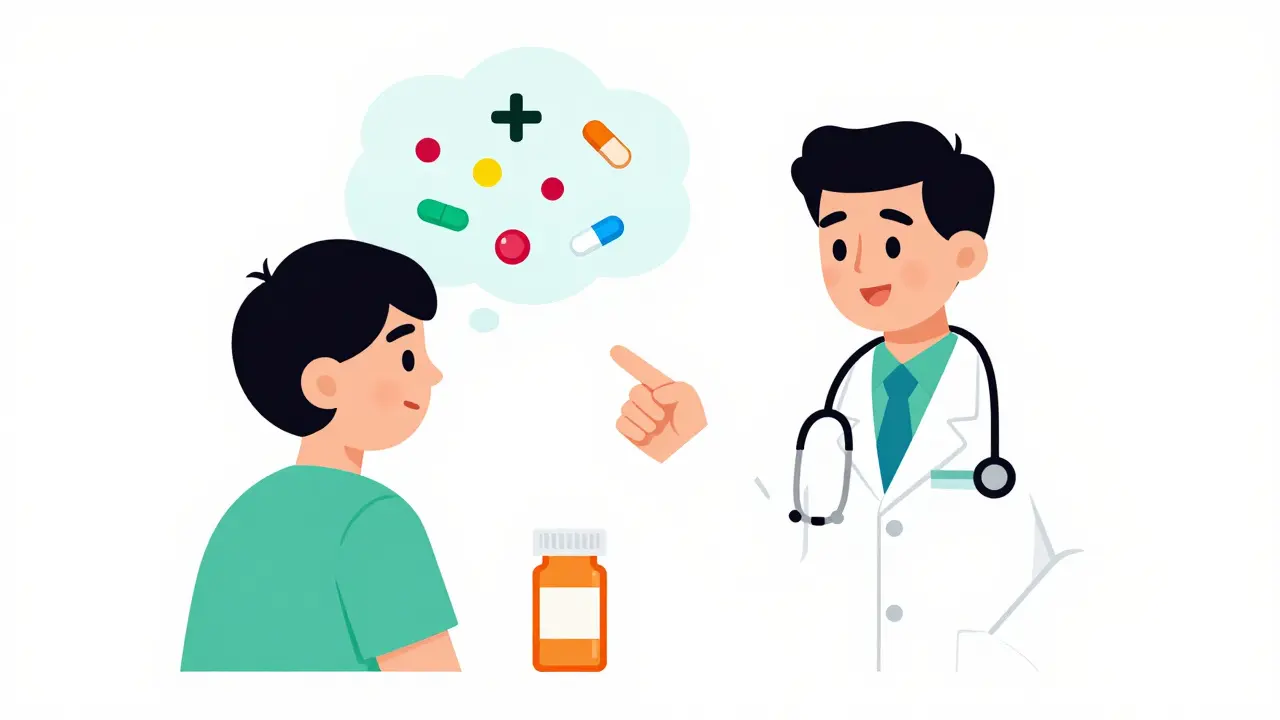
Finally, be wary of "combination" products. Some OTC cold medicines contain four different active ingredients. If you're also taking a prescription medication for blood pressure, one of those "hidden" ingredients in the cold pill could cause a dangerous interaction. This is why your pharmacist is your best resource. They are trained to spot these clashes before you ever take the first dose.
Can I just take a higher dose of OTC medicine to match a prescription?
No. Never do this. Prescription medications aren't just "higher doses" of OTC drugs; they often have different delivery mechanisms, fillers, or concentrations. Taking excessive amounts of OTC medication to mimic a prescription can lead to toxicity, organ damage (especially to the liver and kidneys), or accidental overdose.
Are store-brand generics as effective as name-brand OTC drugs?
Yes. As long as the generic version has the same active ingredient and concentration, it is chemically equivalent to the brand-name version. The FDA ensures that generic medications meet the same safety and quality standards as the original brand.
How do I know if my symptoms require a prescription?
A good rule of thumb is the "10-day rule." If you've used an OTC treatment for 7-10 days and there is no improvement, or if your symptoms are severe enough to disrupt your sleep or work, you need professional medical advice. Additionally, any "first-time" symptom-like a new type of chest pain or a severe allergic reaction-should start with a doctor, not a pharmacy shelf.
Does insurance cover OTC medications?
Generally, no. Most health insurance plans do not cover OTC medications because they are available without a prescription. However, some Flexible Spending Accounts (FSA) or Health Savings Accounts (HSA) allow you to use pre-tax dollars to buy them.
What is an Rx-to-OTC switch?
An Rx-to-OTC switch is the regulatory process where a drug previously available only by prescription is re-classified as an over-the-counter drug. This happens after the FDA determines that the drug's safety and effectiveness are well-established and that patients can safely use it without a healthcare provider's supervision.
Your Next Steps
If you're feeling unwell, start by listing your symptoms and how long they've lasted. If it's a mild, familiar issue, check the OTC labels carefully for dosage and warnings. If you have a pre-existing condition like diabetes or heart disease, call your pharmacist before buying any OTC product to check for interactions.
If you're transitioning from a prescription to an OTC version of the same drug, ask your doctor about the dosage difference. Don't assume that "one pill" of the OTC version equals "one pill" of the prescription version. A quick five-minute conversation with a healthcare provider can be the difference between a fast recovery and a wasted month of ineffective treatment.