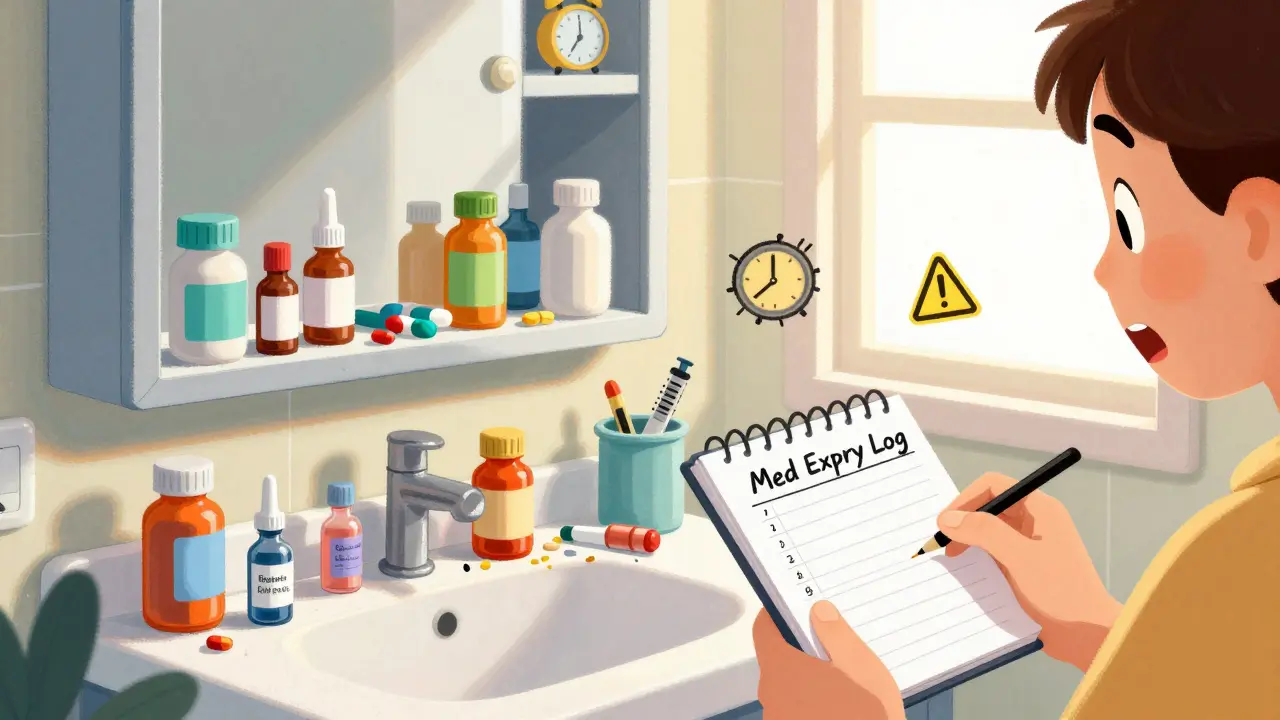
Every year, millions of households in Australia throw away perfectly good medicine-just because they didn’t know it had expired. And worse, some people keep old pills in their cabinets, hoping they’ll still work. That’s risky. Expired medications can lose potency, change chemically, or even become harmful. The good news? You don’t need fancy tech or a hospital-grade system to keep your medicine safe. With a few simple habits, you can track expiration dates like a pro-no RFID tags or cloud dashboards required.
Start with a clean cabinet
Before you start tracking, clear everything out. Take all bottles, boxes, tubes, and patches out of your medicine cabinet. Place them on a table. This isn’t just about cleaning-it’s about visibility. You can’t track what you can’t see. As you pull each item out, check the label. Look for the expiration date. It’s usually printed as MM/YY or DD/MM/YYYY. If it’s faded, scratched off, or missing entirely, write it down with a permanent marker or stick a small label on the bottle.Some medicines, like insulin or eye drops, expire soon after opening-even if the original date is still far off. For example, once opened, most insulin vials last 28 days. Eye drops? Usually 4 weeks. Check the package insert or ask your pharmacist. If you’re unsure, toss it. Better safe than sorry.
Use a simple tracking system
You don’t need an app. You don’t need a spreadsheet. A single notebook or even a sticky note on the inside of your cabinet door works fine. Write down:- The name of the medicine
- The expiration date
- The date you opened it (if applicable)
- Who it’s for (especially if you share the cabinet)
Update it every time you open a new bottle. Keep the notebook near the cabinet. Every few months, flip through it. Mark off what you’ve used up. If you haven’t touched a medicine in over a year-especially painkillers, antibiotics, or antihistamines-it’s probably time to replace it. Your body doesn’t respond the same way to old meds.
Sort by expiration date
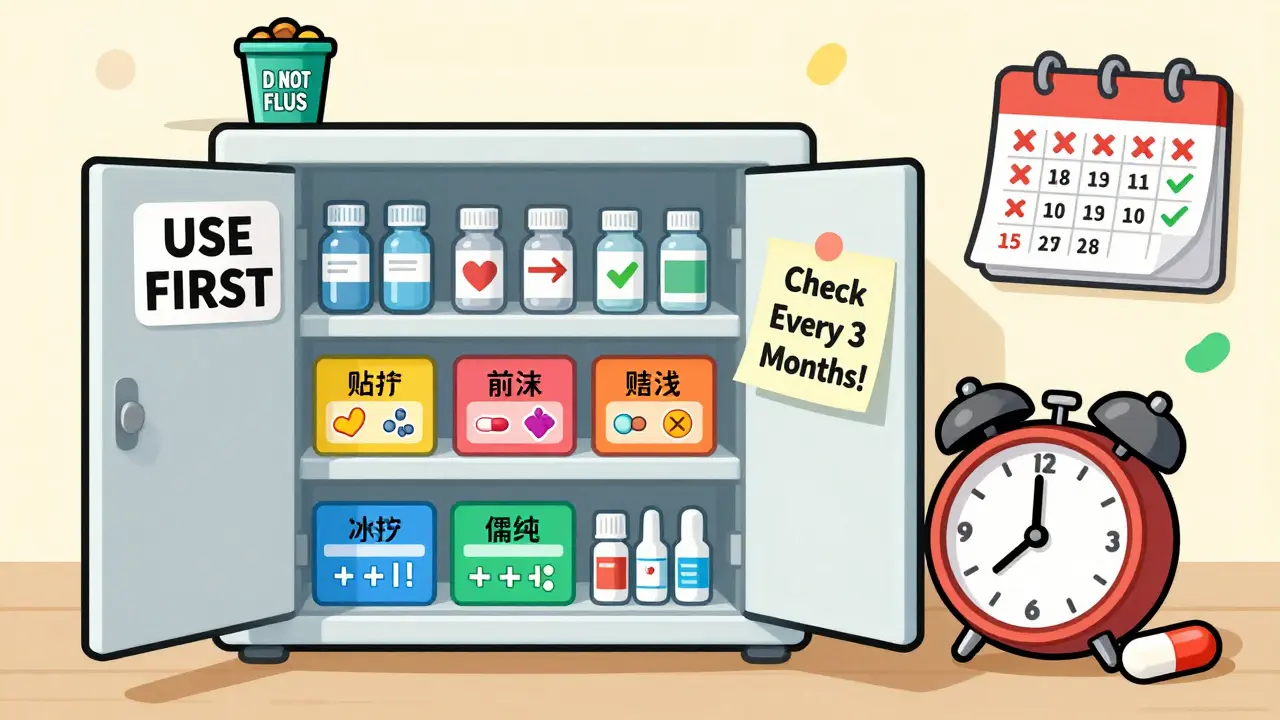
Once you’ve listed everything, rearrange your cabinet. Put the medicines with the soonest expiration dates at the front. That way, you use them first. It’s like grocery shopping-use the milk that expires tomorrow before the one that expires in two weeks. This simple trick cuts down on waste and ensures you’re always taking the freshest version of your meds.Group similar items together: pain relievers in one section, heart meds in another, first aid supplies in a small basket. Label each section with tape or a sticky note. If you have kids or elderly parents living with you, this makes it easier for everyone to find what they need without digging.
Set reminders
Your phone is your best friend here. Set a recurring reminder every 3 months: “Check medicine cabinet.” When it goes off, grab your notebook and do a quick scan. Look for anything that’s expired or close to it. If you’re using a digital calendar, color-code entries: red for expired, yellow for within 30 days, green for safe.Some people swear by calendar alerts tied to specific dates. For example, if you have a prescription that expires on 12/06/2026, set a reminder for 15/05/2026. That gives you time to refill before you run out. Don’t wait until the last day. Pharmacies can be busy, and delivery delays happen-even in Darwin.
Know what to throw out
Not all expired meds are created equal. Here’s what you should never keep past its date:- Antibiotics-these can become ineffective or even toxic
- Insulin and other injectables-they degrade quickly and can cause dangerous spikes in blood sugar
- Nitroglycerin for chest pain-this can fail when you need it most
- EpiPens-epinephrine loses potency over time
- Eye drops, nasal sprays, and liquid suspensions-bacteria can grow in them
- Any medicine that smells odd, looks discolored, or has changed texture
For most other pills-like multivitamins, antihistamines, or blood pressure meds-they may lose some strength after the date, but aren’t usually dangerous. Still, if you’re unsure, don’t take the risk. Talk to your pharmacist. They’ll tell you if it’s safe.
Dispose of expired meds safely
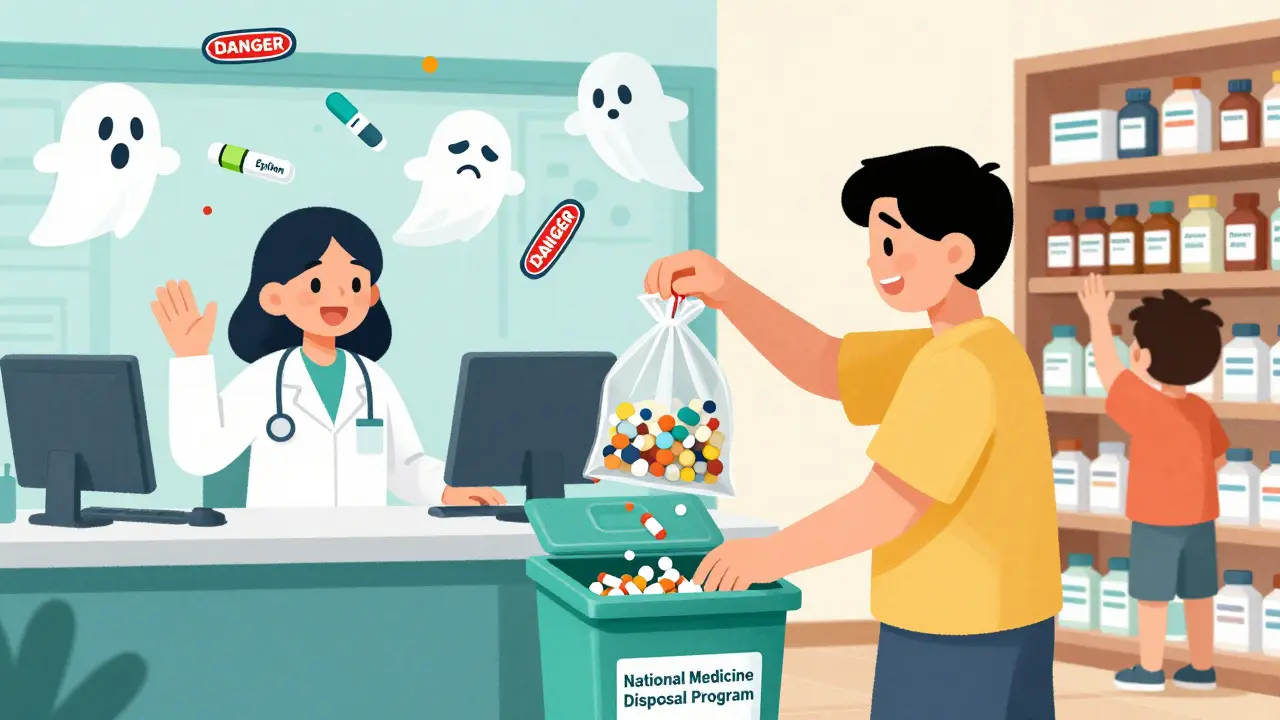
Never flush pills down the toilet or throw them in the trash without taking precautions. In Australia, the National Medicine Disposal Program offers free drop-off points at participating pharmacies. Just bring your expired meds in a sealed bag. No questions asked. You can find your nearest drop-off location on the Department of Health website.If you can’t get to a drop-off, mix the pills with something unappetizing-like coffee grounds or cat litter-put them in a sealed container, and toss them in the bin. This stops kids or pets from getting into them. Remove labels or scratch out personal info to protect your privacy.
Why this matters
In 2022, a study found that nearly 15% of medication errors in hospitals were linked to expired drugs. That’s not just a hospital problem. At home, people take old antibiotics because they “feel like they might work.” Or they give their child a leftover cough syrup from last winter. Both scenarios can lead to treatment failure, antibiotic resistance, or even poisoning.By tracking expiration dates, you’re not just organizing-you’re protecting your family. You’re saving money by not buying duplicates. You’re reducing waste. And you’re making sure that when you really need a medicine, it still works.
What to do next
Do this now: Grab your medicine cabinet. Clear it out. Write down the expiration dates. Set a reminder for 3 months from today. That’s it. You’ve just taken the biggest step toward safer, smarter medicine storage.If you’re still unsure about a specific drug, call your pharmacist. They’ve seen hundreds of these questions. They won’t judge. They’ll help.
Can I still use medicine after the expiration date?
For most solid pills like aspirin or ibuprofen, they may still be safe and effective for a year or two past the date. But for liquids, injectables, insulin, eye drops, or anything that’s been opened, don’t risk it. Potency drops over time, and bacteria can grow. When in doubt, throw it out.
How often should I check my medicine cabinet?
Every 3 months. That’s enough to catch expiring meds before they become a problem. If you’re on multiple prescriptions, do it monthly. Set a recurring phone reminder for the first day of every season-spring, summer, fall, winter.
What’s the best way to store medicines?
Keep them in a cool, dry place away from sunlight and moisture. The bathroom is a bad idea-steam and heat ruin pills. A bedroom closet or kitchen cupboard above the sink works better. Always keep them out of reach of kids and pets. Lock the cabinet if needed.
Do I need to keep the original packaging?
Yes. The box and leaflet contain important info like dosage, warnings, and expiration dates. If you transfer pills to a pill organizer, keep the original bottle as backup. Never throw away the packaging until you’ve used up the entire supply.
Can I donate unused medicine?
In Australia, you cannot legally donate prescription medicine. Even if it’s unopened, it can’t be redistributed. The only safe option is to drop it off at a pharmacy that participates in the National Medicine Disposal Program. Never give your meds to someone else.
What if I accidentally take expired medicine?
If it’s a one-time dose of a non-critical drug like an antihistamine or painkiller, you’re likely fine. But if it’s insulin, antibiotics, heart meds, or EpiPen, call your doctor or Poison Control immediately. In Australia, call 13 11 26. Don’t wait for symptoms.


Mike Dubes
4 March / 2026This is actually super helpful. I never realized how many meds I had lying around that were expired. I just threw out like 6 bottles today. Feels good to clean it out.
Also, putting the soonest-expiring stuff in front? Genius. Why didn't I think of that?