Imagine waking up with a strange tingling in your fingers or a heavy, dragging feeling in your legs. For people living with chronic kidney disease (CKD), these aren't just random symptoms-they can be warning signs of Hyperkalemia in CKD is a medical condition where serum potassium levels rise above 5.0 mmol/L because the kidneys can't efficiently remove excess potassium from the blood. While potassium is essential for your heart to beat and muscles to move, too much of it acts like a poison to the heart's electrical system. If levels climb too high, it can lead to sudden cardiac arrest. The challenge is that the very medications used to protect your kidneys and heart often push potassium levels up, leaving patients in a difficult balancing act.
Quick Guide: Potassium Management Essentials
- Target Range: Aim for serum potassium (sK) between 4.0 and 4.5 mmol/L.
- Advanced CKD Limit: Those in stages 3b-5 typically need to limit intake to 2,000-3,000 mg daily.
- Red Flags: Muscle weakness, heart palpitations, or peaked T-waves on an ECG.
- Emergency Threshold: Immediate intervention is usually required when potassium hits 5.5 mmol/L or higher.
Why Your Kidneys Struggle With Potassium
In a healthy body, the kidneys act as a sophisticated filtration system, dumping excess potassium into your urine. In CKD, this filter breaks down. As you move into advanced stages, your ability to clear potassium drops significantly. According to the 2022 Renal Association Guidelines, while only a small fraction of the general population deals with high potassium, up to 50% of people with advanced CKD face this risk.
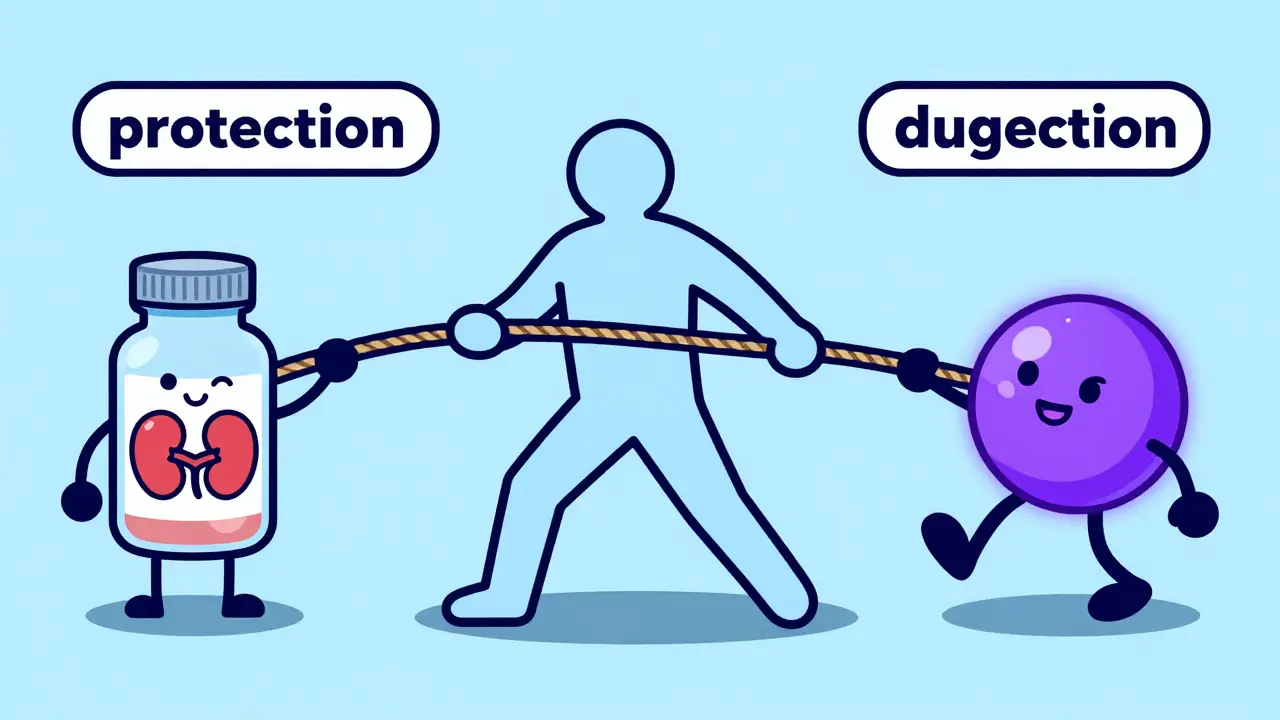
There is a specific medical irony here. To stop kidney failure from progressing, doctors prescribe RAASi (Renin-Angiotensin-Aldosterone System inhibitors). These drugs are lifesavers for heart and kidney protection, but they tell the body to hold onto potassium. This creates a therapeutic tug-of-war: you want the drug to save your organs, but the drug might raise your potassium to dangerous levels.
Dietary Limits: What to Eat and Avoid
Not all CKD patients need the same diet. If you are in the early stages (1-3a), you generally don't need strict restrictions. However, once you hit stage 3b or 5, things get tighter. The goal is to keep your daily intake between 51-77 mmol (roughly 2,000-3,000 mg).
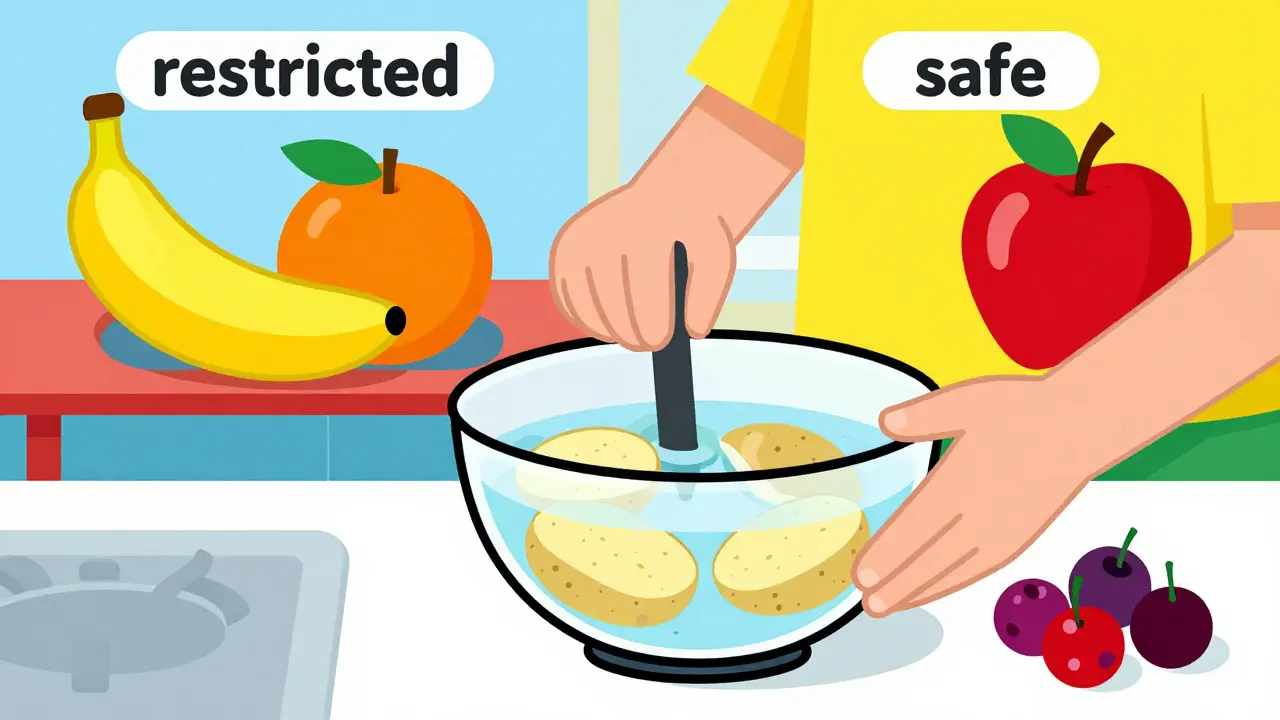
The trick isn't just avoiding "bad" foods, but understanding the density of potassium. For example, a small piece of banana contains about 422 mg of potassium per 100g, which is a huge hit to your daily limit. Potatoes are similarly dense at 421 mg per 100g. Even oranges, which seem healthy, pack 181 mg per 100g.
To make this manageable, focus on "leaching" vegetables-soaking them in water to pull out some of the potassium-and choosing lower-potassium alternatives like apples or berries. Many patients find that using a barcode-scanning app helps them track these numbers in real-time, which is far more effective than trying to guess by eye.
Emergency Treatment: When Every Minute Counts
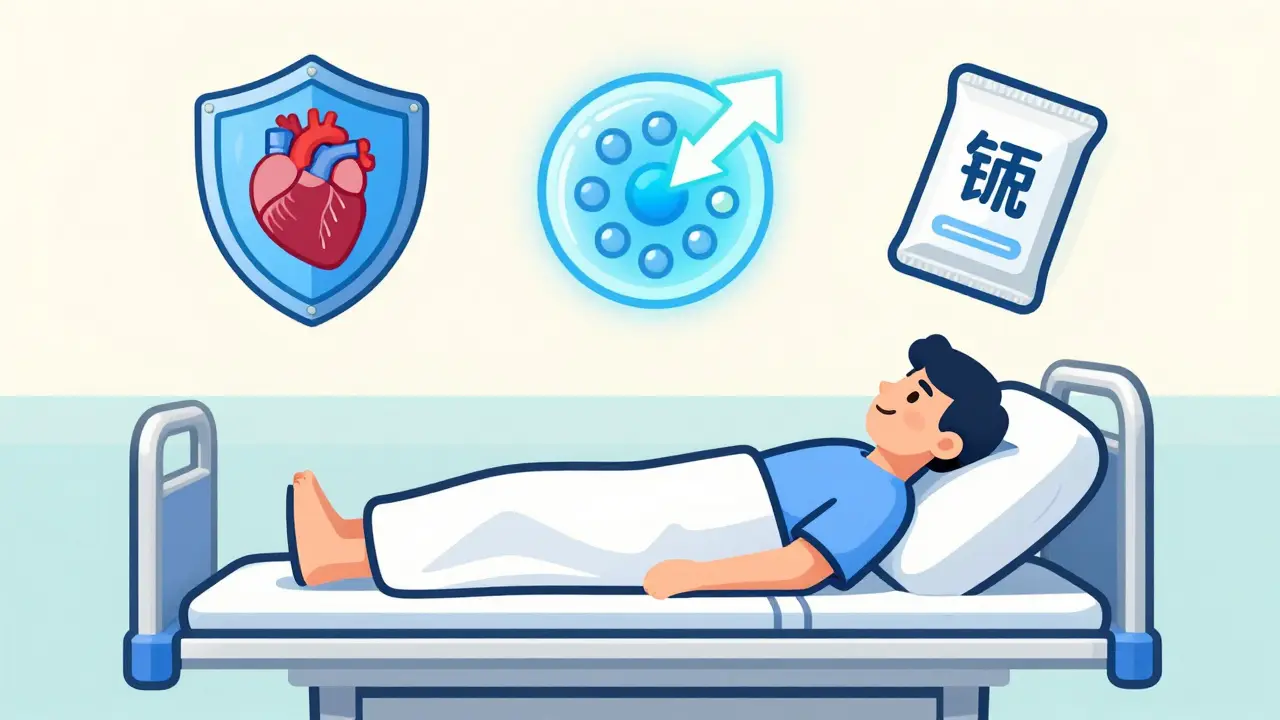
When potassium levels spike to 5.5 mmol/L or higher, it becomes a medical emergency. At this point, dietary changes are too slow. Doctors use a three-pronged attack to stabilize the patient and lower the levels quickly.
First, they protect the heart. If an ECG shows abnormalities, Calcium Gluconate is an intravenous medication used to stabilize the cardiac membrane, preventing lethal arrhythmias. It doesn't actually lower the potassium levels, but it buys time by making the heart less sensitive to the toxin.
Second, they shift potassium from the blood into the cells. An insulin-glucose protocol (10 units of regular insulin with 50% dextrose) typically works within 15-30 minutes. This "tricks" the potassium into moving inside the cells, lowering the serum concentration. Third, for those with metabolic acidosis, sodium bicarbonate is administered to help shift the balance further.
| Method | Onset Time | Primary Goal | Main Risk |
|---|---|---|---|
| Calcium Gluconate | 1-3 Minutes | Heart Protection | None (Doesn't lower K+) |
| Insulin-Glucose | 15-30 Minutes | Shift K+ into cells | Hypoglycemia |
| Potassium Binders | 1 hour to days | Remove K+ from body | GI Distress / Edema |
Modern Solutions: The New Generation of Binders
For years, the go-to for long-term management was Sodium Polystyrene Sulfonate (SPS), a traditional potassium binder that exchanges sodium for potassium in the gut. However, SPS is far from perfect. It has a known risk of colonic necrosis and can cause significant sodium overload, which is terrible for people with heart failure.
Thankfully, newer options have changed the game. Sodium Zirconium Cyclosilicate (SZC), marketed as Lokelma, is a powder that works rapidly, often reducing potassium levels within an hour. It's often the preferred choice for acute situations. On the other hand, Patiromer (Veltassa) is a more sodium-neutral binder typically used for chronic maintenance. Because it doesn't load the body with as much sodium, it's generally safer for those prone to edema.
These newer binders are a big deal because they allow patients to stay on their RAASi medications. In the AMETHYST-DN trial, nearly 78% of patients using patiromer were able to keep their maximum dose of heart-protecting drugs, compared to only 38% of those without binders. This means the binders aren't just managing a symptom; they are enabling the primary treatment for the kidney disease itself.
Pitfalls and Practical Tips for Daily Life
Managing hyperkalemia isn't just about the medicine; it's about timing and awareness. One major pitfall is drug interaction. If you are taking patiromer, you must be careful with other medications. For instance, it can reduce the absorption of levothyroxine (a common thyroid medication) by about 23% if taken too close together. The general rule is to space them out by at least 3 hours.
Another struggle is the "social isolation" that comes with a strict renal diet. It's hard to go to a restaurant or a family dinner when you have to worry if the potato salad is too high in potassium. To fight this, focus on quantity over total avoidance. You don't necessarily have to ban a food forever, but you do need to control the portion size rigorously.
Monitoring is your best defense. If you've just started a new blood pressure medication or increased your dose, you should have your potassium checked within 1-2 weeks. Once you're stable, a check every 3-6 months is standard. If you suddenly feel muscle weakness or a fluttering heart, don't wait for your next appointment-get a blood test immediately.
Can I just stop taking my blood pressure meds if my potassium is high?
You should never do this without consulting your doctor. Stopping RAASi therapies can actually increase the risk of cardiovascular events by 28% and speed up the progression of kidney disease by 34%. The goal is to use potassium binders or diet to keep the meds working, not to abandon them.
What are the most dangerous high-potassium foods?
Foods with the highest concentrations include bananas, potatoes, spinach, and avocados. Also, be wary of "salt substitutes"-many of these replace sodium with potassium chloride, which can cause a dangerous spike in serum potassium for CKD patients.
How quickly do potassium binders work?
It depends on the drug. Sodium Zirconium Cyclosilicate (SZC) is the fastest, often showing a reduction within 1 hour. Patiromer is slower, usually taking 4-8 hours to show a significant effect, making it better for long-term maintenance than emergency use.
What are the signs that hyperkalemia is becoming an emergency?
The most common signs are muscle weakness, a slow or irregular heartbeat (palpitations), and nausea. In a clinical setting, the first sign is often "peaked T-waves" on an ECG when potassium is above 5.5 mmol/L, followed by a widened QRS complex when it exceeds 6.5 mmol/L.
Is there a difference between different stages of CKD diet?
Yes. Patients in stages 1-3a usually only need a "prudent" diet without strict limits. However, those in stages 3b through 5 (who are not on dialysis) require strict limits, typically between 2,000 and 3,000 mg of potassium per day to prevent buildup.