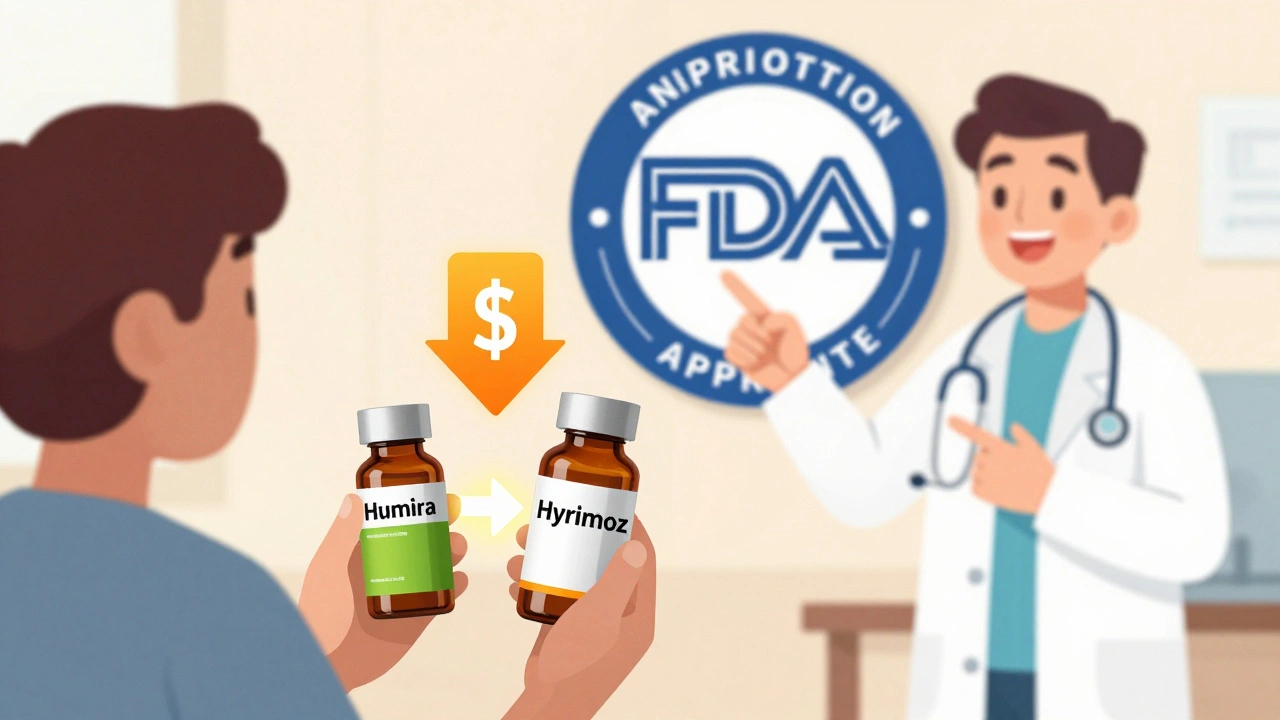
Biologic drugs save lives. They treat cancer, rheumatoid arthritis, Crohn’s disease, and other serious conditions. But they also cost thousands of dollars a month. That’s where biosimilars come in - they’re not generics, but they’re designed to do the same job at a lower price. If you’ve been told you can switch from Humira to a biosimilar, or your doctor mentioned Renflexis instead of Remicade, you’re not alone. Millions of patients are facing this decision. And understanding what biosimilars really are - and how much they actually save - can change your out-of-pocket costs and your treatment experience.
What Exactly Is a Biosimilar?
A biosimilar is a biologic drug that’s highly similar to an already-approved biologic, called the reference product. It’s not a copy. You can’t make an exact duplicate of a biologic because these drugs are made from living cells - yeast, bacteria, or animal cells. That’s different from traditional pills like aspirin or metformin, which are made from simple chemicals. Even tiny changes in the manufacturing process can affect how the drug works. So biosimilars aren’t identical - but they don’t need to be.
The U.S. Food and Drug Administration (FDA) requires biosimilars to show no clinically meaningful differences in safety, purity, or potency compared to the original. That means: same mechanism of action, same dosing, same route of administration, same side effects. The FDA approved its first biosimilar, Zarxio, in 2015. Since then, 45 biosimilars have been approved as of October 2023. These cover treatments for cancer, autoimmune diseases, and diabetes.
Think of it like this: two different brands of insulin may come from different factories, use slightly different strains of bacteria, or have minor variations in how they’re purified. But if they work the same way in your body and don’t cause more side effects, they’re considered biosimilar. The FDA uses a "totality of evidence" approach - looking at thousands of lab tests, animal studies, and human trials - to make sure.
How Are Biosimilars Different From Generics?
This is where confusion starts. Most people think "generic" means cheaper version. But generics are chemically identical to their brand-name counterparts. You can make them in a lab using exact formulas. A generic ibuprofen has the same molecule as Advil. A biosimilar? It’s like comparing two handcrafted wooden chairs made by different artisans. They look the same, feel the same, serve the same purpose - but the wood grain, the joinery, the finish might vary slightly. That’s why biosimilars can’t be automatically swapped at the pharmacy like generics.
In most U.S. states, a pharmacist can’t switch you from Humira to a biosimilar without your doctor’s OK. That’s because of their complexity. Only six biosimilars have been approved as "interchangeable" by the FDA as of November 2023. That means they can be substituted without the prescriber’s involvement - similar to how generics work. But even then, many insurers and providers still require explicit approval.
The bottom line: generics = exact chemical copies. Biosimilars = highly similar biological products made from living systems. The difference matters for how they’re regulated, prescribed, and substituted.
How Much Do Biosimilars Actually Save?
Don’t expect a 70% price drop like you get with generic pills. Biosimilars typically save 15% to 30% off the original biologic’s list price. That might seem small compared to generics - but when the original drug costs $7,000 a month, even a 20% cut saves $1,400 per month. That’s $16,800 a year.
When Humira biosimilars launched in 2023, their list prices were about 35% lower than Humira’s $7,000 monthly cost. Hyrimoz, the first interchangeable biosimilar for Humira, was priced at $5,054 per month - a 28% reduction. But list price isn’t what you pay. Insurance, rebates, coupons, and pharmacy benefit managers (PBMs) muddy the waters. Some patients still pay high copays because their plan doesn’t cover biosimilars as well as the brand.
Still, real-world savings are happening. A 2022 Arthritis Foundation survey of 1,200 patients found 72% reported lower out-of-pocket costs after switching to a biosimilar. On Drugs.com, users of Renflexis (a biosimilar to Remicade) wrote comments like, “Same effectiveness as Remicade but half the cost.” That’s not marketing - that’s patient experience.
And the savings add up fast. The RAND Corporation projected biosimilars could save the U.S. healthcare system $54 billion between 2017 and 2026. The Congressional Budget Office now estimates that could jump to $150 billion annually by 2030 - if market barriers are removed. Right now, patent lawsuits and "product hopping" (when drugmakers tweak a drug slightly to extend exclusivity) slow down biosimilar entry. That’s why adoption is higher in Europe, where biosimilars make up 84% of the filgrastim market compared to 65% in the U.S.
Are Biosimilars Safe? What Does the Science Say?
One of the biggest fears patients have: "Will this work the same? Will it cause more side effects?" The answer, backed by years of data, is yes - they work the same.
The NOR-SWITCH trial, published in The Lancet in 2016, followed nearly 600 patients with inflammatory diseases who switched from a reference biologic to a biosimilar. After 52 weeks, there was no increase in disease flare-ups or immunogenicity (the body’s unwanted immune reaction to the drug). The European Medicines Agency has tracked biosimilars since 2006 - over 16 years - with no new safety signals.
Dr. Gary Lyman, a cancer specialist at Fred Hutchinson Cancer Research Center, wrote in JAMA Oncology in 2022: "Biosimilars have demonstrated equivalent efficacy and safety profiles across multiple clinical trials involving thousands of patients." The FDA states plainly: "Biosimilars are as safe and effective as their reference products."
That doesn’t mean there’s zero risk. All biologics can trigger immune responses. But studies show biosimilars don’t increase that risk. In fact, the same immune reactions seen with the original drug appear at the same rate with the biosimilar.
One caveat: switching multiple times - say, from brand to biosimilar to another biosimilar - needs more monitoring. Dr. Almut Winterstein from the University of Florida warns that while single switches are safe, repeated switches haven’t been studied as thoroughly. That’s why many doctors prefer to pick one version and stick with it.
Why Aren’t More Patients Using Biosimilars?
They’re available. They’re proven. So why isn’t adoption higher? Three big reasons: confusion, inertia, and barriers.
First, patients are scared. A 2022 survey showed 28% of patients worried biosimilars wouldn’t work as well. Many had never heard of them before their doctor mentioned them. Education helps. Rheumatologists report spending 10 to 15 minutes per patient explaining the science. That’s time-consuming - but it works. Once patients understand the data, acceptance rates climb.
Second, doctors aren’t always confident. An ASCO survey of 350 oncologists found 78% needed 1 to 2 hours of training to feel comfortable prescribing biosimilars. The biggest hurdle? Navigating payer rules. One insurer might cover a biosimilar with a low copay, but require prior authorization. Another might only cover the brand-name drug unless the patient fails a cheaper option first.
Third, the system is stacked. Biologic manufacturers spend billions on legal battles to delay biosimilar entry. They offer deep discounts and rebates to insurers to lock in their drugs. Even when biosimilars are cheaper, insurers sometimes don’t pass the savings to patients. The Inflation Reduction Act of 2022 helped by capping Medicare Part D cost-sharing for biosimilars at 25% starting in 2024. That’s a step forward.
What Should You Do If Your Doctor Suggests a Biosimilar?
Don’t panic. Don’t assume it’s a cost-cutting trick. Ask these five questions:
- Is this biosimilar approved as interchangeable by the FDA? (Only six are as of late 2023.)
- Has this biosimilar been studied in my specific condition? (Not all biosimilars are approved for every use of the original drug.)
- What will my out-of-pocket cost be with this vs. the brand?
- Will my insurance cover it without prior authorization?
- Can we try it for a few months and monitor how I respond?
Check the FDA’s Purple Book - it’s the official list of all approved biosimilars and their reference products. Use the Biosimilars Council’s "Biosimilars By Disease" tool to see what’s available for your condition. Talk to your pharmacist. Ask if your insurer has a preferred biosimilar.
Remember: you’re not giving up quality. You’re gaining access to the same treatment at a lower price. And if you feel worse after switching? Tell your doctor. It’s rare, but if it happens, you can go back.
The Future of Biosimilars
Biosimilars are just getting started. Seven biosimilars for Stelara (ustekinumab) are under FDA review as of September 2023. That drug alone costs over $10,000 a month. If even half of those get approved, annual savings could hit billions.
Companies are also developing "biobetters" - next-gen biologics with slight improvements like longer-lasting effects or fewer injections. These won’t be biosimilars, but they’ll compete with both the original and biosimilars, pushing prices down further.
By 2027, analysts expect biosimilar adoption to rise from 25-30% to 50-60% for most products. The market is projected to grow from $9.3 billion in 2022 to $33.3 billion by 2028. That growth means more choices, more competition, and more savings.
But the biggest win isn’t the number on a price tag. It’s access. A patient with Crohn’s disease who couldn’t afford Humira can now get a biosimilar. A mother with rheumatoid arthritis can return to work. A veteran with psoriasis can manage their condition without choosing between rent and medication. That’s what biosimilars are really for.




Saurabh Tiwari
1 December / 2025bro i switched to the biosimilar for my arthritis last year and honestly? same results, way less stress on my wallet 😊