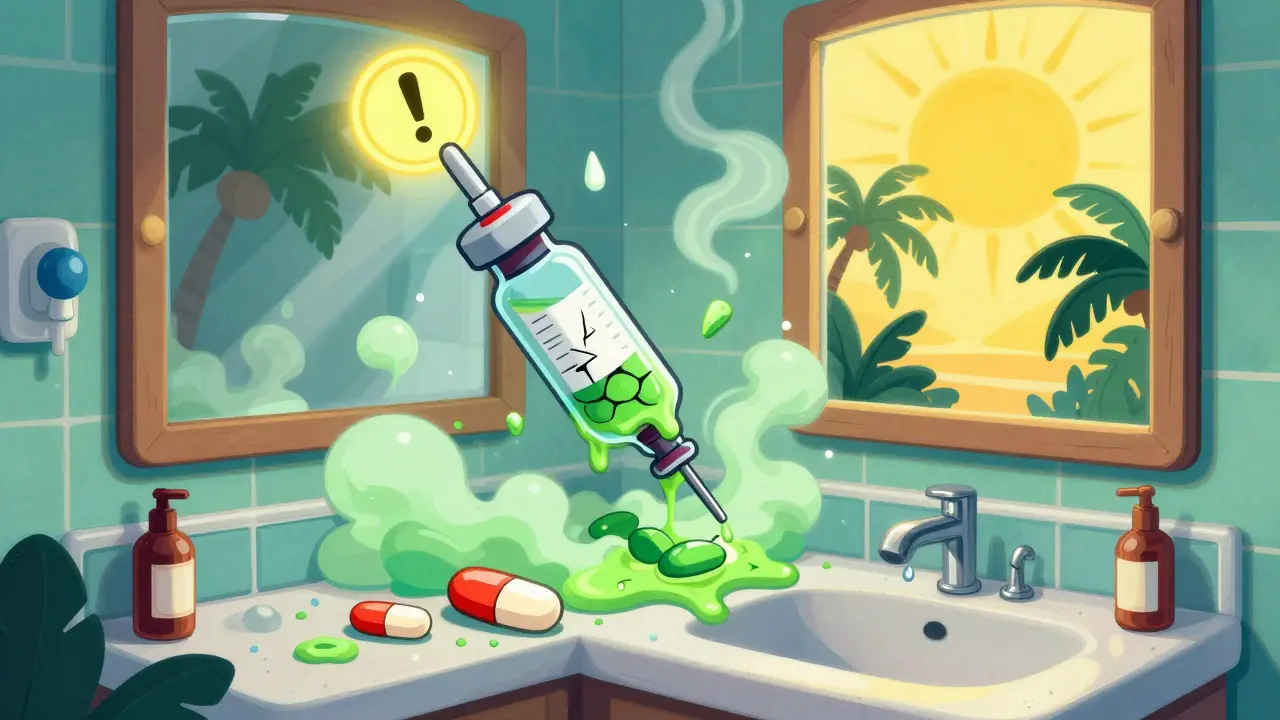
Think your medicine will last until the date printed on the bottle? That’s only true if it’s been stored right. In places like Darwin, where summer temperatures regularly hit 35°C (95°F) and humidity clings to the air like a wet towel, your pills, capsules, and inhalers might be degrading faster than you think. Medication expiration isn’t just a calendar date-it’s a promise. And that promise breaks down long before the label says so if heat and moisture are involved.
Why Heat and Humidity Are Silent Killers for Medicine
Pharmaceutical companies don’t pick expiration dates randomly. They test drugs under controlled conditions: 20-25°C (68-77°F) and 35-65% humidity. That’s the sweet spot where the chemical structure stays stable. But outside that range? Trouble starts fast. Heat speeds up chemical reactions. Humidity? It’s like pouring water into your pill. Moisture can break down coatings, cause tablets to crumble, or make capsules stick together. When this happens, the active ingredient either doesn’t dissolve properly-or worse, breaks down into something useless or even harmful. Take aspirin. When it gets damp, it turns into acetic acid (vinegar) and salicylic acid. You might not notice the smell at first, but your stomach sure will. That’s why some people report stomach irritation after taking old aspirin-it’s not the pill going bad, it’s the pill turning into something that irritates your lining.Not All Medicines Are Created Equal
Some drugs shrug off heat like it’s nothing. Most solid pills-like ibuprofen, acetaminophen, or statins-stay stable even if left in a warm room for months. Studies show they keep over 90% of their potency at 30°C (86°F). But others? They’re fragile.- Insulin: Loses up to 20% of its potency in just 24 hours at 37°C (98.6°F). For diabetics, that’s not a minor drop-it’s a risk of high blood sugar, hospital visits, even long-term damage.
- Nitroglycerin: Used for heart attacks. If it gets too warm, it breaks down so fast that it won’t work when you need it most.
- Antibiotic suspensions (like amoxicillin): These liquid antibiotics lose 30-40% of their strength in under 72 hours if left at room temperature. That’s not just ineffective-it can lead to antibiotic resistance.
- EpiPens: The auto-injector can fail mechanically above 30°C. If you’re having an allergic reaction and the device doesn’t fire? That’s life or death.
- Inhalers: The propellant inside expands under heat. At 49°C (120°F), they can explode. Yes, really.
- Biologics (like monoclonal antibodies): These are proteins. Heat above 8°C (46°F) can permanently ruin their structure. Once denatured, they’re useless.
Where You Store Medicine Is the Problem
The bathroom cabinet? Classic mistake. Showers spike humidity to 70-90%. That’s worse than a rainforest. The medicine cabinet isn’t just near water-it’s in the steam zone. The kitchen? Close to the stove, sink, or dishwasher. Temperatures there can hit 32°C (90°F) on a normal day. Add sunlight through a window? You’re baking your meds. And don’t forget the car. On a sunny day in Darwin, the inside of a parked car can hit 60°C (140°F). That’s not just hot-it’s oven territory. Leaving your insulin or EpiPen in the glove compartment for a quick errand? You just made it unsafe.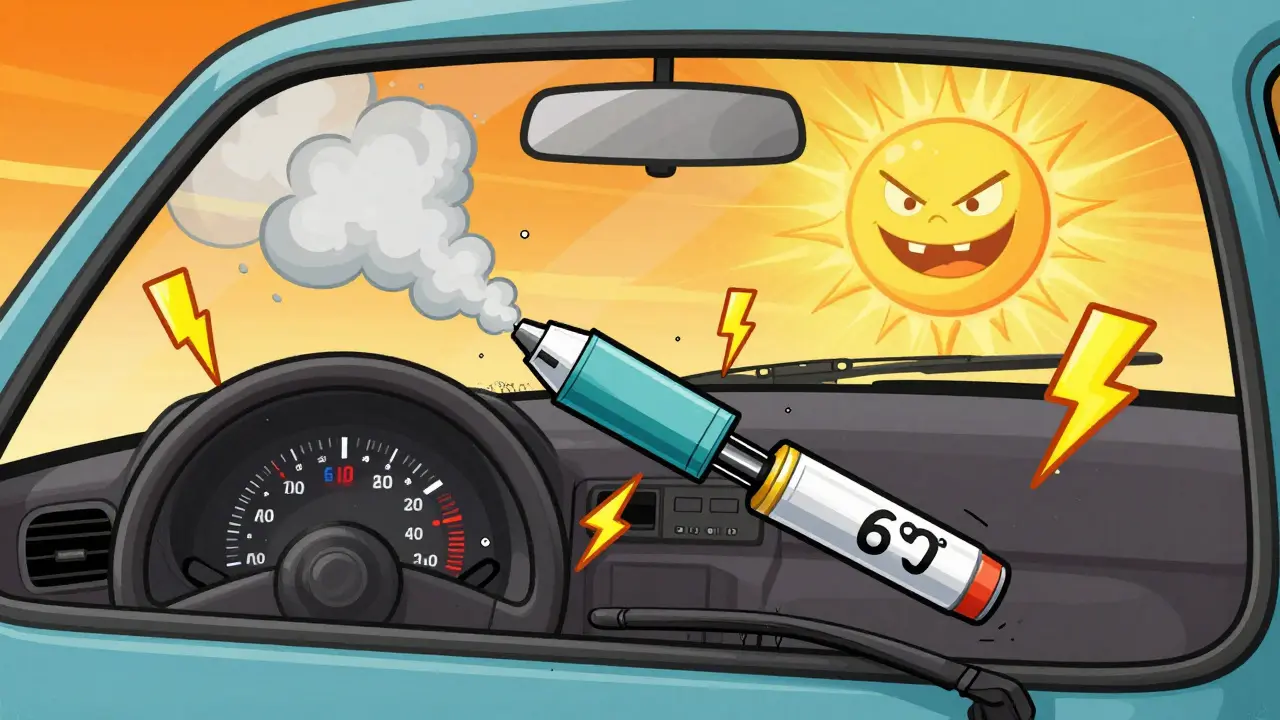
What Does Degraded Medicine Look Like?
You can’t always taste or smell it. But there are signs:- Tablets that are sticky, discolored, or cracked
- Capsules that are swollen, leaking, or brittle
- Liquids that look cloudy, gritty, or have changed color
- Pills that smell odd-like vinegar, mold, or chemicals
- Inhalers that feel lighter than usual or don’t spray properly
How to Store Medicine Right
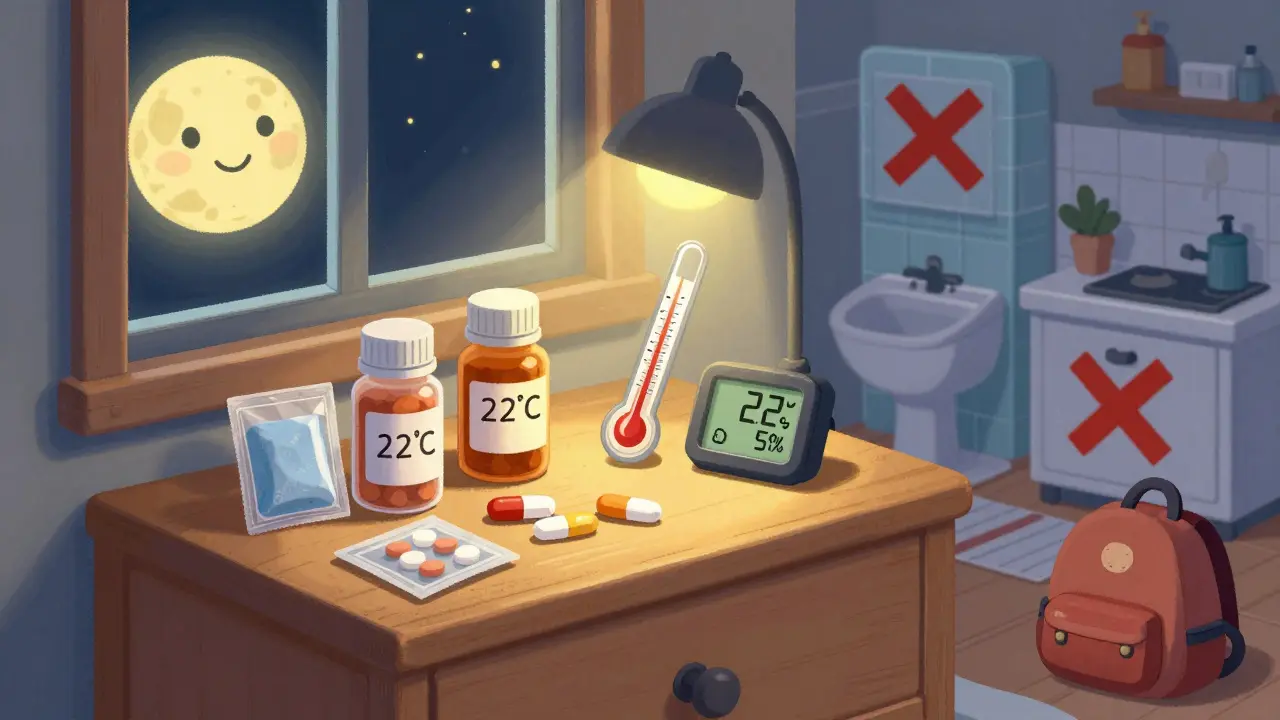
The safest place? A cool, dry, dark spot. Not the bathroom. Not the kitchen. Not the car.- Use a bedroom drawer or closet shelf. Avoid windows.
- Keep meds in their original bottles. The caps are designed to seal out moisture.
- Temperature should stay between 15-25°C (59-77°F). Humidity below 60%.
- If your drug needs refrigeration (like insulin or some antibiotics), keep it in the fridge-not the door, where temperatures swing.
- For travel: Use a small insulated bag with a cool pack. Pharmacies sell these. They’re cheap and worth every dollar if you’re carrying insulin or epinephrine.
- Keep medications away from direct sunlight. UV rays break down chemicals too.
The Real Danger: When Medicine Fails
Most people think expired meds are just less effective. That’s true-but it’s not the whole story. Take antibiotics. If they’ve lost potency, they won’t kill all the bacteria. The survivors? They become stronger. That’s how antibiotic resistance starts. It’s not just about your infection-it’s about the next person who gets sick. Insulin that’s degraded? Blood sugar spikes. Diabetic ketoacidosis. ER visits. Long-term nerve and kidney damage. EpiPens that fail? Anaphylaxis can kill in minutes. If the device doesn’t work because it was left in a hot car, no one else is to blame but the storage. The FDA says it plainly: "Using expired medicines is risky and possibly harmful to your health." And if you’ve stored them wrong? You’re already using expired medicine-even if the date says otherwise.What’s Changing? What’s Coming?
Pharma companies are starting to adapt. Some new bottles include desiccants (tiny moisture-absorbing packets). Others have temperature-sensitive labels that change color if exposed to heat. A few even have QR codes that link to storage logs. But the biggest issue? Climate change. In places like Darwin, northern Australia, Southeast Asia, and parts of Africa, temperatures are routinely above 35°C. The cold chain-how drugs are shipped and stored-is breaking down. The World Health Organization now lists medication stability in extreme heat as a global health threat. For now, the solution is simple: store it right. You can’t control the weather. But you can control your medicine cabinet.Can I still use medicine after the expiration date if it looks fine?
No. The expiration date is the last day the manufacturer guarantees full potency and safety-only if stored properly. Even if it looks okay, heat and humidity can damage the medicine without visible signs. Taking it could mean you’re getting less than the right dose-or even harmful breakdown products.
Is it safe to store medicine in the fridge?
Only if the label says so. Most pills don’t need refrigeration-cold and damp can actually damage them. But insulin, some antibiotics, and biologics do. Store them in the main compartment, not the door, where temperature changes too much. Always keep them in their original container to prevent moisture buildup.
What should I do if my medicine was left in a hot car?
If it’s a life-saving drug-like insulin, EpiPen, nitroglycerin, or seizure medication-throw it away and get a new one. Don’t risk it. For other meds, check for changes: discoloration, odd smell, sticky texture. If anything’s off, replace it. When in doubt, ask your pharmacist. It’s cheaper than a hospital visit.
Do all medications expire the same way?
No. Solid tablets (like aspirin or ibuprofen) are more stable. Liquids, injectables, and biologics degrade fast. Insulin can lose potency in hours. EpiPens can fail mechanically. Inhalers can explode. The form of the drug matters just as much as the ingredient.
How can I tell if humidity damaged my pills?
Look for sticky or swollen tablets, cracked or leaking capsules, cloudy liquids, or pills that smell moldy or like vinegar. If the bottle cap is hard to open or has condensation inside, that’s a red flag. If you’re unsure, don’t take it. Bring it to your pharmacy-they can check.


Elan Ricarte
8 February / 2026Let me tell you something - I used to keep my insulin in the bathroom cabinet like a goddamn idiot. Thought it was ‘convenient.’ Then my glucose levels went nuclear for three days straight. Turned out the humidity had turned my vials into lukewarm soup. No joke. I’ve seen people argue about ‘expiration dates’ like they’re Bible verses, but if your meds are stored like snacks in a sauna, the date on the bottle is just a suggestion written in invisible ink. You think you’re saving space? You’re risking your life. And no, ‘it looks fine’ doesn’t mean shit. I’ve had pills that smelled like old vinegar and still looked perfect. Don’t be that guy.