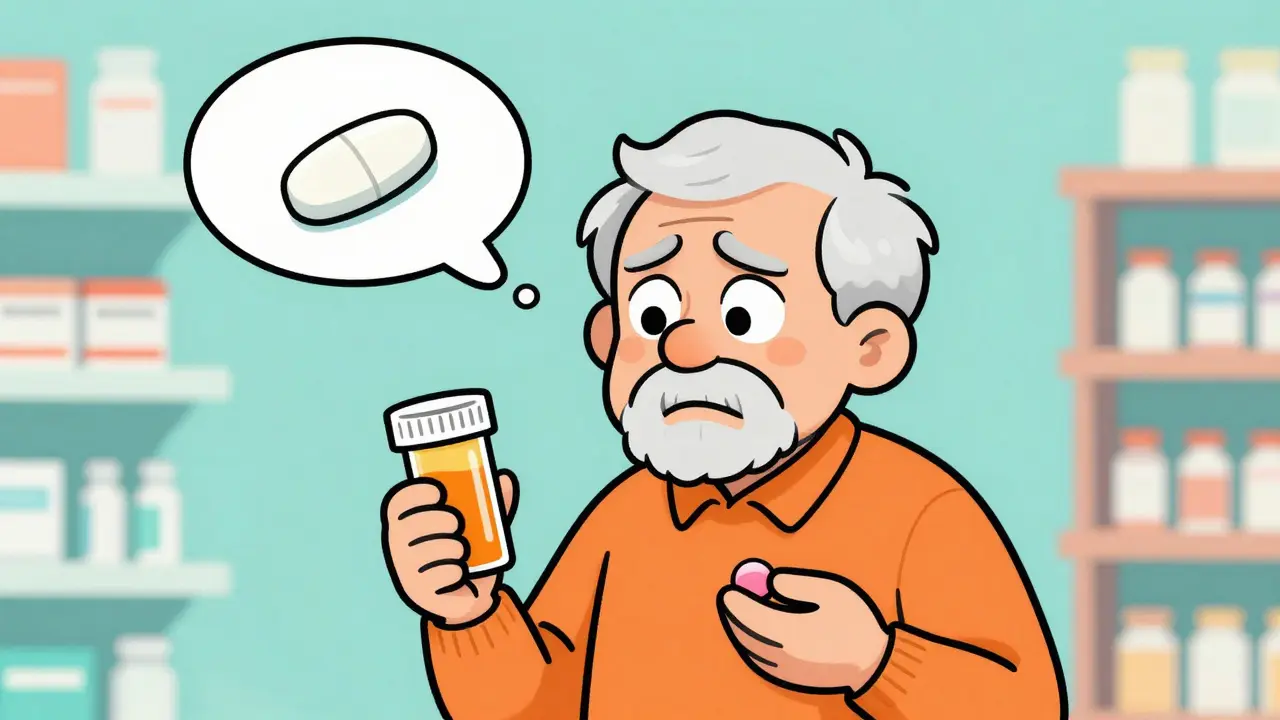
Imagine picking up a prescription and finding a pink round pill in the bottle when you're used to a white oval one. For many of us, it's a quick check of the label. But for millions of people, this simple visual change can cause a complete shutdown in treatment. Some might think it's the wrong medicine, while others might simply stop taking it out of fear. This is the real-world impact of a gap in health literacy is the ability to access, understand, and use health information to make informed decisions about one's well-being. When we talk about generic drugs, the confusion isn't usually about the science-it's about how the information is delivered.
The problem is that we often assume everyone understands that a generic drug is the same as a brand-name one. In reality, a huge chunk of the population doesn't. According to the National Network of Libraries of Medicine, about 80 million adults in the US have basic or below-basic health literacy skills. When you combine that with the fact that generic drugs can look completely different depending on who makes them, you get a recipe for dangerous medication errors. It's not just a misunderstanding; it's a systemic failure in how we communicate medicine.
The Generic Confusion: Why Visuals Matter
Most people know that Generic Medications are drugs created to be therapeutically equivalent to brand-name drugs, containing the same active ingredients but often differing in inactive ingredients and appearance. But knowing the definition and trusting the pill in your hand are two different things. When a pharmacy switches a patient to a different generic manufacturer, the color, shape, or size of the pill often changes. For an elderly patient managing five different chronic conditions, this is a nightmare.
This "generic distrust" is a documented phenomenon. Research shows that people with lower literacy levels are over three times more likely to refuse a generic substitute. Why? Because they don't have the conceptual framework to understand that "different look = same effect." In one heartbreaking case shared on a patient forum, a person with type 2 diabetes stopped taking their metformin for three days because the pill changed from a white oval to a pink round one. They ended up in the emergency room with dangerously high blood sugar, all because of a visual mismatch.
| Feature | Brand-Name Drugs | Generic Drugs |
|---|---|---|
| Recognition | High (due to consistent branding and ads) | Low (varies by manufacturer) |
| Patient Trust | Generally higher initial trust | Higher skepticism in low-literacy groups |
| Visual Consistency | Same look every time | Color/shape can change between refills |
| Information Source | Direct-to-consumer marketing | Pharmacist or basic leaflets |
Moving from Personal to Organizational Responsibility
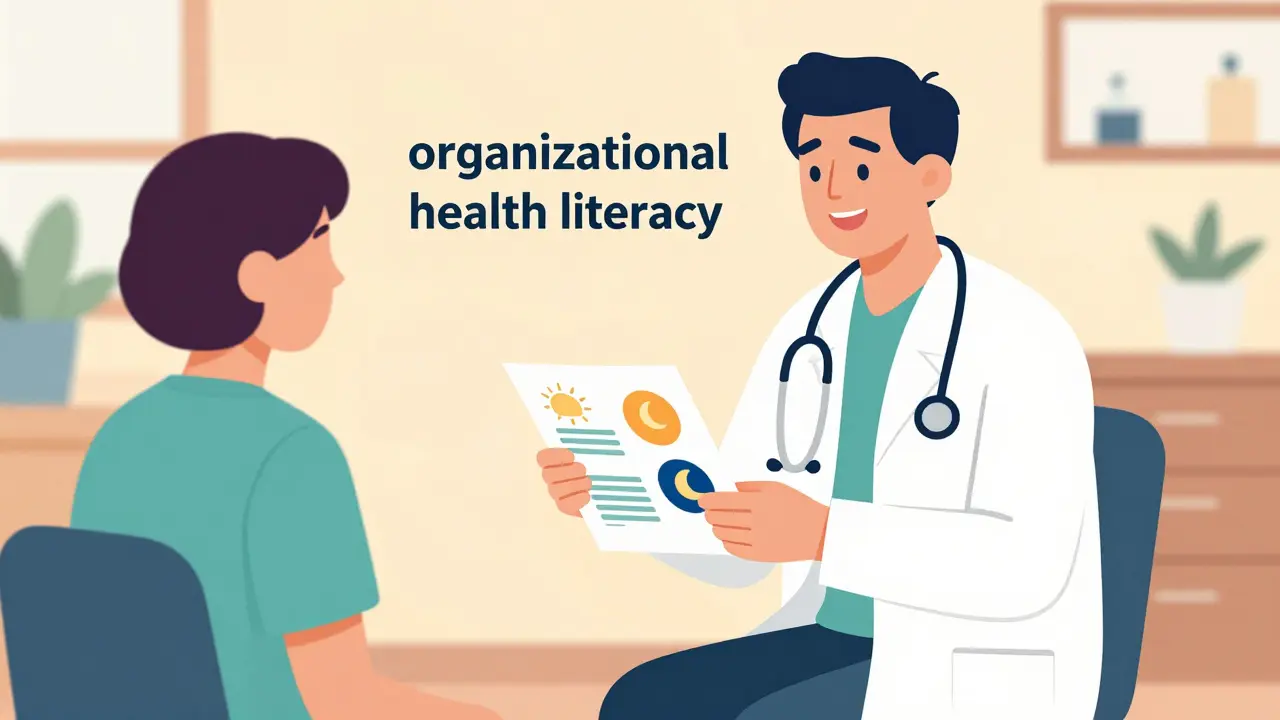
For a long time, we treated health literacy as a personal failing-like the patient just "didn't get it." But the U.S. Department of Health and Human Services shifted the narrative with Healthy People 2030. They introduced the concept of organizational health literacy. This means the burden isn't on the patient to be an expert; it's on the clinic, the pharmacy, and the drug maker to make the information impossible to misunderstand.
Think about the current state of patient leaflets. Many are still written in dense, medical jargon that requires a degree to decode. A 2022 FDA review found that only 37% of generic manufacturers actually used plain language principles in their leaflets. When a patient is already anxious about their health, a wall of 8-point font medical text is a barrier, not a help. To fix this, organizations need to stop providing "information" and start providing "understanding." This involves using pictures, simple checklists, and verbal confirmation rather than just handing over a piece of paper.
Practical Ways to Bridge the Literacy Gap
If you're a caregiver or a healthcare provider, there are proven ways to stop medication errors before they happen. One of the most effective tools is the "Ask Me 3" program. Instead of asking "Do you have any questions?" (which usually gets a "no"), providers ask three specific questions to ensure the patient knows exactly what the drug is, what it's for, and how to take it. Hospitals using this method have seen a 31% drop in generic-related errors.
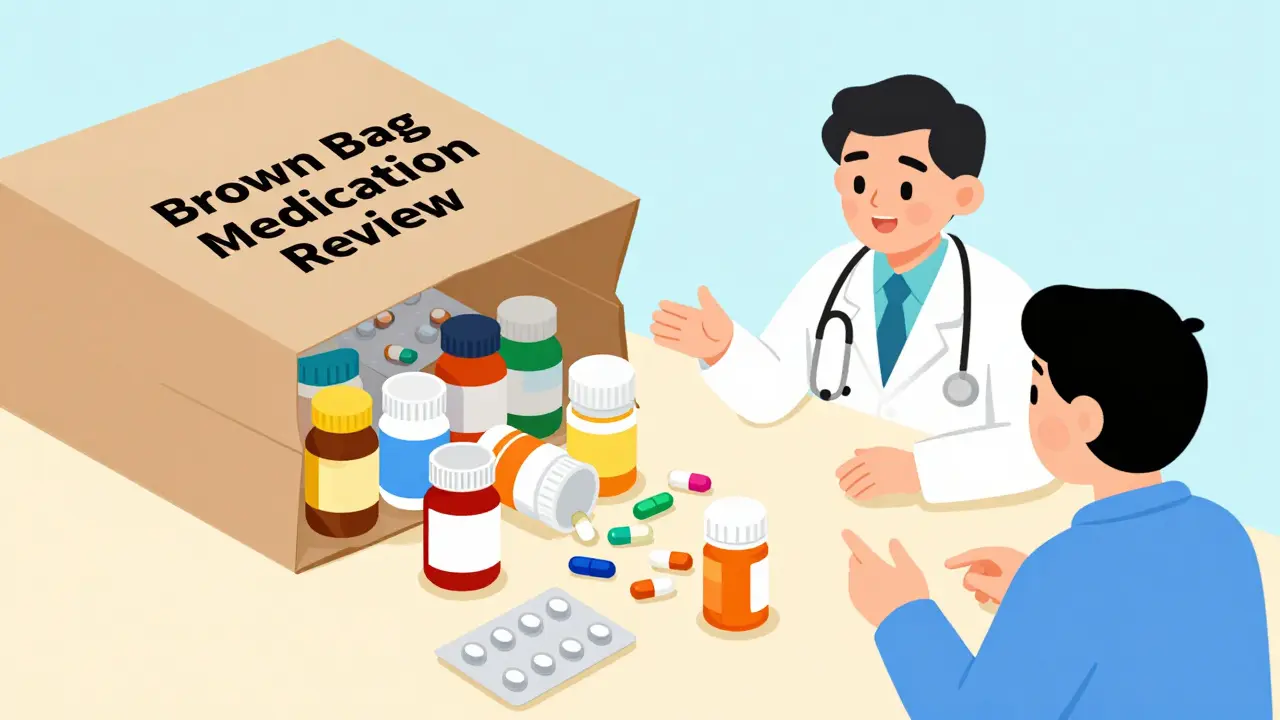
Another gold-standard approach is the "Brown Bag Medication Review." This is exactly what it sounds like: the patient puts every single bottle and blister pack they use into a bag and brings it to the appointment. This allows the provider to see the actual pills the patient is taking, identify any visual mismatches, and clear up confusion on the spot. This method has been shown to reduce medication discrepancies by 44%.
For those who prefer tech, apps like Medisafe are changing the game. By using visual recognition and photo-matching, these tools help patients confirm that the pill they are holding matches the prescription, regardless of whether it's a brand name or a generic version. Recent trials show these digital tools can improve understanding by over 60% for those who struggle with traditional reading.
The Path Toward Standardized Medications
While individual efforts help, the real solution lies in systemic change. We need generic medications that look the same regardless of who makes them. The World Health Organization has been pushing for international standardization of generic appearances to remove the visual barrier entirely. Europe is already leading the way; the Falsified Medicines Directive helped reduce errors by nearly 20% in pilot programs in Germany and France by focusing on packaging and consistency.
In Australia, a color-coding system for different therapeutic classes of drugs has already reduced errors by 33%. This is the kind of logic the FDA is now exploring in its 2023 draft guidance. Imagine a world where all blood pressure generics have a specific color band on the packaging, or all diabetes meds follow a consistent visual cue. It removes the guesswork and allows the patient's brain to categorize the medication by its function rather than its manufacturer's specific design choices.
Checklist for Patients and Caregivers
To ensure you're using generic medications safely, keep these steps in mind during your next pharmacy visit:
- Verify the Change: If the pill looks different than your last refill, ask the pharmacist: "This looks different; is it still the same active ingredient?"
- Request Plain Language: Ask for a summary of the side effects in simple terms, not just the printed leaflet.
- Use the 'Teach-Back' Method: Tell the provider in your own words how you plan to take the medication to ensure there's no misunderstanding.
- Keep a Visual Log: Take a photo of your medication and the label so you have a reference point for the next refill.
- Bring All Bottles: Every few months, do a "brown bag" check with your doctor to ensure everything is still correct.
Are generic drugs really the same as brand-name drugs?
Yes, in terms of the active ingredient. Generic drugs must meet the same therapeutic standards as the brand-name version, meaning they work the same way in the body. However, they can have different "inactive ingredients" (like fillers or dyes), which is why they often look, smell, or taste different.
Why does my generic medication change appearance between refills?
Pharmacies often buy generic drugs from different manufacturers based on availability or cost. Since there is no global standard for how a generic pill must look, Manufacturer A might make a white oval pill while Manufacturer B makes a pink round one, even though the medicine inside is identical.
What should I do if I'm confused about my medication?
Never guess with your health. If a pill looks different or the instructions are confusing, contact your pharmacist or doctor immediately. Use the "Teach-Back" method: explain your understanding of the dose and purpose to them and ask them to correct any mistakes.
How can I tell if I have low health literacy?
Health literacy isn't about your general intelligence; it's about how you process medical information. If you often find pharmacy labels confusing, struggle to understand the side-effect leaflets, or feel intimidated when talking to doctors, you may have a gap in health literacy. This is very common and can be managed with the right tools and support.
Can technology help me manage generic medication changes?
Absolutely. Medication management apps can provide visual reminders and photo-logs of your prescriptions. Some AI-powered tools can even recognize pills to confirm they match your prescription, which significantly reduces the risk of errors due to visual changes.
Next Steps for Better Medication Safety
Whether you're a patient or a provider, the goal is the same: eliminate the guesswork. If you are a patient, start by being vocal about your confusion. Don't feel embarrassed to ask for a simpler explanation. If you are a healthcare provider, move away from the "do you understand?" question and toward the "show me how you'll take this" approach.
For those managing complex care for elderly parents, the "Brown Bag" method is your best bet. Setting aside one hour a month to audit every single pill in the house can prevent an ER visit. As we move toward more standardized packaging and better digital tools, the gap in health literacy will close, making the healthcare system safer for everyone, regardless of their reading level.