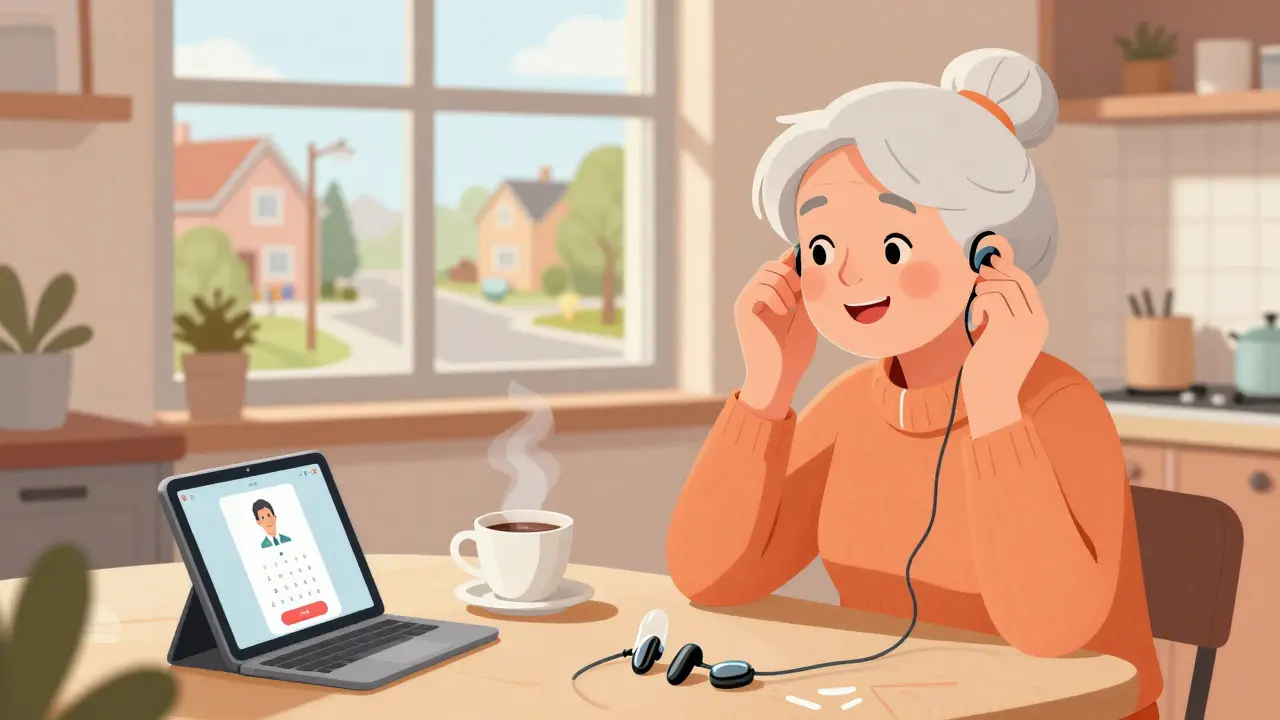
For millions of people with hearing loss, getting help used to mean driving hours to a clinic, sitting in a waiting room, and hoping the appointment went smoothly. Now, with teleaudiology, that’s changing - fast. You can adjust your hearing aids from your kitchen table, get real-time feedback from your audiologist over video, and skip the drive entirely. It’s not science fiction. It’s happening right now, and it’s making life easier for people who need hearing care the most.
What Exactly Is Teleaudiology?
Teleaudiology is simply hearing care delivered remotely using technology. Instead of walking into a clinic, you connect with an audiologist via video call, app, or secure messaging. This isn’t just for simple check-ins. You can do full hearing tests, get your hearing aids fine-tuned, receive counseling on how to use them better, and even troubleshoot feedback or muffled sound - all without leaving your home.
The technology has been around for decades, but it exploded during the pandemic. In 2020, nearly half of all hearing care providers started using teleaudiology for adjustments and follow-ups. Today, more than 6 out of 10 audiology practices in the U.S. offer it. Major brands like Phonak, ReSound, Oticon, and Starkey built apps specifically for this. You don’t need to be tech-savvy. If you can use a smartphone to send a text or join a Zoom call, you can use teleaudiology.
How It Works: Two Ways to Connect
There are two main ways teleaudiology works: asynchronous and synchronous.
Asynchronous means no live interaction. You take a hearing test on your phone or tablet using an app like SHOEBOX or HearZap. The app plays tones and asks you to press a button when you hear them. Your results go to your audiologist, who reviews them later and sends back settings or advice via email or secure messaging. This is great for routine check-ins, especially if you’re not in a rush.
Synchronous is live video. You hop on a call with your audiologist. They can watch you, guide you through tests, and even control your hearing aids remotely in real time. Systems like hear.com’s Clinic-in-a-Box® let the audiologist adjust volume, change programs, or test noise reduction while you’re sitting in your living room. It’s like having them there - except they’re on your screen.
Both methods need a few things: a smartphone or computer with a good internet connection (at least 5 Mbps), Bluetooth-enabled hearing aids (most modern ones), and a quiet space. You don’t need fancy gear. Just your devices and a little patience.
Why People Love It
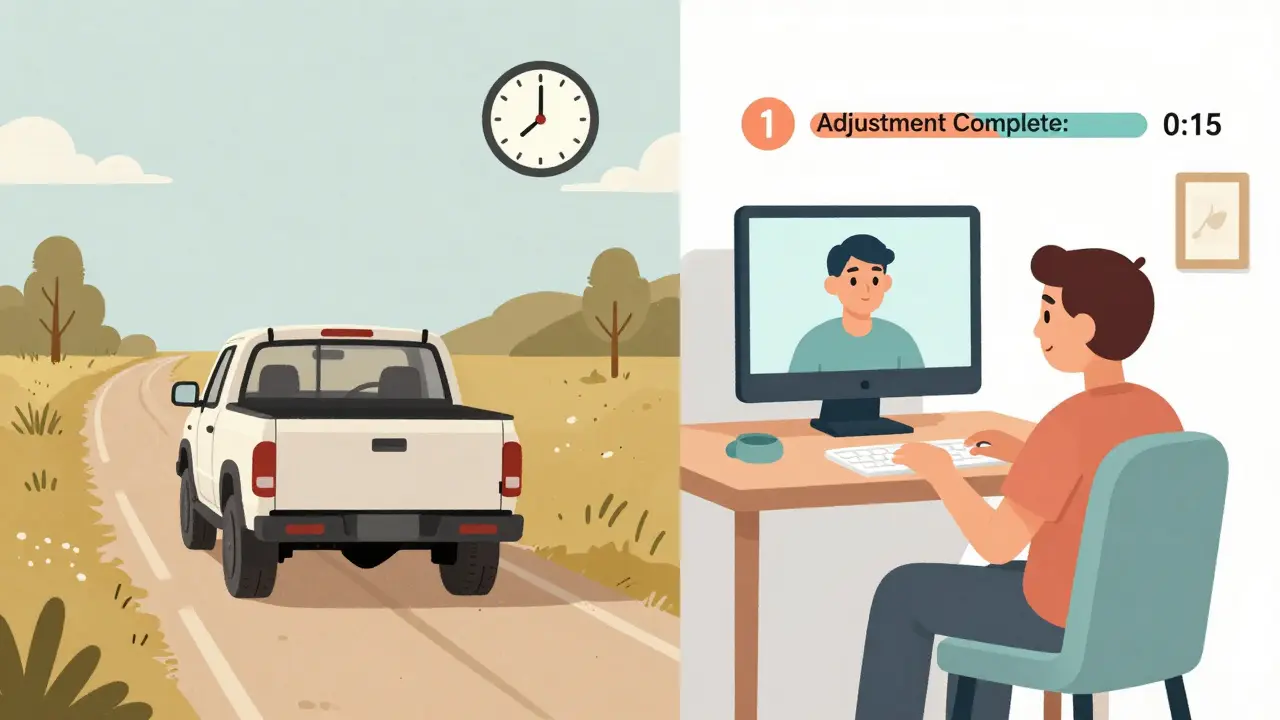
For people in rural areas, teleaudiology isn’t a convenience - it’s a lifeline. In the U.S., 78% of rural patients live more than 50 miles from an audiology clinic. Before teleaudiology, they spent an average of 2.3 hours driving each way. Now, that time drops to zero. The cost? Around $87 less per visit.
But it’s not just about geography. Older adults with mobility issues, people recovering from surgery, or those with busy schedules all benefit. One user on Reddit, u/HearingHelp456, said after hip surgery, eliminating 3-hour round trips for minor adjustments “was life-changing.”
Accuracy is surprisingly high. In quiet home environments, remote hearing tests match in-clinic results 92-95% of the time. Patient satisfaction scores for remote hearing aid adjustments hit 4.6 out of 5 - higher than in-person visits. Why? Because you’re adjusting the hearing aids in your real world: while watching TV, eating dinner, or talking to grandkids. That’s something a clinic can’t replicate.
Where It Falls Short
Teleaudiology is powerful, but it’s not magic. There are limits.
You can’t have your ears checked visually. If you have wax buildup, an infection, or a structural issue, an audiologist can’t see it remotely. That’s a problem. Experts say 12-15% of medically significant conditions - like ear infections or growths - would be missed without an in-person otoscopy.
Home noise is another issue. Background chatter, fans, or traffic can mess up test results. About 37% of remote tests are affected by ambient noise, according to SHOEBOX.md’s 2023 data. That means some results might not be accurate.
And sometimes, tech just fails. Bluetooth pairing issues, weak Wi-Fi, or confusing apps can frustrate users. One user in California went through three failed remote sessions before discovering a simple earwax blockage that needed professional removal.
Also, not every state lets audiologists treat patients across state lines. As of 2024, 28 U.S. states still have licensing rules that block cross-border teleaudiology. Medicare only reimburses for it in 18 states. That creates gaps in access.
Cost and Accessibility
Remote visits typically cost $120-$150, compared to $140-$180 for in-person appointments. That’s a 15-20% savings. Some manufacturers, like Phonak, offer premium remote support as a monthly subscription - $29.99 a month for 24/7 help.
For people on fixed incomes, that matters. The global hearing aid market is worth $12.8 billion, and teleaudiology is growing fast - from $1.2 billion in 2019 to an estimated $4.7 billion in 2023. Adoption is highest in North America (68% of practices), followed by Europe (52%), and Asia-Pacific (37%). India, for example, has used government-backed teleaudiology to reach 12 million rural residents since 2020.
The Veterans Affairs system has seen major wins too. After adopting teleaudiology, no-show rates for follow-ups dropped from 22% to 9%. That’s a huge win for public health.
Getting Started
If you have Bluetooth-enabled hearing aids from a major brand, you’re already halfway there. Here’s how to begin:
- Download your manufacturer’s app: Phonak’s myPhonak, ReSound Smart, Oticon’s OnApp, or Starkey’s Livio.
- Create a secure patient portal account through your audiologist’s clinic.
- Set up a quiet room - turn off fans, close windows, and avoid noisy appliances.
- Make sure your phone or tablet is charged and connected to stable Wi-Fi or cellular data.
- Call your provider to schedule your first remote session. Most take 20-45 minutes to set up.
Most users need just one 30-minute tutorial to get comfortable. Audiologists report an 89% success rate among people 65 and older after minimal help. If you can send a photo or join a video call, you can do this.
What’s Next?
Technology is getting smarter. Widex launched “Widex Moment Adjust” in late 2023 - it uses AI to detect your environment automatically and adjust your hearing aids without you lifting a finger. Signia did the same in January 2024, bringing teleaudiology to over-the-counter (OTC) hearing aids for the first time.
The FDA updated its rules in April 2024, opening teleaudiology to 40 million more U.S. consumers who use OTC devices. Analysts predict that by 2027, over half of all hearing aid adjustments will happen remotely. AI will handle 30-40% of routine tuning, freeing up audiologists for complex cases.
The World Health Organization calls teleaudiology “critical” to solving the global shortage of 200,000 hearing professionals by 2030. But challenges remain - especially for older adults with low tech literacy, or those without reliable internet.
Real Talk: Is It Right for You?
If you:
- Live far from a clinic
- Have trouble driving or moving around
- Just need minor tweaks to your hearing aids
- Are comfortable using apps or video calls
Then yes - teleaudiology is likely a perfect fit.
If you:
- Have sudden hearing loss or ear pain
- Need your ears checked for infection or wax
- Are new to hearing aids and need hands-on training
- Struggle with tech
Then start with one in-person visit. After that, switch to remote for follow-ups. Most experts agree: a hybrid approach works best.
Can I really get my hearing aids adjusted remotely?
Yes. If your hearing aids are Bluetooth-enabled and from a major brand like Phonak, ReSound, or Oticon, your audiologist can adjust volume, noise reduction, and program settings over a video call. Many systems even let them test your hearing in real time while you’re at home. This works for 89% of routine follow-ups, according to clinical trials.
Do I need special equipment for teleaudiology?
No. You need a smartphone or computer with a stable internet connection (5 Mbps or higher), Bluetooth-enabled hearing aids, and a quiet room. Most people already have these. You don’t need extra hardware - just the app from your hearing aid manufacturer.
Is remote hearing testing accurate?
In quiet, controlled environments, remote hearing tests are 92-95% as accurate as in-clinic tests. But if there’s background noise - like a TV, fan, or traffic - accuracy drops to 78-85%. That’s why audiologists recommend testing in a silent room with closed doors and no distractions.
Can teleaudiology replace all in-person visits?
Not completely. You still need at least one in-person visit for a full ear exam, especially if you have sudden hearing loss, pain, or earwax buildup. Audiologists can’t see inside your ear canal remotely. Most experts recommend a hybrid model: start with one in-person visit, then use teleaudiology for ongoing adjustments.
Is teleaudiology covered by insurance or Medicare?
Medicare only covers teleaudiology in 18 U.S. states as of 2024. Private insurance varies widely. Some plans cover it fully, others don’t. Always check with your provider. Many manufacturers offer subscription-based remote support ($29.99/month) that’s not covered by insurance but may be worth it for convenience.
What if my internet cuts out during a session?
If your Wi-Fi fails, switch to cellular data. Most people can use their phone’s hotspot to connect their computer or tablet. If the call drops, your audiologist will usually call you back or send instructions via secure messaging. Don’t panic - this happens occasionally, and providers expect it.


marjorie arsenault
1 March / 2026This is such a game-changer for people who can't drive to clinics. I've seen elderly neighbors struggle for years just to get a tiny tweak to their hearing aids. Now? They do it while sipping coffee. No more waiting rooms, no more stress. Just quiet, effective care from home.
It's not just convenience-it's dignity.