Drug Reaction: What It Is, How to Spot It, and What to Do
When your body responds badly to a medication, that’s a drug reaction, an unintended and harmful response to a medicine. Also known as an adverse drug event, it’s not always an allergy—it can be a side effect, an interaction, or even a delayed immune response. These reactions don’t always show up right away. Some hit within minutes after taking a pill. Others creep in over days or weeks, making them easy to miss.
Common triggers include antibiotics like amoxicillin, antidepressants like SSRIs, and even over-the-counter painkillers. Serotonin syndrome, a dangerous spike in serotonin levels from mixing certain drugs or supplements, can happen if you take 5-HTP with an SSRI. Drug interactions, when two or more medicines change how each other works are behind many serious reactions—like MAO inhibitors clashing with common foods or other meds. Even something as simple as a statin like pravastatin can cause muscle pain in older adults, especially when combined with other drugs.
Not every rash or stomach upset means a drug reaction, but if you feel worse after starting a new medication, don’t ignore it. A sudden fever, swelling, trouble breathing, or confusion could signal something serious. And if you’re unsure, stop taking the drug and call your doctor. You’re not overreacting—you’re protecting yourself.
Reporting a drug reaction isn’t just about your own safety. When you file a report with the FDA’s MedWatch system, you help others avoid the same problem. Thousands of reactions go unreported every year, which means drug makers and regulators don’t see the full picture. Your report could be the one that leads to a warning label, a dosage change, or even a drug recall.
Below, you’ll find real guides from people who’ve been there: how to spot a bad reaction, what to do if you get the wrong pill from the pharmacy, how to switch antidepressants without triggering serotonin syndrome, and why some drugs are safer than others for older adults. These aren’t theory pieces—they’re practical, lived experiences that help you navigate medication risks with confidence.
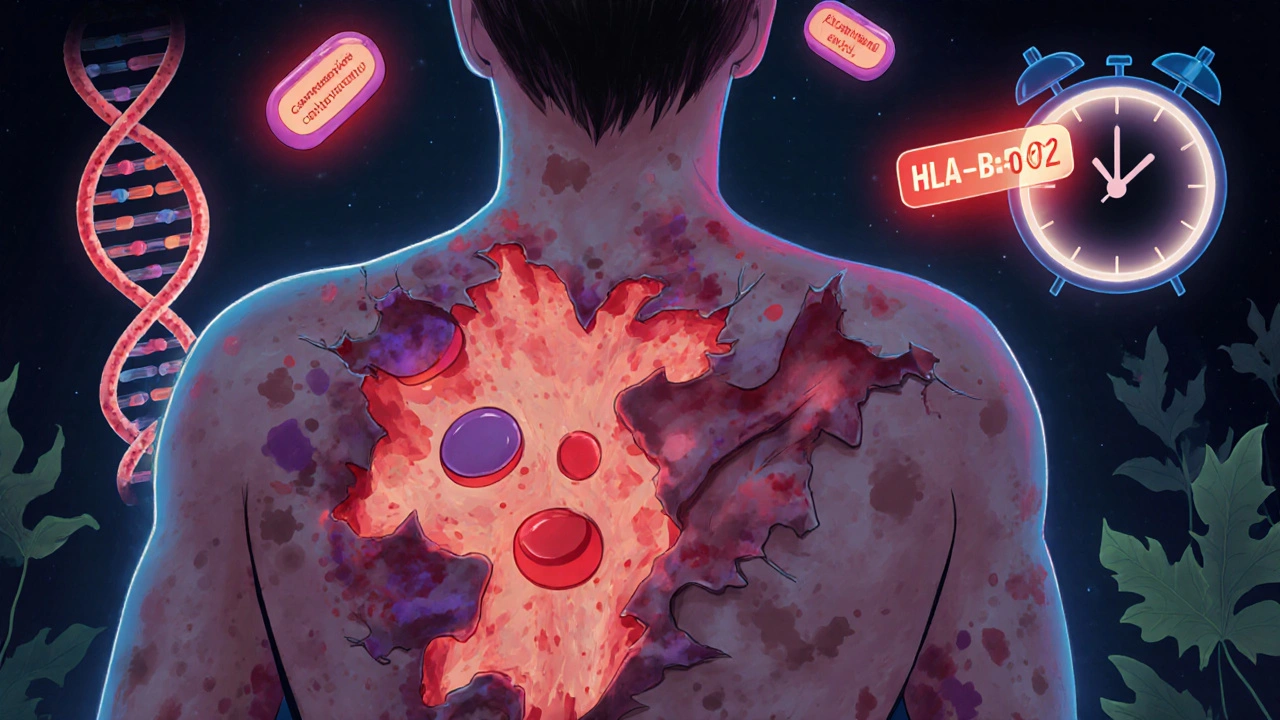
Stevens-Johnson Syndrome and Toxic Epidermal Necrolysis are rare but deadly drug reactions that cause skin and mucous membrane damage. Learn the warning signs, causes, treatments, and how genetic testing can prevent them.
View Details