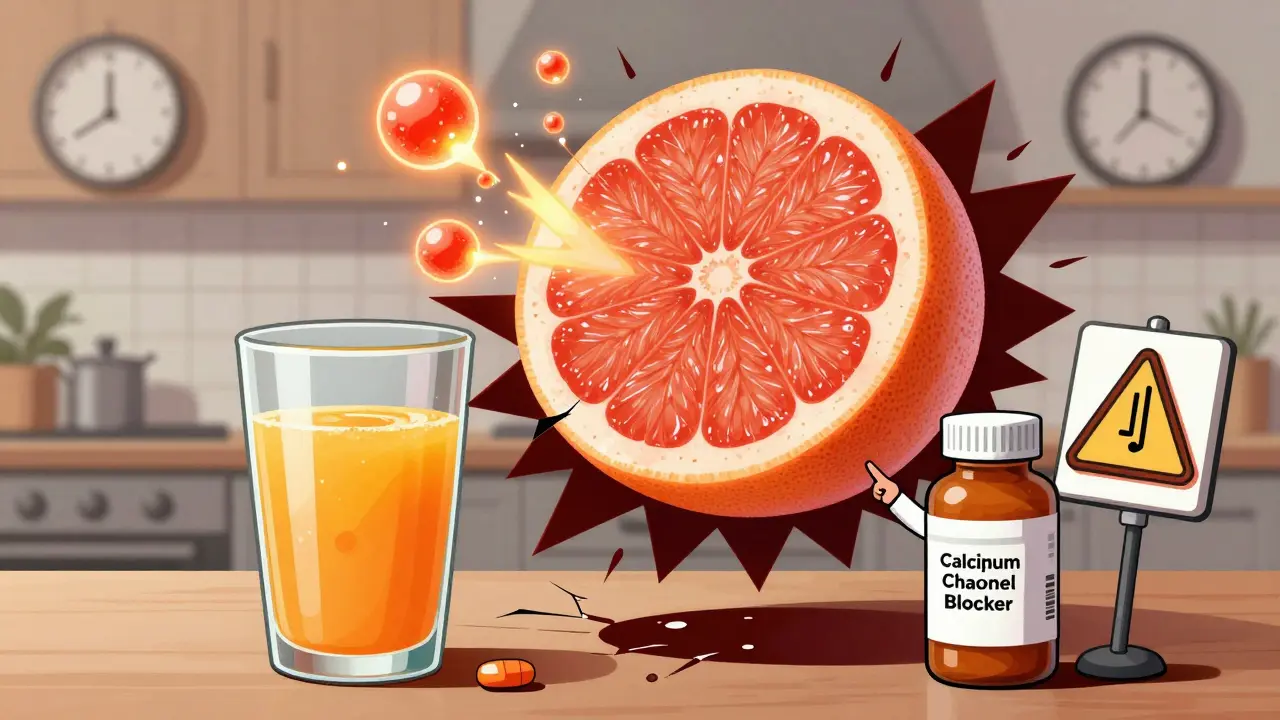
If you're taking a calcium channel blocker for high blood pressure or chest pain, your morning glass of orange juice might be more dangerous than you think. Not all citrus fruits are created equal, but grapefruit - and a few close relatives - can turn your carefully dosed medication into a potential health emergency. This isn't a myth. It's a well-documented, life-threatening interaction that affects millions of people worldwide, yet most patients and even some doctors don't know about it.
How Grapefruit Breaks the Rules
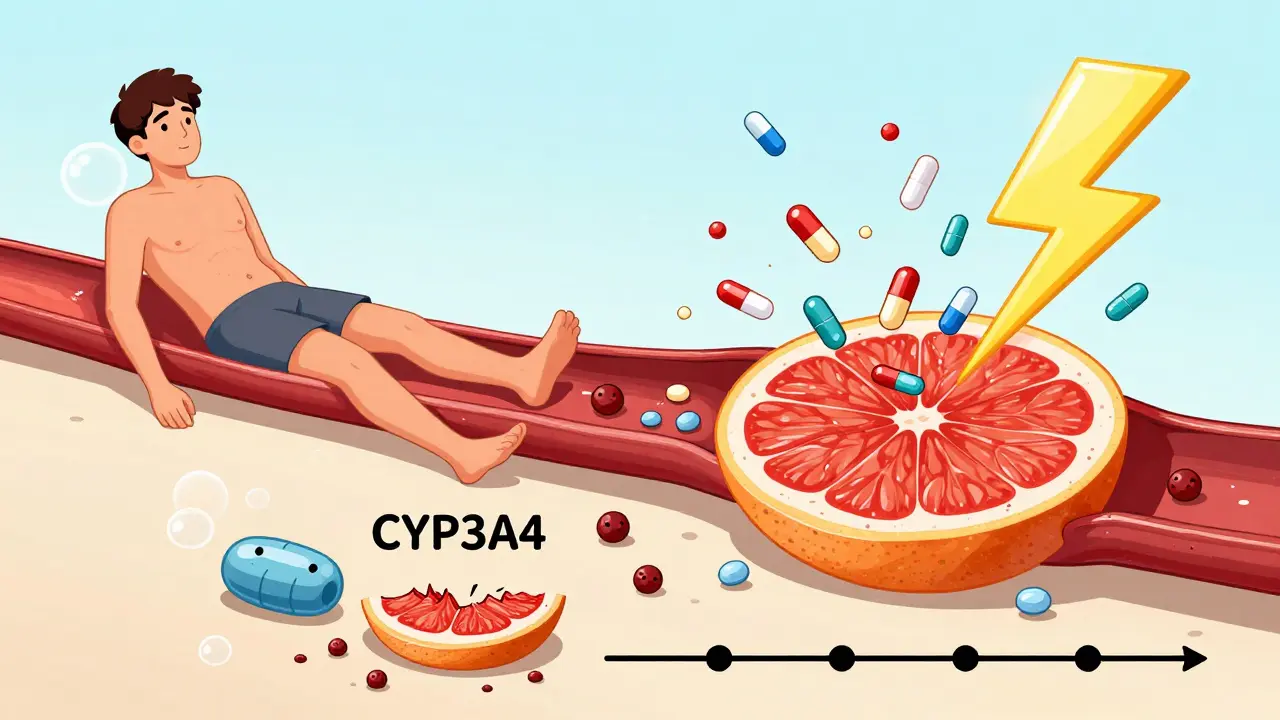
Calcium channel blockers work by relaxing your blood vessels to lower blood pressure. But they don’t work alone. Your body uses an enzyme called CYP3A4, mostly in your intestines, to break down these drugs before they enter your bloodstream. Grapefruit contains chemicals called furanocoumarins - specifically 6',7'-dihydroxybergamottin and bergamottin - that shut down this enzyme like a circuit breaker. Once it’s turned off, your body can’t break down the drug properly. The result? Up to five times more medication floods into your system than intended.
One 200ml glass of grapefruit juice - about one cup - is enough to block CYP3A4 completely. And here’s the kicker: the effect lasts up to 72 hours. That means if you drink grapefruit juice at breakfast, then take your blood pressure pill at night, you’re still in danger. The enzyme doesn’t just pause - it gets permanently damaged. Your body has to grow new enzyme cells, which takes days. So even spacing out your juice and pill doesn’t help.
Which Calcium Channel Blockers Are Most at Risk?
Not all calcium channel blockers react the same way. The worst offenders are the dihydropyridine (DHP) types:
- Felodipine - This one’s the most sensitive. Grapefruit juice can increase its concentration in your blood by 300% to 500%. Some studies show levels jumping from 2.5 ng/mL to over 11 ng/mL.
- Nicardipine and Nimodipine - Both show major spikes in blood levels when taken with grapefruit.
- Pranidipine - Less common, but still dangerous.
- Amlodipine - Often considered safer, but research from GoodRx (2023) confirms it still interacts. The increase isn’t as extreme, but it’s enough to cause side effects in some people.
Non-dihydropyridine types like verapamil and diltiazem are less affected, but they’re not risk-free. Experts still recommend avoiding grapefruit with any calcium channel blocker unless your doctor says otherwise.
What Happens When the Interaction Goes Wrong
Too much calcium channel blocker in your system doesn’t just make your blood pressure drop - it can crash it. Symptoms include:
- Severe dizziness or lightheadedness
- Flushing or sudden warmth
- Swelling in your legs or ankles (peripheral edema)
- Rapid heartbeat (reflex tachycardia)
- Fainting or near-fainting episodes
For older adults, this isn’t just uncomfortable - it’s life-threatening. A 2023 presentation by nurse practitioner Amelie Hollier at the American Academy of Nurse Practitioners described a case where an elderly woman fell after taking amlodipine with grapefruit juice. Her intended dose of 60 mg was effectively acting like 140 mg. She couldn’t stand. She didn’t break a hip - but she could have.
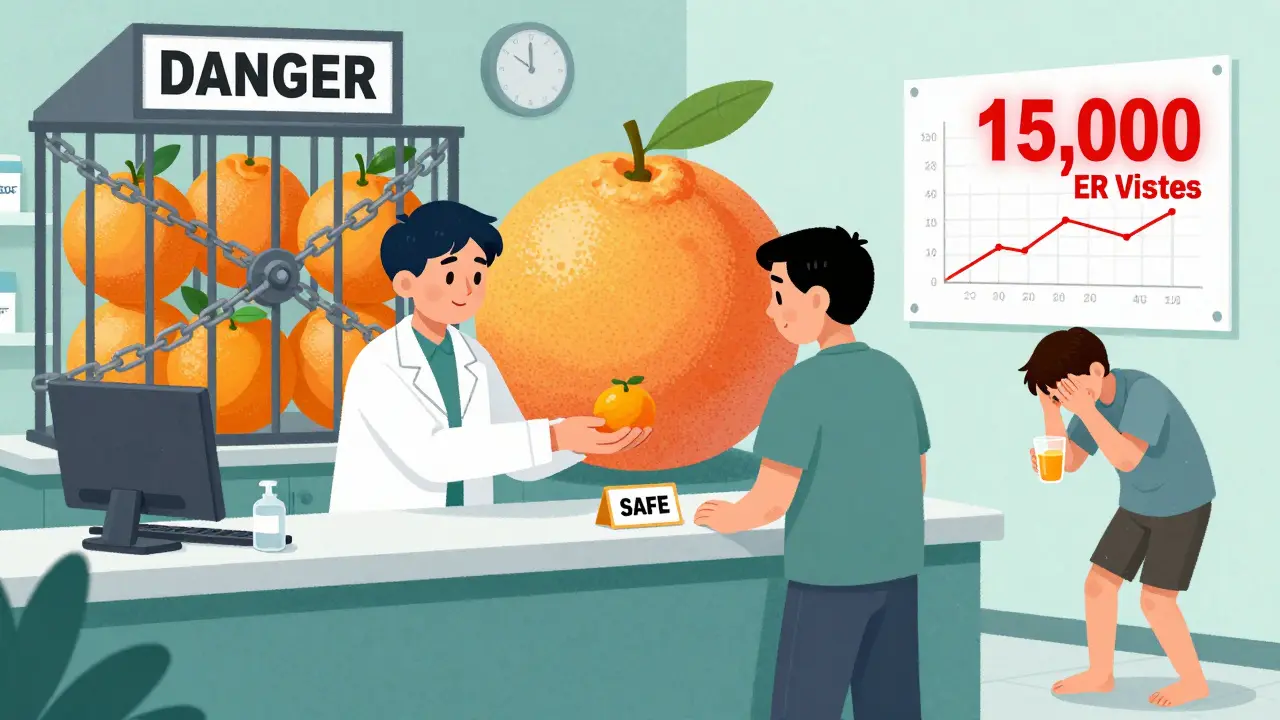
According to the CDC’s 2021 hospital survey, about 15,000 emergency visits each year in the U.S. are tied to grapefruit-drug interactions. Most involve blood pressure meds. And it’s not just grapefruit juice - whole fruit, frozen pulp, and even some marmalades can trigger the same reaction.
Not All Citrus Is Equal
Here’s what you need to know about other citrus fruits:
- Grapefruit - Highest risk. Contains the most furanocoumarins - up to 10 mg per 100 mL.
- Seville oranges - These sour, bitter oranges used in marmalade also contain furanocoumarins. Avoid them.
- Tangelos - A cross between tangerines and grapefruit. They carry the same risk.
- Sweet oranges - Regular oranges (like Valencia or Navel) have almost no furanocoumarins. They’re generally safe.
- Citrus juices from concentrate - Some brands add grapefruit juice or extract. Always check the ingredient list.
Don’t assume that if it’s not grapefruit, it’s safe. If it’s a hybrid or sour citrus, it’s worth asking your pharmacist.
What Should You Do?
If you’re on a calcium channel blocker, here’s what to do right now:
- Check your medication label. Felodipine, nimodipine, and others have black box warnings about grapefruit. If it’s there, don’t risk it.
- Ask your pharmacist. They can tell you if your specific drug is affected. Many don’t even know the details - but pharmacists do.
- Stop grapefruit cold. No exceptions. Even occasional use adds up. The 72-hour window means you can’t time it around your dose.
- Switch if needed. Amlodipine is less risky, but not zero-risk. If you’re struggling, ask your doctor about alternatives like lisinopril (an ACE inhibitor), valsartan (an ARB), hydrochlorothiazide (a diuretic), or metoprolol (a beta blocker). None of these have known grapefruit interactions.
And if you’ve been drinking grapefruit juice for years with your blood pressure pill? You’re not alone. A 2022 survey by the American Society of Health-System Pharmacists found that only 37% of primary care doctors routinely ask patients about grapefruit use. And 68% of patients had no idea their morning juice could be dangerous.
The Bigger Picture
This isn’t just about grapefruit. It’s about how little we’re told about food and medicine. We assume if something is natural, it’s harmless. But grapefruit isn’t a vitamin - it’s a biochemical disruptor. It changes how your body handles drugs in ways that can’t be undone with timing or portion control.
Research is moving forward. Two new extended-release versions of amlodipine are in Phase III trials (NCT04567890 and NCT04567891) and show a 70% reduction in grapefruit interaction. That’s promising. But until they’re widely available, the safest choice remains simple: skip the grapefruit.
For the 80 million Americans on calcium channel blockers - and millions more worldwide - this interaction is one of the most preventable drug-related emergencies. You don’t need to give up citrus forever. Just know which ones to avoid. And if you’re unsure? When in doubt, leave it out.



Linda Franchock
15 February / 2026I can't believe we still have to warn people about this. My grandma took felodipine for years and drank grapefruit juice every morning. She's fine. Probably because she's 82 and her liver doesn't work anymore anyway. 😏