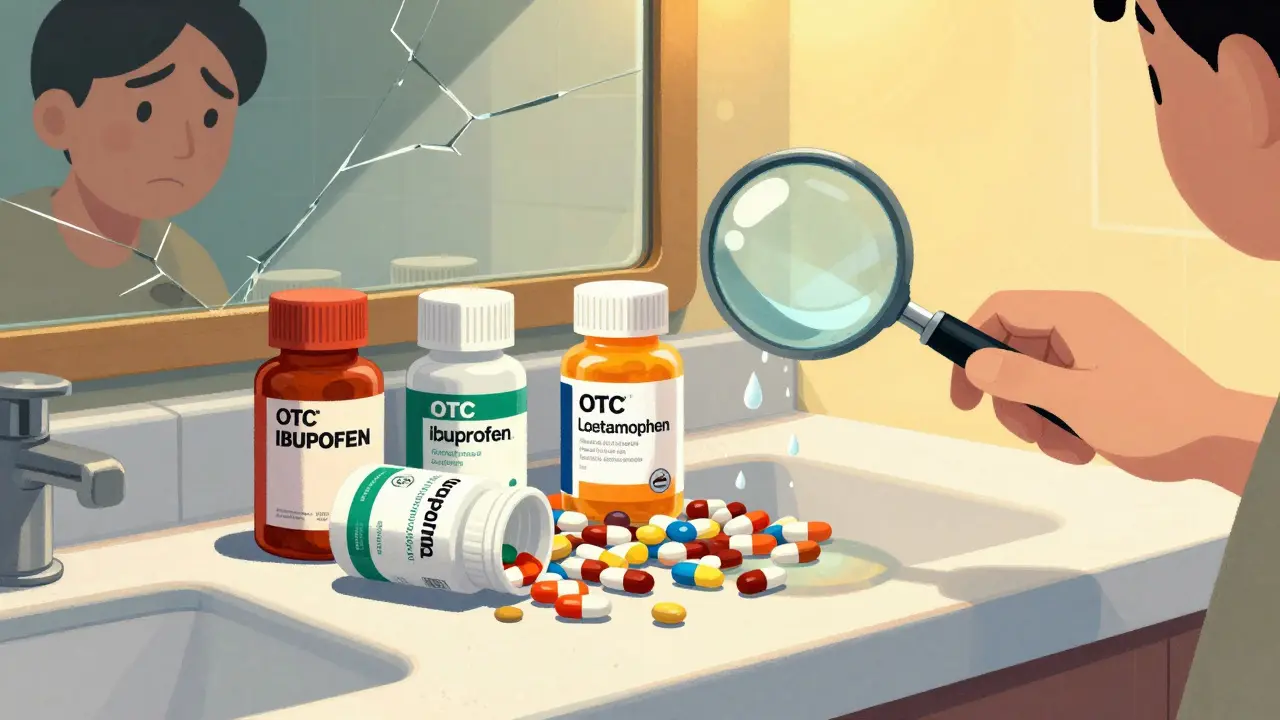
Every year, Americans spend over $120 billion on over-the-counter (OTC) medications. That’s more than half of all the drugs people take - and most of it happens without a doctor’s signature. You grab a bottle of ibuprofen for a headache, grab Tylenol for a fever, or pick up Claritin when your nose won’t stop running. But just because you can buy these medicines off the shelf doesn’t mean they’re harmless. In fact, acetaminophen alone sends 56,000 people to the emergency room each year because of accidental overdose. The truth is, most people don’t know how to use these drugs safely - or even what they’re actually taking.
NSAIDs: More Than Just Pain Relief
NSAIDs - nonsteroidal anti-inflammatory drugs - include ibuprofen (Advil, Motrin IB), naproxen (Aleve), and aspirin. These aren’t just painkillers. They reduce inflammation, which is why they work better than acetaminophen for sprains, arthritis, or menstrual cramps. A 2021 analysis of 15 clinical trials found ibuprofen was 50% more effective than acetaminophen for inflammatory pain. That’s why 68% of people who use OTC pain relievers for muscle soreness pick ibuprofen.
But here’s the catch: NSAIDs don’t just block pain signals. They interfere with enzymes that protect your stomach lining and regulate blood flow to your kidneys. Regular use - especially over 1,200mg of ibuprofen per day - can increase your risk of stomach bleeding by 2.5 times. People with high blood pressure, heart disease, or kidney issues should avoid them. Even worse, about 10-20% of asthma patients have a dangerous reaction to NSAIDs called aspirin-exacerbated respiratory disease. One puff of an Advil tablet can trigger wheezing or a full-blown asthma attack.
OTC ibuprofen comes in 200mg tablets. That’s the max you can buy without a prescription. You’re allowed six per day - 1,200mg total. But many people don’t realize that cold medicines, headache formulas, and even some sleep aids contain ibuprofen too. Taking two different products? You could easily hit 1,500mg without knowing it.
Acetaminophen: The Quiet Killer
If NSAIDs are the loud, inflammatory type, acetaminophen (Tylenol) is the quiet one. It doesn’t reduce swelling. It doesn’t help with joint pain. But it knocks out headaches, fevers, and minor aches - and it’s gentler on the stomach. That’s why 72% of people reach for Tylenol for headaches, and why 68% of seniors prefer it over NSAIDs.
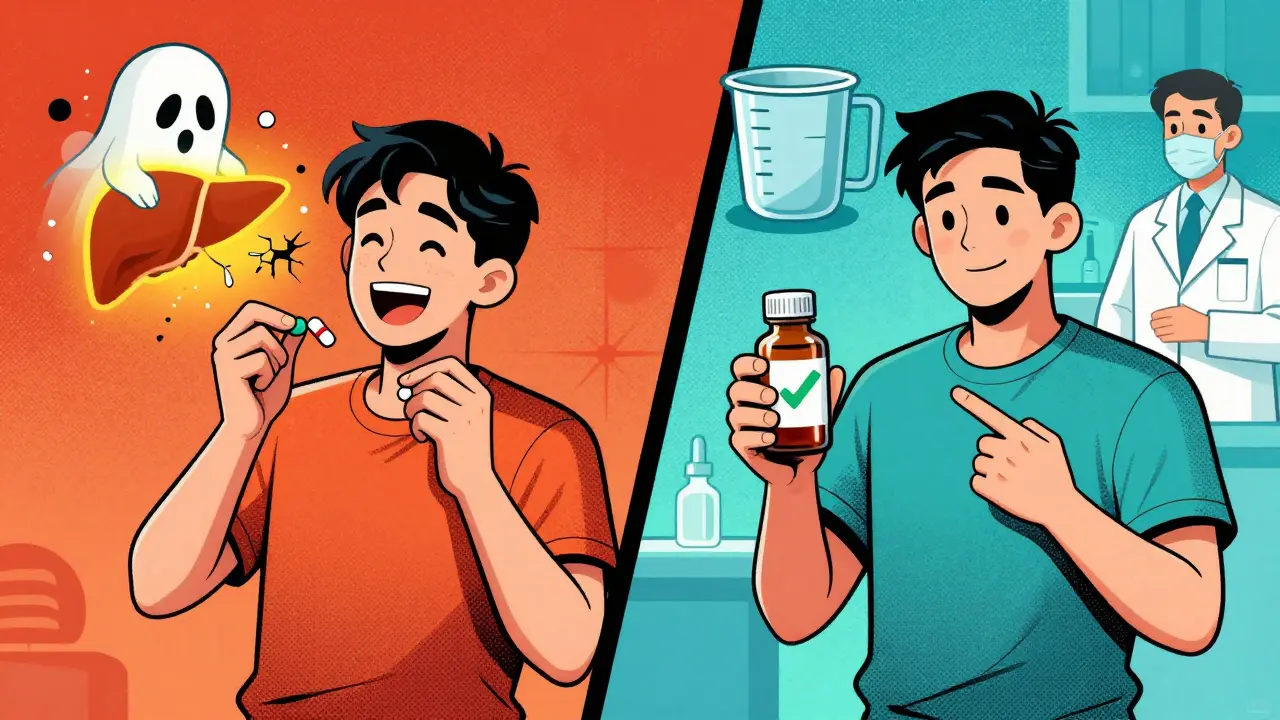
But here’s the scary part: acetaminophen has a razor-thin safety margin. The official maximum daily dose is 4,000mg - but many experts now recommend capping it at 3,000mg to be safe. Why? Because liver damage from acetaminophen doesn’t show up until it’s too late. You might feel fine for 24 hours after taking too much, then suddenly start vomiting, turning yellow, and slipping into liver failure. The FDA says 20% of all accidental overdoses happen because people don’t realize they’re double-dosing. A cold medicine with acetaminophen plus a painkiller with acetaminophen? That’s a recipe for disaster.
Children’s liquid Tylenol used to come in different strengths - 80mg per teaspoon, 160mg per teaspoon - and parents mixed them up. Now, the FDA requires all liquid acetaminophen to be 160mg per 5mL. That’s a big win. But adults still make mistakes. Some take extended-release tablets every 4 hours instead of every 8. Others crush pills to swallow them faster, changing how the drug releases. And don’t forget alcohol. Even one drink a day while taking acetaminophen increases liver damage risk.
Antihistamines: Sleepy vs. Non-Sleepy
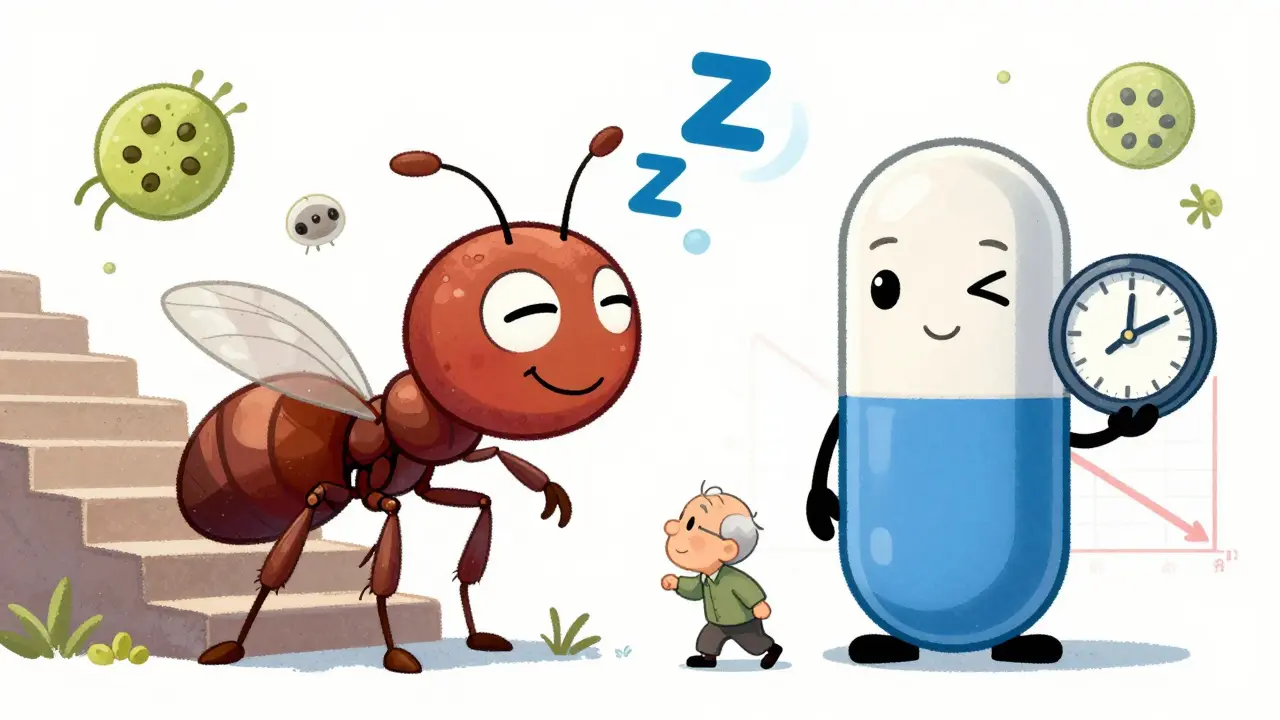
Allergies? You’ve got two choices: the old-school, sleepy kind or the modern, non-drowsy kind. First-generation antihistamines like diphenhydramine (Benadryl) work fast - within 15 to 30 minutes. But they cross into your brain. Half the people who take them feel like they’ve had three glasses of wine. A 2022 Consumer Reports survey found 50% of users reported severe drowsiness. That’s why they’re often used as sleep aids - but it’s a bad idea. In older adults, this increases fall risk by 50%. One study in JAMA Internal Medicine linked them to long-term memory decline.
Second-generation antihistamines - loratadine (Claritin), cetirizine (Zyrtec), fexofenadine (Allegra) - are different. They barely touch your brain. Only 8% of users report drowsiness. They take longer to kick in - 1 to 3 hours - but last 24 hours. That’s why Claritin holds 41% of the allergy market. People like the convenience. No need to nap after lunch.
But here’s something most people don’t know: not everyone responds the same. A Reddit thread with over 1,800 upvotes featured a doctor explaining that 20% of patients respond better to one antihistamine than another because of genetic differences in how their bodies handle histamine. If Claritin doesn’t work, try Zyrtec. If Zyrtec makes you itchy, try Allegra. It’s not just trial and error - it’s biology.
What You’re Really Buying
Store brands are cheaper. But are they the same? Yes - legally, they have to be. Generic ibuprofen, generic acetaminophen, generic loratadine - they all contain the exact same active ingredient as the name brands. The difference? Fillers, dyes, coatings. For most people, that doesn’t matter. But if you’re allergic to red dye #40, or if you’re sensitive to lactose, you need to read the label. Five percent of OTC users report allergic reactions to inactive ingredients.
And don’t assume “OTC” means “weaker.” Some OTC versions have the same strength as prescription drugs. But others don’t. Omeprazole (Prilosec) OTC is 20mg. The prescription version is 40mg. That’s intentional. The FDA limits OTC doses to what’s safe for self-use. But many people think if a little is good, more is better. They take two tablets. They double up. They get sick.
How to Use These Safely
Here’s how to avoid the most common mistakes:
- Check every bottle. If you’re taking more than one OTC product, look at the “Active Ingredients” section. If acetaminophen or ibuprofen shows up twice, stop. You’re doubling your dose.
- Use the right tool. Only 60% of liquid OTC meds come with a proper measuring cup. Use the one that came with the bottle - not a kitchen spoon. A tablespoon is three times a teaspoon. That’s how kids end up in the ER.
- Know your limits. Ibuprofen: max 1,200mg/day. Acetaminophen: max 3,000mg/day (not 4,000). Loratadine: 10mg once daily. Don’t go over.
- Don’t mix with alcohol. Especially with acetaminophen. Even one drink a day raises your risk.
- Ask your pharmacist. They’re trained to catch dangerous combinations. If you take blood pressure meds, diabetes meds, or have kidney or liver disease, they can tell you what’s safe.
When to Stop and See a Doctor
OTC meds are great for short-term relief. But if you’re using them for more than 10 days straight, something’s wrong. Here’s when to call a doctor:
- Your pain doesn’t improve after 7 days of NSAIDs or acetaminophen.
- You’re taking antihistamines daily for more than 2 weeks - you might need allergy testing.
- You feel dizzy, confused, or have trouble urinating after taking an antihistamine.
- You have dark stools, vomiting blood, or severe stomach pain after taking NSAIDs.
- Your skin or eyes turn yellow, you feel nauseous, or you lose your appetite after taking acetaminophen.
These aren’t side effects. They’re warning signs. And they’re not rare. The FDA gets thousands of reports every year of people who ignored the signs until it was too late.
What’s Changing Now
The FDA is moving fast. In 2023, they proposed lowering the maximum daily acetaminophen dose from 4,000mg to 3,250mg. Why? Because the data shows liver damage happens at lower doses than we thought. Topical NSAID gels - like Voltaren Arthritis Pain 1% - are now available OTC. That’s good news for people with knee or hand pain who can’t take pills.
And the future? Low-dose statins for cholesterol might soon be OTC, just like Prilosec. That’s a big shift. But it also means more people will need to understand how to use these drugs responsibly - without a doctor’s guidance.
OTC medications are powerful tools. But they’re not toys. They’re drugs. And like any drug, they can help - or hurt - depending on how you use them.



Gaurav Meena
30 January / 2026Man, I never realized how easy it is to accidentally overdose on Tylenol until my cousin ended up in the ER last year. She was taking cold medicine at night and ibuprofen during the day - thought she was being smart. Turns out, both had acetaminophen. Scary stuff. Always check the labels, folks. Your liver will thank you. 😅