Opioid Side Effects: What You Need to Know Before Taking Them
When you take opioids, a class of powerful pain-relieving drugs that include prescription pills like oxycodone and hydrocodone, as well as illegal drugs like heroin. Also known as narcotics, they work by binding to receptors in your brain and spinal cord to block pain signals—but they also slow down your breathing, mess with your digestion, and can trap you in a cycle of dependence. Many people start with a legitimate prescription after surgery or injury, but even short-term use can lead to side effects that aren’t always obvious until it’s too late.
Opioid dependence, a physical adaptation where your body starts to need the drug to function normally is one of the most dangerous outcomes. It doesn’t mean you’re addicted—yet—but it means stopping suddenly can trigger opioid withdrawal, a painful set of symptoms including nausea, sweating, muscle aches, anxiety, and insomnia. These symptoms often push people back onto the drug, not because they want to get high, but because they can’t stand to feel this bad. And if you keep using, your tolerance climbs, meaning you need more just to feel the same relief—raising the risk of opioid overdose, a medical emergency where breathing slows or stops entirely, often leading to death without immediate help.
It’s not just about the high. Common side effects like constipation, dizziness, and mental fog are often dismissed as "normal," but they can wreck your daily life. Long-term use can also lower your hormone levels, weaken your immune system, and make you more sensitive to pain over time. Even when taken exactly as prescribed, opioids aren’t harmless. The CDC estimates that nearly 70% of drug overdose deaths in the U.S. involve opioids. That’s not a statistic—it’s someone’s parent, sibling, or friend.
You’ll find real stories here—not theories, not marketing. Posts cover how people spotted early signs of dependence, what helped them manage withdrawal, and how some avoided overdose by knowing the warning signs. You’ll also see how other medications interact with opioids, what to do if you’re prescribed them long-term, and why some people react worse than others. This isn’t about scare tactics. It’s about giving you the facts so you can make smarter choices—whether you’re taking them now, know someone who is, or just want to understand why this crisis keeps growing.
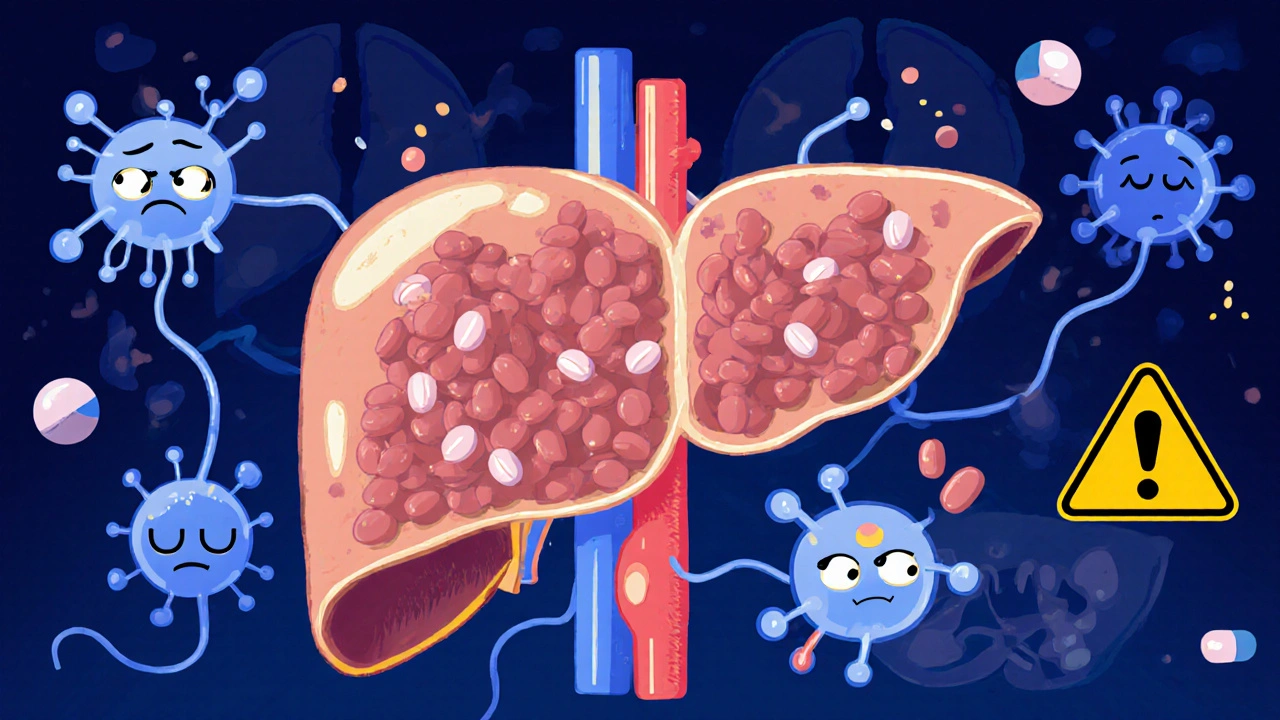
Opioids can become dangerous in liver disease due to impaired metabolism, leading to drug buildup and serious side effects. Learn which opioids are riskiest, how dosing must change, and what alternatives exist.
View Details