Medication Mistake: How to Avoid Dangerous Errors and Stay Safe
When you take a pill, you expect it to help—not hurt. But a simple medication mistake, an error in how a drug is prescribed, taken, or monitored. Also known as drug error, it can lead to hospital visits, long-term damage, or even death. These aren’t just rare accidents. Studies show that nearly half of all adults make at least one mistake with their meds each year—forgetting a dose, mixing pills with alcohol, or not telling their doctor about a supplement they’re taking.
One of the biggest dangers comes from drug interaction, when two or more substances react in a harmful way inside your body. Take MAO inhibitors for depression—they can cause a deadly spike in blood pressure if you eat aged cheese or take certain cold medicines. Or combine 5-HTP with an SSRI, and you risk serotonin syndrome, a life-threatening condition caused by too much serotonin in the brain. These aren’t theoretical risks. People end up in ERs every week because they didn’t know their tea, vitamin, or over-the-counter painkiller could clash with their prescription.
Then there’s the silent killer: adverse drug event, an injury caused by a medicine, whether it was used correctly or not. Stevens-Johnson Syndrome, a brutal skin reaction, can start with a mild rash after taking an antibiotic like amoxicillin. Toxic Epidermal Necrolysis? That’s the extreme version—skin peeling off like a burn. And it’s not just about new drugs. Even common ones like statins or blood thinners can cause muscle damage or internal bleeding if not monitored. The good news? Most of these events are preventable.
People think they’re safe if they follow the label. But labels don’t tell you everything. They don’t warn you about how your liver changes with age, or how grapefruit turns a cholesterol drug into a poison. They don’t mention that generic versions might have different fillers that trigger reactions in sensitive people. And they sure don’t tell you how to report a bad reaction—if you don’t report it, the FDA won’t know it’s happening.
That’s why knowing how to spot red flags matters more than ever. Is your skin blistering after a new pill? Is your heart racing after adding a new supplement? Are you dizzy, confused, or swollen for no reason? These aren’t just "side effects"—they’re warning signs. And if you’re on multiple meds, especially as you get older, you’re at higher risk. One pill might be fine alone. Two? Three? That’s when things go wrong.
Below, you’ll find real stories and clear guides from people who’ve been there. We cover how to switch antidepressants without triggering withdrawal, why some statins are safer for seniors, how to report a dangerous reaction to the FDA, and what to do when your meds don’t match your life. No fluff. No jargon. Just what you need to stop a medication mistake before it stops you.
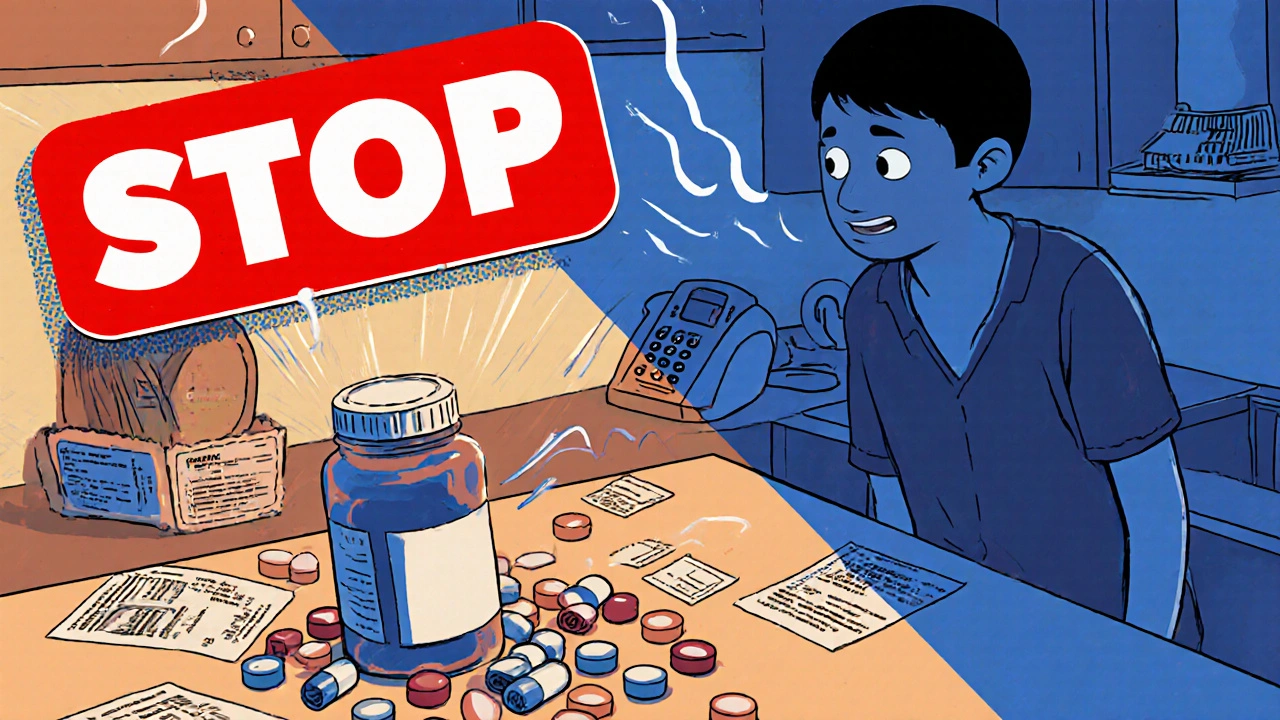
If you receive the wrong medication from the pharmacy, stop taking it immediately, contact your doctor, save all evidence, and report the error. These mistakes can be dangerous-but knowing what to do can protect your health and prevent future errors.
View Details