Dispensing Errors: What They Are, How They Happen, and How to Stop Them
When a pharmacy gives you the wrong medicine, it’s not a minor mistake—it’s a dispensing error, a preventable mistake where the wrong drug, dose, or instructions are given to a patient. Also known as a medication mistake, these errors happen more often than you think, and they can land you in the hospital—or worse. This isn’t about bad pharmacists. It’s about systems under pressure: busy counters, similar-looking drug names, handwritten prescriptions, and rushed checks.
These errors don’t happen in a vacuum. They often connect to pharmacy error, any mistake in the process of preparing or handing out medication, which includes mislabeling, incorrect dosing, or giving a drug that clashes with your other meds. For example, someone on metformin might get confused with another diabetes pill, or a patient taking MAO inhibitors could be handed a supplement like 5-HTP that triggers serotonin syndrome. These aren’t hypotheticals—they’re real risks documented in posts about drug interactions and patient safety.
You’re not powerless. pharmacy safety, the set of practices and checks designed to prevent mistakes before they reach the patient exists for a reason. But it only works if you’re part of it. Always check the pill bottle against your prescription. Know your meds’ names and why you’re taking them. If something looks off—different color, shape, or size—ask. Save the packaging. Report it. The FDA’s MedWatch system exists because patients like you have stepped up.
And when you do get the wrong medication? It’s not the end of the world—but it’s the start of a critical action plan. Stop taking it. Call your doctor. Document everything. That’s exactly what the guide on receiving the wrong medication walks you through. These aren’t just stories—they’re survival steps.
Below, you’ll find real cases and clear advice on how to catch these errors before they hurt you. From how common drug name mix-ups are, to what to do if your blood pressure med turns out to be a diabetes pill, to how to report it so others don’t get caught in the same trap—this collection gives you the tools to speak up, spot the red flags, and protect your health. You don’t need to be a medical expert. You just need to pay attention—and know what to do next.
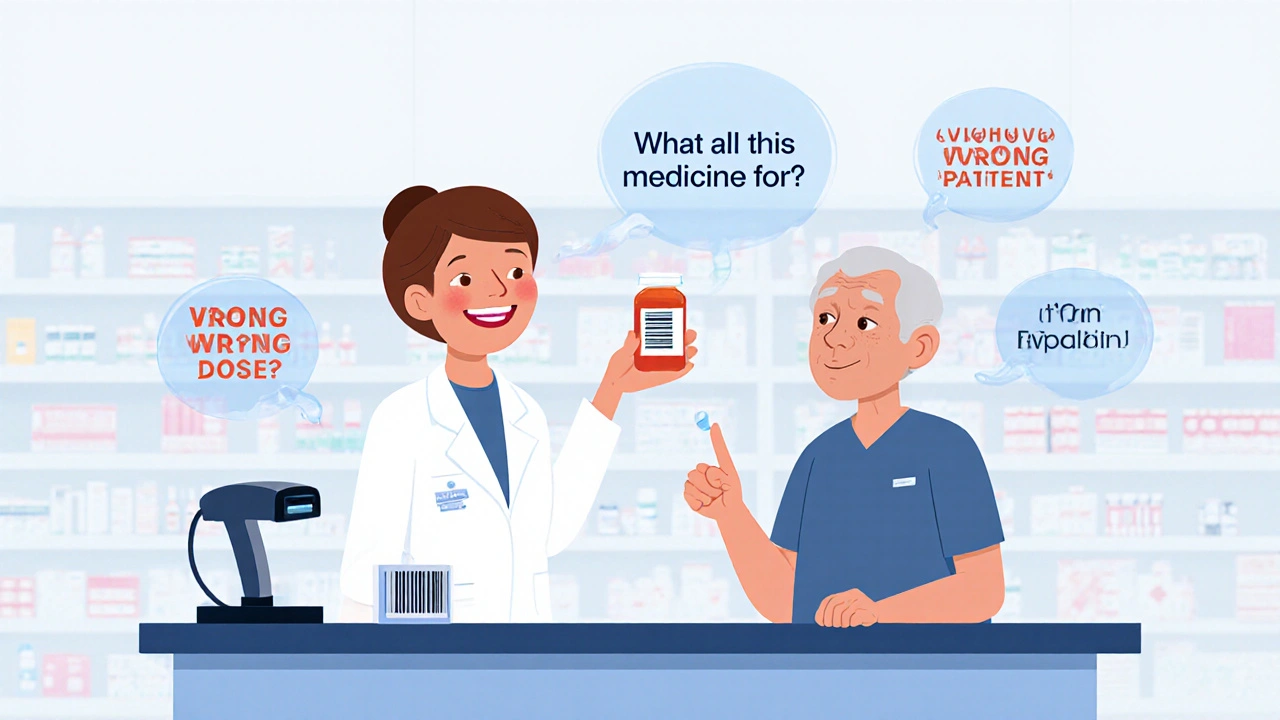
Patient counseling catches 83% of dispensing errors before they reach patients. Learn the proven 4-step method pharmacists use to verify medications, spot look-alike mistakes, and turn patients into safety partners.
View Details