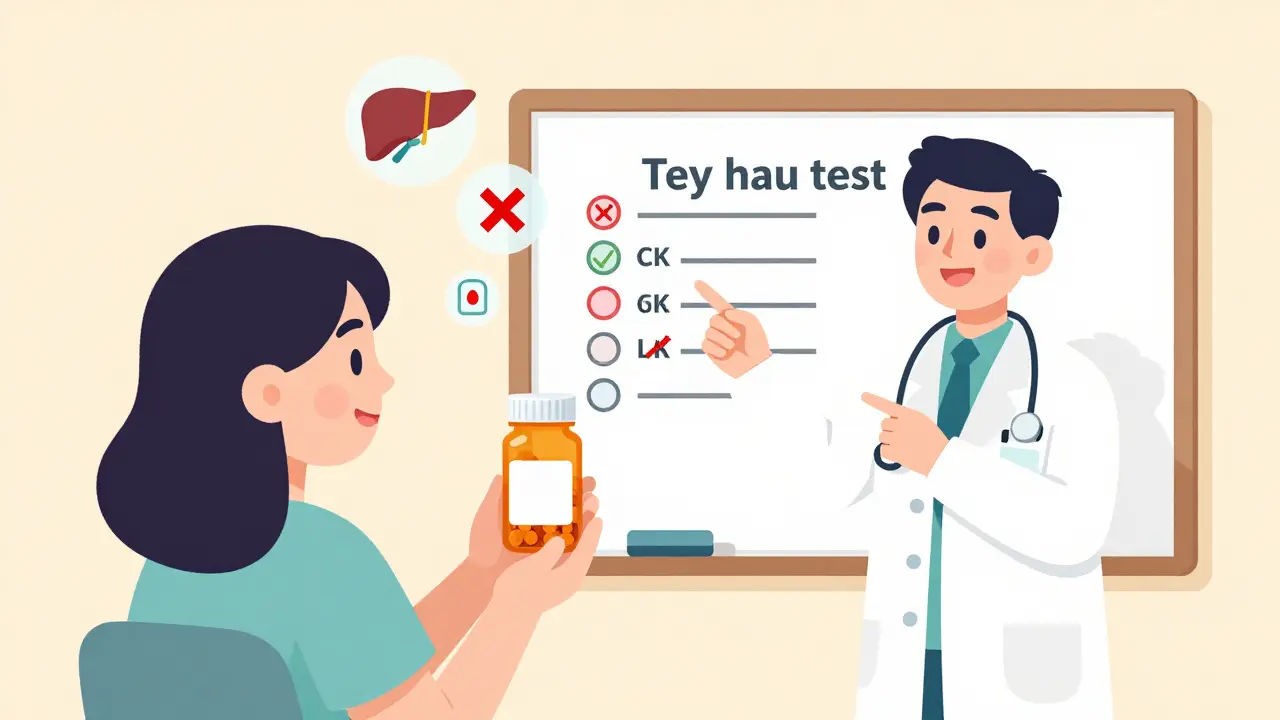
Statin Monitoring Decision Guide
This tool helps you understand what lab tests you really need while on statins, based on current medical guidelines. Many doctors still order unnecessary tests due to outdated practices, but you can be informed about evidence-based monitoring.
Your Recommended Testing Plan
Required Tests:
- Lipid panel (total cholesterol, HDL, LDL, triglycerides)
Additional tests if needed:
- Liver enzymes (ALT/AST) only if you have liver symptoms
- CK (creatinine kinase) only if you have persistent muscle pain
Important: If your liver enzymes are less than 3 times the upper limit of normal, do not stop taking statins. Stopping increases your heart attack risk by 10-20%.
What You Should Know
Current guidelines (NICE, ACC/AHA) recommend:
- Baseline test before starting statins
- Lipid panel 4-12 weeks after starting
- Lipid panel annually after that
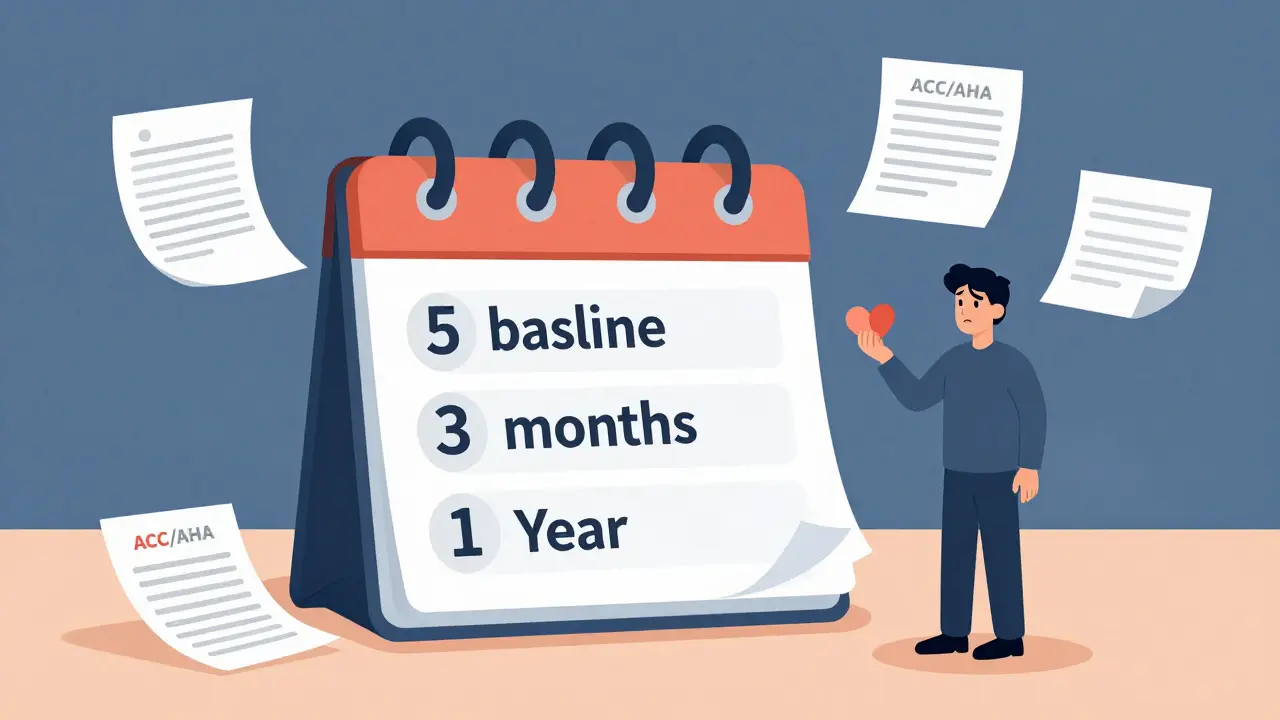
- Liver enzymes only at baseline, 3 months, 12 months - and only if you have symptoms
Serious liver damage from statins is extremely rare (<1 per million patient-years). Muscle pain often isn't statin-related (up to 70% of people experience it with placebo).
When you start taking a statin, your doctor might order a bunch of blood tests. You might get called back for more tests every few months. But here’s the truth: most of those tests aren’t necessary if you feel fine. The old habit of checking liver enzymes every three months? That’s outdated. The FDA changed its guidelines in 2012, and major medical groups have followed. Yet, many doctors still order them - and patients are left confused, anxious, and sometimes even taken off a life-saving drug over a harmless lab number.
Why You’re on Statins (and What They Do)
Statins work by blocking an enzyme in your liver that makes cholesterol. Lowering LDL (bad cholesterol) reduces your risk of heart attack and stroke. They’re not just for people with very high cholesterol. Many people take them because they have diabetes, high blood pressure, or a family history of heart disease. In the U.S. alone, over 260 million statin prescriptions are filled every year. That’s one in five adults. But knowing why you’re on it matters more than how often you get blood drawn.The Only Lab Tests That Actually Matter
You don’t need a full panel every time you walk in. Here’s what you really need:- Baseline test - Before you start: total cholesterol, HDL (good cholesterol), non-HDL cholesterol, triglycerides, and a basic liver panel (ALT and AST). This gives your doctor a starting point.
- 4 to 12 weeks after starting or changing dose - Repeat the lipid panel. This is the only test that tells you if the statin is working. You want to see your LDL drop by 30% to 50%. If it doesn’t, your dose might need adjusting.
- Once a year after that - Just the lipid panel. No need for liver enzymes unless you’re having symptoms.
That’s it. No monthly tests. No quarterly liver checks. If you’re not having muscle pain, fatigue, or dark urine, you don’t need creatine kinase (CK) tested - and you definitely don’t need it after a workout. Exercise alone can spike CK levels and trigger false alarms.
Liver Tests? Only If You Have Symptoms
Liver enzymes (ALT, AST) are often checked out of habit. But here’s what the science says: serious liver damage from statins is extremely rare - less than one case per million patient-years. Most elevations are mild, temporary, and mean nothing. A 2013 study of 143 patients found that even when liver enzymes went up, none of them had real liver injury. And in every case, the levels went back down on their own.The National Institute for Health and Care Excellence (NICE) says: test liver enzymes only at the start, at three months, and at 12 months. After that? Only if you feel unwell. The American College of Cardiology and American Heart Association agree. The FDA dropped routine liver monitoring in 2012 because the data showed no benefit.
Yet, many clinics still order them every three months. Why? Because old habits die hard. Electronic health records often have default settings that auto-order LFTs. Some doctors are afraid of missing something. But missing a real problem isn’t the risk - the real risk is stopping your statin because of a false alarm.
What Happens If Your Liver Enzymes Are High?
If your ALT or AST is more than three times the upper limit of normal, your doctor might pause the statin. But if it’s below that? Keep taking it. Many normal ranges go up to 55 U/L. A value of 58? That’s not dangerous. It’s not even unusual. One patient I spoke with had her statin stopped because her ALT was 58 - and her doctor didn’t know the normal range was 7 to 55. She was terrified. She had no symptoms. Her heart risk was high. She didn’t need to stop. She just needed better information.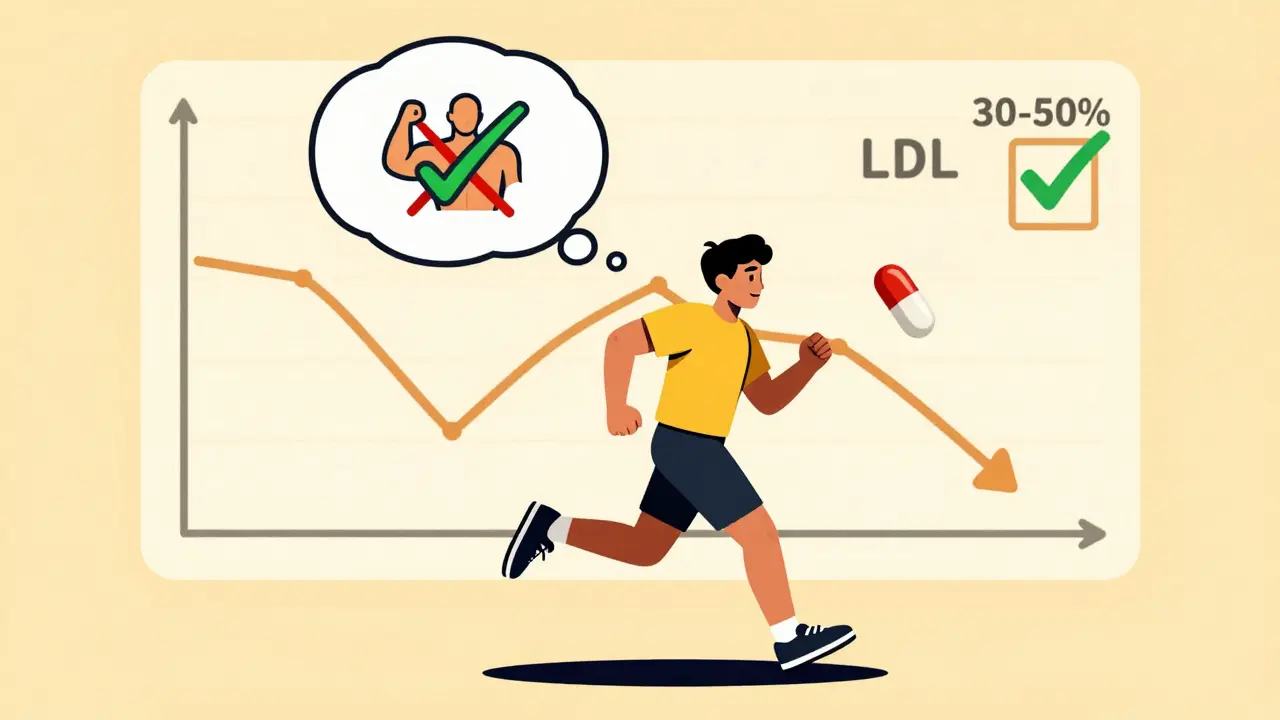
What About Muscle Pain?
Muscle aches are the most common concern. But here’s the twist: most people who say they have statin-related muscle pain don’t actually have it. In clinical trials, up to 70% of people who quit statins because of muscle pain had no difference in symptoms when they took a placebo instead. That’s the nocebo effect - expecting side effects makes you feel them.True statin myopathy is rare. It shows up as persistent, unexplained muscle pain or weakness - not soreness after a hike or a new workout. If you have it, and your creatine kinase (CK) is more than 10 times the normal level, then yes, stop the statin. But if you’re just sore? Don’t test CK. It’ll be high anyway. And don’t stop your statin without talking to your doctor. Stopping increases your heart attack risk by 10% to 20%.
Diabetes Risk? Don’t Panic
Statins slightly raise blood sugar. That’s real. But the benefit - preventing a heart attack - far outweighs the risk. The American Diabetes Association says you should monitor HbA1c every 3 to 6 months if you already have prediabetes or diabetes. But if you don’t? No need to check HbA1c just because you’re on a statin. The European guidelines are clear: routine glucose testing isn’t needed. If your weight, diet, and activity level are stable, your blood sugar will stay stable too.What’s New in 2026?
The field is moving toward smarter monitoring. In 2023, the FDA approved genetic testing for the SLCO1B1 gene variant. If you have it, you’re at higher risk for muscle side effects from simvastatin. This test isn’t routine yet, but it’s coming. It could mean personalized dosing - lower doses for high-risk people, standard doses for others.Another shift: ApoB is now an option to track treatment response instead of LDL-C, especially if your triglycerides are high. It’s a more accurate measure of how many bad particles are in your blood. Not every lab offers it, but if your lipid specialist mentions it, ask about it.
AI tools are starting to help too. By analyzing your EHR data - your age, weight, other meds, past labs - algorithms can flag who really needs extra monitoring. The European Heart Journal predicts that by 2027, routine liver tests will drop by half because of this.
What to Do If Your Doctor Orders Unnecessary Tests
Bring this info with you. Print out the NICE or ACC/AHA guidelines. Say: “I’ve read that routine liver tests aren’t needed unless I have symptoms. Can we stick to the lipid panel every year?” Most doctors will agree - especially if you’re calm, informed, and have no symptoms.If your doctor refuses, ask why. Is it habit? Fear? A default setting in the computer? You have the right to ask for evidence-based care. You’re not being difficult - you’re being smart.
The Real Danger: Stopping Statins Over Minor Lab Results
This is the big one. A 2017 JAMA Internal Medicine study found that patients who stopped statins because of minor liver enzyme elevations had a 10% to 20% higher chance of having a heart attack or stroke in the next year. That’s not a small risk. That’s life-changing. Statins are among the most studied drugs in history. They save lives. But they only work if you take them.Don’t let a lab number scare you into stopping. If you’re feeling fine, keep taking your statin. If you’re worried, ask for the actual numbers and what they mean. Most elevations are noise. Your heart doesn’t care about a single ALT value. It cares that you’re still on your medication.
Bottom Line
You don’t need to be a lab rat to stay safe on statins. Here’s your simple plan:- Get a lipid panel before starting.
- Repeat it 4 to 12 weeks after starting or changing dose.
- Get it once a year after that.
- Only test liver enzymes at baseline, 3 months, and 12 months - then only if you feel sick.
- Don’t test CK unless you have persistent muscle pain - and never after exercise.
- Never stop your statin because of a slightly high liver number.
Statin therapy isn’t about chasing perfect lab results. It’s about staying alive. The best test is the one you take every day - the pill.
Do I need to get liver tests every 3 months on statins?
No. Routine liver enzyme testing every 3 months is outdated. Major guidelines (NICE, ACC/AHA, FDA) say to test only at baseline, at 3 months, and at 12 months - then only if you have symptoms like yellowing skin, dark urine, or extreme fatigue. Most elevations are harmless and don’t require stopping the medication.
Can statins damage my liver?
Serious liver damage from statins is extremely rare - less than one case per million patients per year. Mild, temporary increases in liver enzymes happen in some people but are not linked to real injury. The FDA removed routine liver monitoring in 2012 because studies showed no benefit. If your liver enzymes are below 3 times the upper limit of normal, keep taking your statin.
I have muscle pain. Should I stop my statin?
Not necessarily. Most muscle pain on statins isn’t caused by the drug. If the pain is mild, comes and goes, or happens after exercise, it’s likely not statin-related. True statin myopathy is rare and involves persistent, unexplained pain or weakness. Only stop if your creatine kinase (CK) is more than 10 times normal - and even then, talk to your doctor first. Stopping statins increases heart attack risk.
Do statins cause diabetes?
Statins can slightly raise blood sugar, but the risk is small. For people with prediabetes or diabetes, monitoring HbA1c every 3 to 6 months is reasonable. But if you don’t have diabetes, routine glucose or HbA1c testing isn’t needed just because you’re on a statin. The benefit of preventing heart disease far outweighs this small risk.
What if my doctor won’t stop ordering unnecessary tests?
Ask why. Bring printed guidelines from NICE or the American College of Cardiology. Say: “I’ve read that these tests aren’t recommended unless I have symptoms. Can we follow the evidence-based protocol?” Many doctors are unaware of the updated guidelines. If they still refuse, consider asking for a referral to a lipid specialist or cardiologist who follows current standards.




Elen Pihlap
6 January / 2026I just stopped my statin because my ALT was 62 and my doctor freaked out. Now I feel fine but I’m scared to start again. 😭