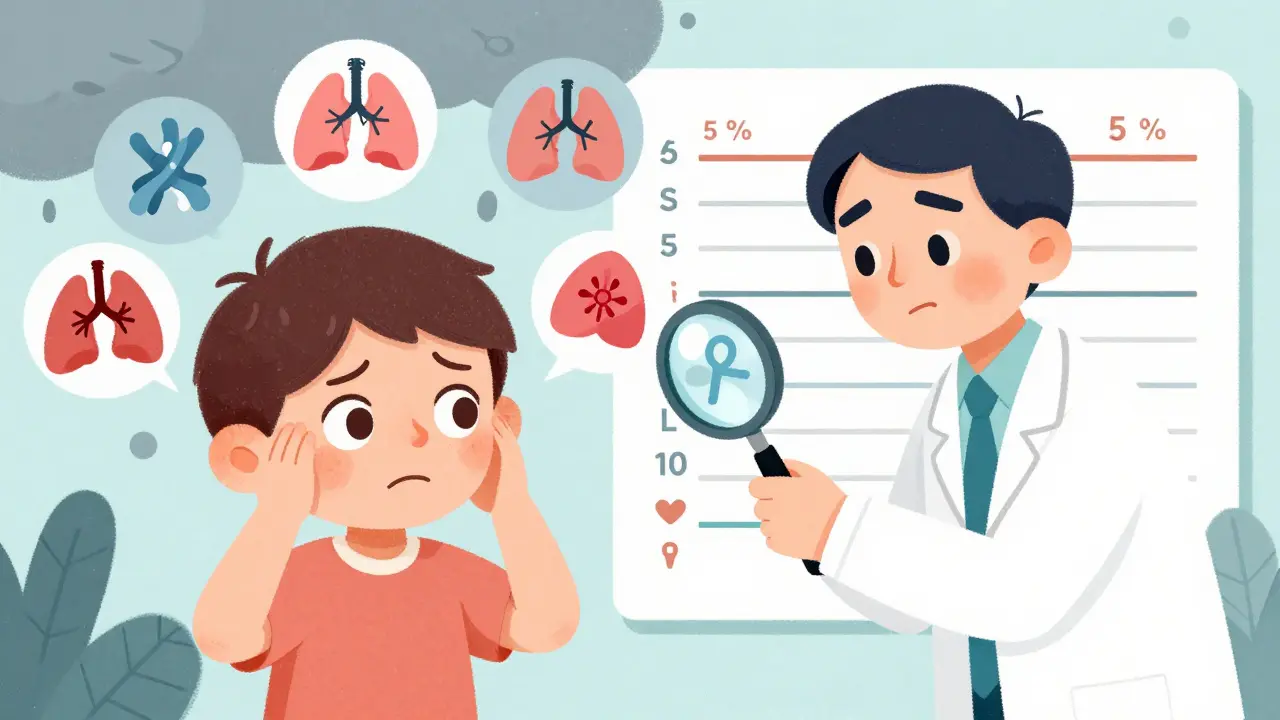
When infections won’t quit, it’s not just bad luck
Most kids get colds. A lot of them. Six, eight, even twelve respiratory infections a year is normal for preschoolers. But when infections keep coming back-ear after ear, sinus after sinus, pneumonia after pneumonia-it’s not just bad luck. It could be a sign that the body’s defenses are failing. Primary immunodeficiencies (PIDs) are rare, but they’re underdiagnosed. And every month that goes by without a diagnosis increases the risk of permanent lung damage, organ failure, or even death.
The 10 warning signs that shouldn’t be ignored
Doctors don’t wait for a child to get 20 infections before acting. They look for patterns. The Royal Australian College of General Practitioners and the American Academy of Allergy, Asthma & Immunology agree on a set of red flags:
- Four or more ear infections in one year
- Two or more serious sinus infections in one year
- Two or more pneumonias in one year
- Deep skin or organ abscesses that keep coming back
- Persistent oral thrush after age one
- Infections that don’t clear up after two months of antibiotics
- Needing IV antibiotics to treat infections
- Two or more deep-seated infections like septicemia or meningitis
- Failure to gain weight or grow normally
- A family history of immunodeficiency
These aren’t vague concerns. They’re measurable thresholds. For example, thrush that lingers past age one isn’t just a fungal annoyance-it’s a red flag with 89% specificity for antibody deficiency. And if a child needs IV antibiotics just to clear a sinus infection, that’s not routine. That’s a system screaming for help.
What the physical exam can reveal
A child’s body tells stories. Sometimes, the clues are right in front of you. Absent tonsils or lymph nodes? That’s a hallmark of severe combined immunodeficiency (SCID). In one study, 78% of SCID cases showed no visible lymphoid tissue. Skin changes matter too. Telangiectasias-those tiny red spider veins on the face or chest-are found in 95% of children with ataxia-telangiectasia. Growth charts don’t lie. If a child is below the 5th percentile for height and weight, and they’re constantly sick, it’s not just being small. It’s a sign of chronic immune stress. In one Pediatrics study, 63% of children with PIDs showed failure to thrive.
Where to start: The basic immune workup
Once red flags appear, testing begins with simple, widely available tools. The first step is a complete blood count (CBC) with manual differential. In children over one year, a lymphocyte count below 1,500 cells/μL suggests T-cell trouble. In infants under one, anything under 3,000 is a warning. Next come immunoglobulin levels: IgG, IgA, IgM. But here’s the trap-normal ranges change with age. A 3-month-old with an IgG of 243 mg/dL is perfectly healthy. An 8-year-old with the same level is in trouble. Many pediatricians miss this. One Ohio doctor reported three CVID cases misdiagnosed as chronic bronchitis because her patients’ IgG was 420 mg/dL-just above the adult cutoff, but far below the age-adjusted norm for their age.
Testing antibody function: The real gold standard
Having normal IgG levels doesn’t mean the immune system works. A child can have all the right numbers and still not fight off infections. That’s why vaccine challenges are critical. After giving a tetanus or diphtheria shot, you wait 4-6 weeks and check IgG titers. Protective levels? At least 0.1 IU/mL. For pneumococcal vaccine, it’s 1.3 μg/mL. If the body doesn’t respond, it’s not a lab error. It’s a diagnosis. This is how you confirm Common Variable Immunodeficiency (CVID)-low IgG plus low IgA or IgM, plus poor vaccine response. Without this test, you might mistake transient hypogammaglobulinemia of infancy (which resolves on its own) for CVID. And that leads to unnecessary, expensive, and risky immunoglobulin infusions.
What the lab won’t tell you: Ruling out mimics
Not every recurrent infection is immune failure. Up to 43% of cases have anatomical causes. Cystic fibrosis accounts for 12%. Structural sinus problems make up 31%. Inhaled foreign bodies? They’re behind 18% of recurrent pneumonia cases in kids. And here’s the kicker: up to 30% of patients diagnosed with CVID actually have something else-autoimmune disease, cancer, or medication side effects. That’s why you don’t jump to treatment. You rule out the mimics first. A chest X-ray. A sweat test. A CT scan of the sinuses. A review of medications like long-term steroids or biologics. Skipping these steps leads to misdiagnosis. One multicenter study found 22% of patients got IVIG without proof of antibody failure.
The new frontier: Genetic testing and AI
Five years ago, diagnosing a PID meant years of tests, guesswork, and frustration. Now, next-generation sequencing panels like StrataID Immune screen 484 immune-related genes in one test. They find the cause in 35% of suspected cases-nearly double the rate of older methods. The NIH is already testing AI algorithms that predict specific PIDs using routine lab data. Early results show 92% accuracy. Within five years, whole exome sequencing may become the first test, not the last. Newborn screening for SCID is expanding fast-38 U.S. states now include it, up from 26 in 2018. That’s saving lives. Babies diagnosed before 3.5 months have a 94% survival rate. After that? It drops to 69%.

Why timing matters more than you think
Delay isn’t just inconvenient. It’s dangerous. The average time from first symptoms to diagnosis used to be 9.2 years. With structured protocols and awareness campaigns like the Jeffrey Modell Foundation’s 10 Warning Signs, that’s now down to 2.1 years. But that’s still too long. Every missed infection is another scar on the lungs. Every untreated sinus infection is another step toward bronchiectasis. Every delay in SCID diagnosis is a countdown to death. The tools are here. The guidelines are clear. What’s missing is vigilance.
What parents and doctors can do today
If you’re a parent and your child keeps getting sick, don’t wait for the next infection. Start asking questions: Is this normal? Have we ruled out structural problems? Have we checked antibody function? If you’re a doctor, don’t rely on adult reference ranges for kids. Don’t treat low IgG without proof of poor response. Don’t give IVIG without a clear diagnosis. Use the 10 warning signs. Order the CBC. Check immunoglobulins with age-adjusted norms. Do the vaccine challenge. Refer early. The system works when we follow the steps-not when we assume it’s just a phase.
What’s next for immunodeficiency care
The global diagnostic market for PIDs is expected to grow from $1.2 billion in 2022 to $2.1 billion by 2028. But access isn’t equal. In 78% of low- and middle-income countries, basic immunoglobulin testing isn’t available. That’s why organizations like PATH and the Bill & Melinda Gates Foundation are developing point-of-care tests. The goal? To make diagnosis possible anywhere-not just in major hospitals. The future isn’t just better tests. It’s faster, fairer access to them.
Can a child outgrow recurrent infections without treatment?
Some children do-especially those with transient hypogammaglobulinemia of infancy, which resolves by age 2-3. But if infections are severe, deep, or involve unusual organisms like fungi or Pneumocystis, it’s not a phase. It’s a signal. Waiting to see if it gets better can lead to irreversible lung damage. Always rule out immunodeficiency before assuming it’s normal.
Is IV immunoglobulin (IVIG) always the answer for recurrent infections?
No. IVIG is only recommended when there’s proof of antibody deficiency-low IgG levels plus poor response to vaccines. Giving IVIG without this evidence is unnecessary and risky. One study found 22% of patients received IVIG without proper testing. Side effects include headaches, fever, and kidney damage. It’s expensive and not a cure. It’s a bridge-until the real problem is identified and treated.
Why do some doctors miss immunodeficiency?
Many don’t know the age-adjusted normal ranges for immunoglobulins. A 6-month-old with IgG at 558 mg/dL is normal. An 8-year-old with the same level is dangerously low. Also, access to functional antibody testing is limited in many clinics. And some assume frequent infections are just part of growing up. But when infections hit the red flag thresholds, it’s not normal. It’s a medical emergency.
What’s the difference between primary and secondary immunodeficiency?
Primary immunodeficiency (PID) is genetic-you’re born with it. Examples include SCID, CVID, and X-linked agammaglobulinemia. Secondary immunodeficiency is caused by something else: cancer, HIV, malnutrition, steroids, chemotherapy, or autoimmune diseases. The treatment is different. For secondary causes, you fix the underlying problem. For PID, you replace or support the missing immune function. Misdiagnosing one as the other leads to wrong treatment.
Can adults develop immunodeficiency too?
Yes. Common Variable Immunodeficiency (CVID) is often diagnosed in adults in their 20s-40s. Symptoms include chronic sinusitis, pneumonia, gastrointestinal infections, and autoimmune problems. Many adults have been sick for years before being diagnosed. If you’ve had recurrent pneumonia, unexplained diarrhea, or persistent thrush since your 20s, ask your doctor about immune testing. It’s not just a childhood issue.
How long does it take to get a diagnosis?
With a structured approach-using the 10 warning signs, basic labs, and vaccine challenges-it takes about 112 days on average. Without a plan, it can take over a year, sometimes years. The key is starting early and following a clear pathway: rule out mimics, test antibody function, then consider genetic testing. Delay isn’t passive-it’s harmful.




Jocelyn Lachapelle
15 December / 2025I've seen this with my niece. Four ear infections in one year, then pneumonia. We thought it was just bad luck until the pediatrician said 'this isn't normal.' Now she's on IVIG and thriving. Don't wait for 10 infections. Trust your gut.