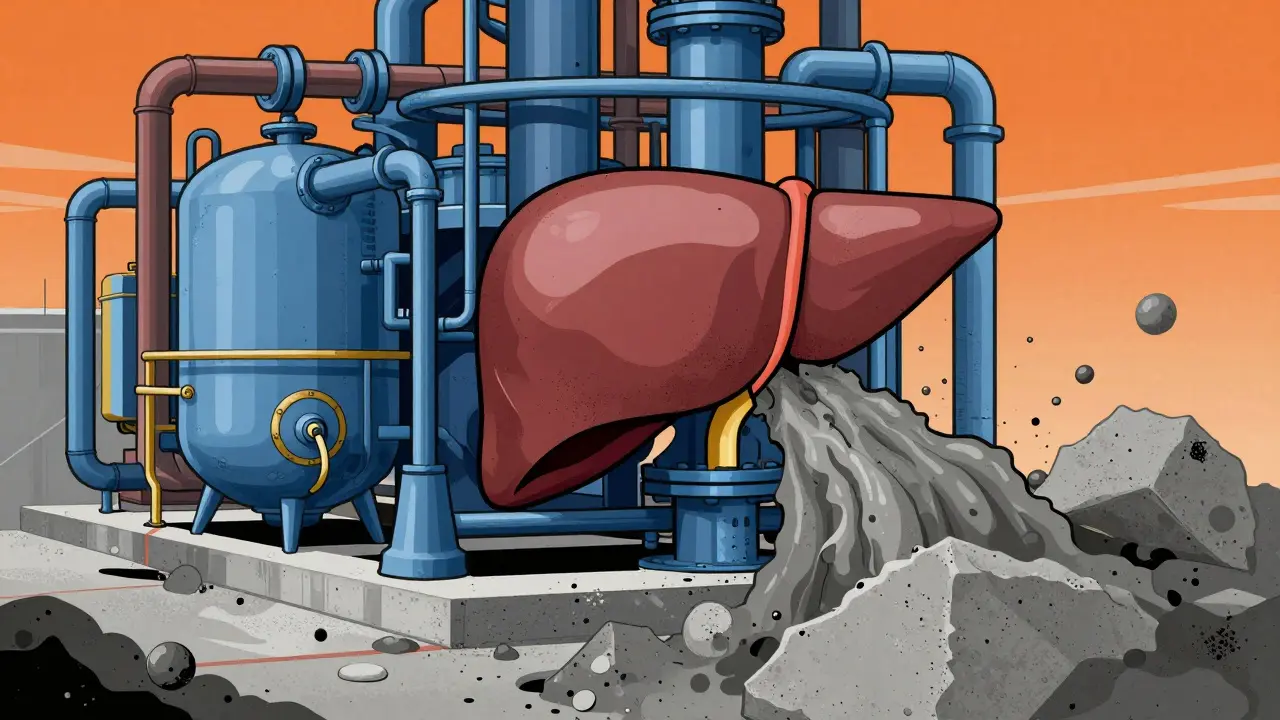
Imagine your liver as a high-tech filtration plant that works 24/7 to clean your blood, process nutrients, and produce vital proteins. Now, imagine that plant slowly being filled with concrete. That is essentially what happens with cirrhosis is a late-stage liver condition where healthy liver tissue is replaced by permanent, non-functional scar tissue. Because the liver is remarkably resilient, you might not feel a thing for years while the damage piles up. But once the scarring hits a tipping point, the results can be sudden and severe.
What Actually Happens During Liver Scarring?
The process starts with something called fibrosis. When your liver gets damaged-whether by alcohol, a virus, or fat buildup-it tries to heal itself. However, if the damage keeps happening, the liver creates thick bands of scar tissue instead of healthy cells. When this scarring becomes widespread, it's called cirrhosis.
This isn't just a cosmetic change in the organ. The scar tissue physically squeezes the blood vessels running through the liver. This leads to portal hypertension, which is when the pressure in the portal vein exceeds 10 mmHg. Think of it like a kink in a garden hose; the blood can't flow through the liver easily, so it backs up into other parts of your body, often causing fluid to leak into the abdomen.
As the scarring worsens, the liver loses its ability to perform its core jobs. It stops producing enough albumin (a protein that keeps fluid in your blood vessels) and clotting factors, which is why people with advanced cirrhosis bruise and bleed much more easily.
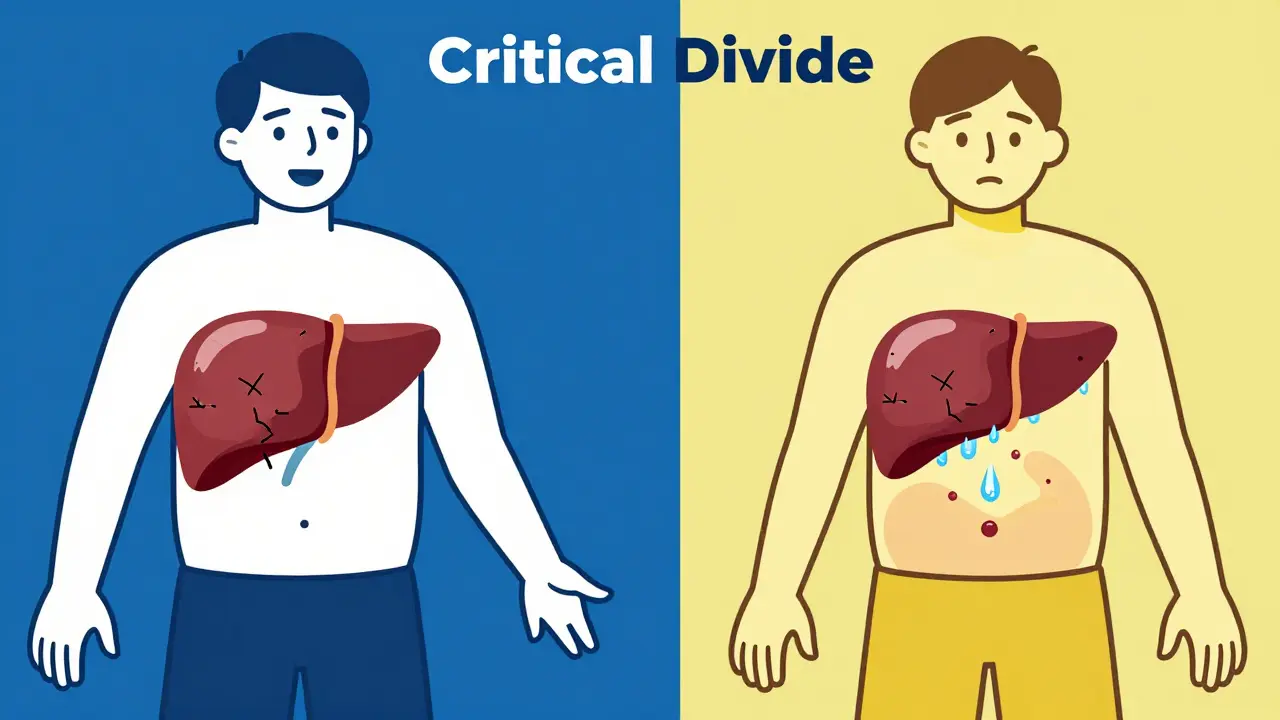
Compensated vs. Decompensated: The Critical Divide
Doctors divide cirrhosis into two main stages. The difference between them is often the difference between living a relatively normal life and needing urgent hospitalization.
- Compensated Cirrhosis: Your liver is heavily scarred, but it's still "getting the job done." You might feel a bit more tired than usual, but you have no major complications. Many people find out they have this stage during routine blood work because they had no symptoms.
- Decompensated Cirrhosis: This is the tipping point. The liver can no longer keep up, and symptoms become obvious. This is where complications like jaundice (yellowing of the skin) or mental confusion appear.
| Feature | Compensated Cirrhosis | Decompensated Cirrhosis |
|---|---|---|
| Symptoms | Minimal or none | Jaundice, Ascites, Confusion |
| Liver Function | Sufficient for daily needs | Severely impaired |
| 5-Year Survival Rate | 80-90% | 20-50% |
| Treatment Goal | Prevent progression | Manage complications / Transplant |
Warning Signs of Liver Failure
When the liver begins to fail, the body starts to accumulate toxins that should have been filtered out. One of the most dangerous results is hepatic encephalopathy. This happens when ammonia builds up in the blood and reaches the brain, causing a "mental fog," extreme confusion, or a characteristic flapping tremor in the hands called asterixis. If you or a loved one experience sudden confusion, it is a medical emergency.
Another major red flag is ascites. This is the buildup of fluid in the peritoneal cavity, making the abdomen look swollen. It's often distressing and can lead to infections. To treat this, doctors perform a paracentesis-essentially using a needle to drain the fluid-but this usually requires an infusion of albumin to keep the patient's blood pressure stable.
You can also look at laboratory markers to gauge the risk. Doctors look for bilirubin levels above 2 mg/dL, low platelet counts (below 150,000/mm³), and a prolonged prothrombin time (INR >1.5), which indicates the blood is taking too long to clot.
How Doctors Measure Severity
Because every patient is different, doctors use scoring systems to decide who needs a transplant first. The most common is the MELD score (Model for End-Stage Liver Disease). This score ranges from 6 to 40 and is based on bilirubin, creatinine, and INR levels. Generally, a score over 15 indicates a high risk of mortality without a transplant.
Another tool is the Child-Pugh classification, which grades patients as A, B, or C. A patient in class A has a much better one-year survival rate (around 100%) compared to someone in class C (around 45%).
While liver biopsies were once the gold standard, many clinics now use non-invasive tests like ultrasound elastography. This measures liver stiffness; if the value exceeds 12.5 kPa, it's a strong indicator of cirrhosis. Newer tech like magnetic resonance elastography is even more accurate, hitting about 90% accuracy in diagnosis.
The Path to Liver Transplantation
When scarring is permanent and the liver is decompensated, a transplant becomes the only definitive cure. A liver transplant is a complex surgery where a diseased liver is replaced by a healthy one from a deceased or living donor.
Getting on the list is a grueling process. In the U.S., the United Network for Organ Sharing (UNOS) manages the waiting list, prioritizing candidates using the MELD-Na score. The reality is tough: in 2022, there were over 14,000 active candidates but only about 8,780 transplants performed. This gap means about 12% of listed patients die while waiting.
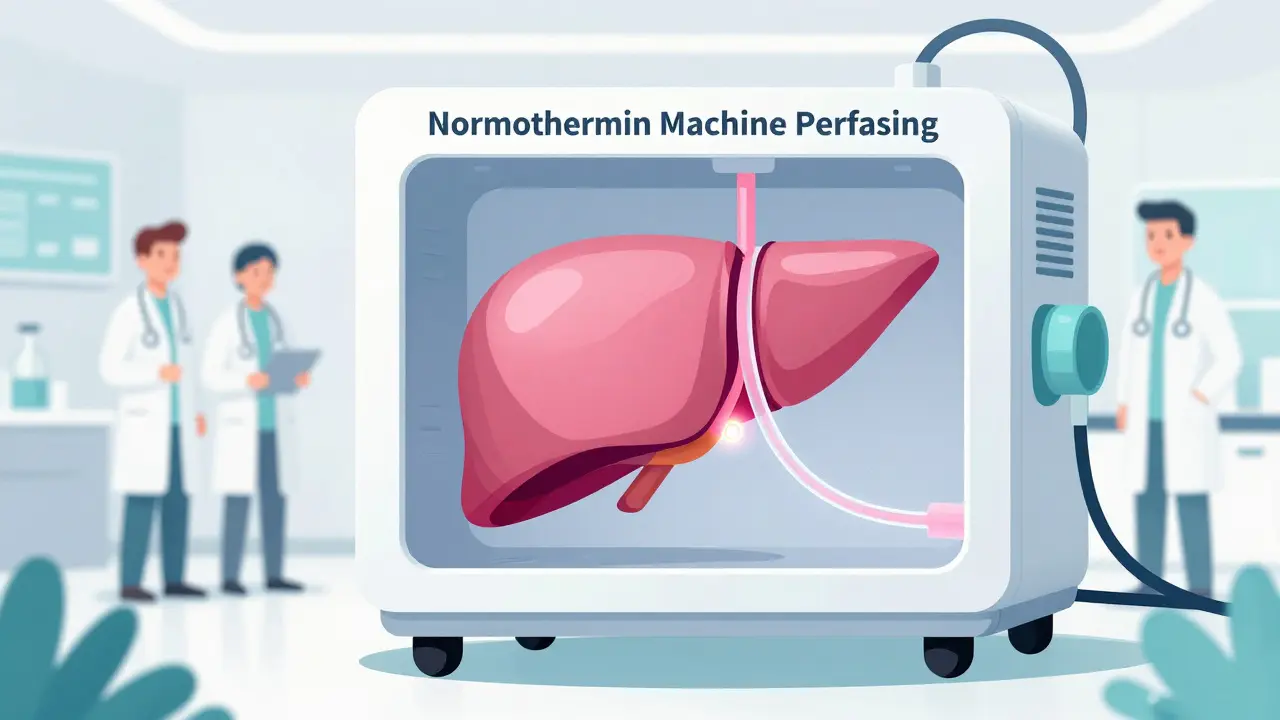
However, there is hope in new tech. Normothermic machine perfusion-which keeps the donor organ "alive" and pumping blood outside the body-has increased the number of usable grafts by 22%. Researchers are also testing bioartificial livers and stem cell therapies to bridge the gap for those who can't wait for a donor.
Managing the Condition Daily
If you are living with cirrhosis, your daily routine changes significantly. Nutrition becomes a primary tool for survival. Most patients must limit their sodium intake to less than 2,000 mg per day to prevent fluid buildup in the abdomen and legs.
The learning curve is steep, often taking 3 to 6 months to get the hang of dietary restrictions and medication schedules. It is also vital to have a multidisciplinary team. Combining a hepatologist with a nutritionist and an addiction specialist (if alcohol was the cause) has been shown to reduce emergency hospital visits by 40% in some cases.
Can cirrhosis be reversed?
Generally, once the liver has developed full cirrhosis, the scarring is considered irreversible. However, early-stage fibrosis can sometimes be reversed if the underlying cause-such as Hepatitis C or alcohol abuse-is treated or removed. The goal of treatment for established cirrhosis is to stop further damage and manage complications.
What is the most common cause of cirrhosis today?
While alcohol has historically been a primary driver, Non-Alcoholic Fatty Liver Disease (NAFLD) is rapidly increasing. In the U.S., NAFLD now accounts for about 24% of cirrhosis cases, often surpassing alcohol-related causes due to rising rates of obesity and diabetes.
How do I know if I have compensated or decompensated cirrhosis?
Compensated cirrhosis is often "silent," meaning you have no outward symptoms. Decompensated cirrhosis is marked by overt signs: jaundice (yellow skin/eyes), ascites (swollen belly), or hepatic encephalopathy (confusion/disorientation). A doctor uses blood tests and imaging to officially stage the disease.
What is a MELD score and why does it matter?
The Model for End-Stage Liver Disease (MELD) score is a numerical value (6-40) based on lab tests. It predicts the short-term risk of death. It is the primary tool used by transplant networks to determine the priority of patients on the waiting list; a higher score means a more urgent need for a new liver.
Does a liver transplant cure the cause of cirrhosis?
A transplant replaces the damaged organ, but it doesn't cure the original cause. If the cirrhosis was caused by an autoimmune disease or uncontrolled diabetes, those conditions must still be managed. If it was caused by alcohol or drugs, sobriety is typically required to ensure the new liver isn't damaged in the same way.