
Standing up from a chair and feeling dizzy? For many older adults on blood pressure medication, this isn’t just a momentary glitch-it’s a warning sign. Orthostatic hypotension-a sudden drop in blood pressure when standing-is one of the most dangerous side effects of hypertension treatment in seniors. It doesn’t just cause dizziness. It leads to falls, fractures, hospital stays, and even death. Yet, many doctors and patients still believe that lowering blood pressure too much causes this problem. The truth? It’s often the type of medication, not the intensity, that’s to blame.
What Is Orthostatic Hypotension-and Why Does It Matter?
Orthostatic hypotension happens when your blood pressure drops by at least 20 mm Hg systolic or 10 mm Hg diastolic within three minutes of standing. That’s not a minor blip. It means your brain isn’t getting enough blood fast enough. The result? Lightheadedness, blurred vision, weakness, or fainting. For someone over 70, a single fall can change everything.
It’s common. Between 3% and 26% of older adults with high blood pressure experience it. And the risk goes up with age. Why? As we get older, our body’s natural pressure regulators slow down. Baroreceptors-those tiny sensors in your neck that tell your heart to pump harder when you stand-don’t respond as quickly. Blood vessels don’t constrict as effectively. The kidneys produce less renin, which helps maintain pressure. All of this makes standing up risky, especially if you’re on the wrong meds.
Not All Blood Pressure Meds Are Created Equal
Here’s the big surprise: Aggressive blood pressure control doesn’t cause orthostatic hypotension. In fact, the opposite is true. The SPRINT trial and multiple meta-analyses show that tighter control (targeting under 120 mm Hg) doesn’t increase falls or dizziness-it actually lowers the risk of orthostatic hypotension by 17%.
So what’s really causing the problem? The type of drug.
- Alpha blockers (like doxazosin, terazosin) carry the highest risk-up to 28% of seniors on these drugs develop orthostatic hypotension. They relax blood vessels too abruptly.
- Beta-blockers (metoprolol, atenolol) are next. Studies show they triple the risk of sustained low blood pressure when standing. They slow heart rate and reduce cardiac output, making it harder to compensate when you stand.
- Diuretics (furosemide, hydrochlorothiazide) can cause volume depletion. Less fluid in the blood vessels means less pressure to push blood to the brain.
- Central sympatholytics (clonidine, methyldopa) interfere with the nervous system’s ability to raise blood pressure on demand.
On the flip side, some drugs are much safer:
- ACE inhibitors (lisinopril, enalapril) and ARBs (losartan, valsartan) have the lowest risk. Studies show they reduce orthostatic hypotension by 14-15% compared to other classes. They don’t over-dilate vessels or blunt heart response. They’re the preferred first-line choice for seniors.
- Amlodipine and isradipine (calcium channel blockers) are also safer than older CCBs like diltiazem. Their slow, steady action avoids sudden drops in pressure.
Why Stopping Meds Isn’t the Answer
Many doctors, worried about dizziness, will lower the dose or stop the medication entirely. But that’s often the wrong move.
Dr. Harry Goldblatt from Case Western Reserve University found that the real danger isn’t low standing pressure-it’s high lying pressure. If you stop a blood pressure pill because someone gets dizzy standing up, their blood pressure when lying down might spike. That increases stroke and heart attack risk.
The American Heart Association says: Don’t routinely stop or reduce antihypertensives just because someone has orthostatic hypotension-unless they’re symptomatic and on a high-risk drug.
Instead, swap the risky meds for safer ones. Switch from doxazosin to losartan. Swap metoprolol for amlodipine. That’s how you protect both the brain and the heart.
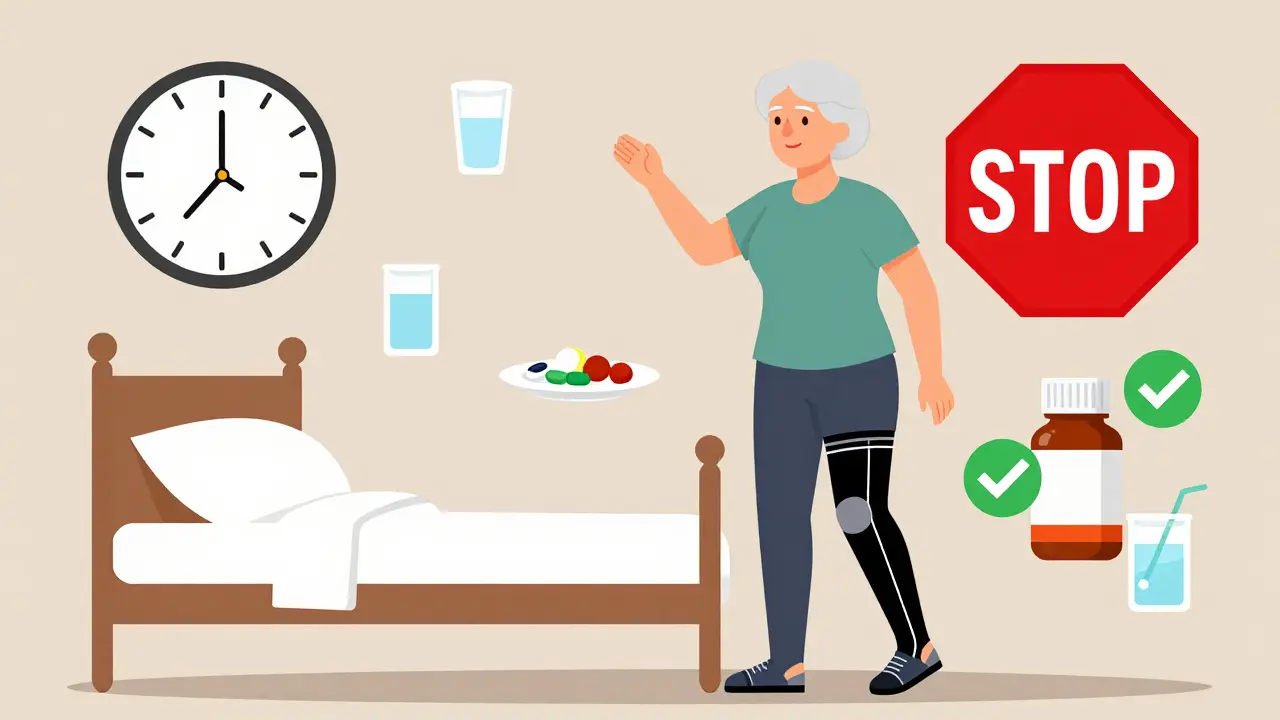
Non-Drug Strategies That Actually Work
Medication changes help-but they’re not the whole story. Simple, daily habits make a huge difference.
- Stand up slowly. Don’t jump out of bed. Sit on the edge for 30 seconds. Then stand still for another 30 seconds before walking. Do this every time-after naps, after meals, after using the bathroom.
- Stay hydrated. Dehydration worsens orthostatic hypotension. Drink water throughout the day. A glass before standing can help.
- Eat smaller meals. Large meals divert blood to your gut, lowering pressure elsewhere. Split meals into four or five smaller ones.
- Wear compression stockings. These help push blood back up from the legs. Not glamorous, but effective.
- Avoid alcohol and hot showers. Both dilate blood vessels and can trigger sudden drops.
Patients who practice these steps consistently see improvement in 2-4 weeks. Many report fewer dizzy spells and more confidence walking around the house.
When Medication Is Still Needed
Some seniors need extra help beyond lifestyle changes and safer antihypertensives. If dizziness persists despite switching meds, doctors may add:
- Midodrine (Orvaten): A vasoconstrictor that tightens blood vessels. Works quickly but can cause high lying pressure if taken too late in the day.
- Droxidopa (Northera): Boosts norepinephrine to raise blood pressure. Used for neurogenic orthostatic hypotension.
- Fludrocortisone: Helps the body hold onto salt and water. Can cause swelling or high blood pressure when lying down.
- Pyridostigmine (Mestinon): Enhances nerve signaling. Less commonly used but helpful for some.
These aren’t first-line. They’re for when the basics don’t work. They require careful monitoring. And they’re not for everyone.

What’s Changing in 2025?
Guidelines are shifting fast. The 2023 update to the American Geriatrics Society Beers Criteria now explicitly lists alpha blockers and certain beta-blockers as “potentially inappropriate” for seniors with orthostatic hypotension risk. More doctors are now checking standing blood pressure during routine visits.
Market trends show it: In 2023, 38% of new hypertension prescriptions for seniors were ACE inhibitors or ARBs-up from 32% in 2020. That’s because doctors are learning that safety matters as much as lowering numbers.
Future drugs are being designed with position-sensing tech. Two compounds in Phase II trials adjust their effect based on whether the patient is lying down or standing. Imagine a pill that works harder when you’re upright and eases off when you’re resting. That’s the next frontier.
For now, the best advice is simple: Don’t fear low blood pressure. Fear the wrong pill. And don’t ignore dizziness-it’s not just aging. It’s a signal.
What to Ask Your Doctor
If you or a loved one is on blood pressure medication and feels dizzy when standing, here’s what to say:
- “Could this dizziness be from my medication?”
- “Which drug am I on, and is it linked to orthostatic hypotension?”
- “Can we switch to an ACE inhibitor or ARB instead?”
- “Can we check my blood pressure both lying down and standing up?”
- “Are there non-drug steps I can take right away?”
Don’t wait for symptoms to get worse. A simple blood pressure check-done properly-can prevent a fall before it happens.
Final Thought
High blood pressure is dangerous. But so is the wrong treatment. For older adults, the goal isn’t just to lower numbers. It’s to live safely, steadily, and without fear of falling. The right medication, paired with smart habits, makes that possible. And it’s not magic-it’s science. It’s time to stop treating orthostatic hypotension as a side effect. Treat it as a red flag. And act on it.
Is orthostatic hypotension normal as you get older?
No, it’s not normal-even though it’s common. Aging slows your body’s ability to regulate blood pressure, but that doesn’t mean dizziness when standing is unavoidable. Many seniors never experience it. When it does happen, it’s often caused by medication, not just age. It’s a warning sign, not a fact of life.
Should I stop my blood pressure medicine if I feel dizzy?
Don’t stop on your own. Stopping medication can cause your blood pressure to spike while lying down, which increases your risk of stroke or heart attack. Instead, talk to your doctor. They can check if your medicine is one of the high-risk types (like alpha blockers) and switch you to a safer option, like an ARB or ACE inhibitor.
Which blood pressure meds are safest for seniors?
ACE inhibitors (like lisinopril) and ARBs (like losartan) are the safest choices for older adults. They lower blood pressure effectively with the lowest risk of causing dizziness when standing. Amlodipine, a calcium channel blocker, is also a good option. Avoid alpha blockers (doxazosin), beta-blockers (metoprolol), and diuretics unless absolutely necessary.
Can lifestyle changes really help with orthostatic hypotension?
Yes-dramatically. Standing up slowly, drinking water before getting up, wearing compression stockings, and eating smaller meals can reduce dizziness by 50% or more in many people. These aren’t just tips-they’re proven strategies. Many patients see improvement in just 2-4 weeks.
How often should seniors have their blood pressure checked standing up?
Every time they start a new blood pressure medication, or if they report dizziness, lightheadedness, or falls. Even if they feel fine, doctors should check both lying and standing pressure at least once a year after age 70. Many clinics skip this step-but it’s critical. A simple 30-second check can prevent a fall.
For seniors managing hypertension, safety isn’t about the lowest number on the screen. It’s about staying steady on your feet. The right medicine, the right habits, and the right questions can make all the difference.



Jerry Peterson
20 December / 2025I’ve seen this play out with my dad-started on doxazosin, ended up in the ER after a fall. No one ever told us the med itself was the problem. We thought it was just ‘getting old.’ Switched him to losartan and he’s been walking like a teenager again. Simple fix, but so many docs don’t know this.