Opioid Metabolism: How Your Body Processes Pain Medications
When you take an opioid like oxycodone, hydrocodone, or morphine, your body doesn’t just leave it alone—it breaks it down. This process is called opioid metabolism, the biochemical process by which the liver transforms opioids into compounds that can be eliminated from the body. Also known as drug biotransformation, it determines how long the drug lasts, how strong it feels, and whether it might interact dangerously with other medications. Not everyone processes opioids the same way. Your genes, your liver health, and what else you’re taking all change the game.
At the heart of opioid metabolism are the CYP450 enzymes, a family of liver proteins responsible for breaking down most prescription drugs, including opioids. The most important ones here are CYP3A4 and CYP2D6. CYP2D6 turns codeine into morphine—so if your body makes too little of this enzyme, codeine won’t work. If you make too much, you could overdose on a normal dose. That’s why some people feel nothing from codeine, while others get dangerously sleepy. Meanwhile, CYP3A4 handles drugs like fentanyl and oxycodone. If you’re taking something that blocks this enzyme—like grapefruit juice, certain antibiotics, or antifungals—you could build up toxic levels of the opioid.
It’s not just about the liver. Kidney function matters too. If your kidneys aren’t filtering well, inactive metabolites can pile up and cause confusion or breathing trouble. Older adults, people with liver disease, or those on multiple meds are at higher risk. Even something as simple as switching from one opioid to another can go wrong if you don’t account for how each one is metabolized. That’s why pharmacists check your full list of meds before filling an opioid prescription.
There’s also the issue of genetic testing. Some clinics now test for CYP2D6 variants before prescribing opioids like tramadol or codeine. If you’re a poor metabolizer, you might need a different painkiller. If you’re an ultra-rapid metabolizer, you could be at risk even on low doses. It’s not routine everywhere—but it should be, especially if you’ve had bad reactions before.
What you’ll find in the posts below isn’t just theory. These are real stories and facts about how opioid metabolism affects people daily: why some meds work for one person and not another, how common drugs like antidepressants or antifungals can turn safe doses into dangerous ones, and what you need to ask your doctor before taking anything new. You’ll see how liver health, drug interactions, and even diet play a role. No fluff. Just what you need to know to stay safe.
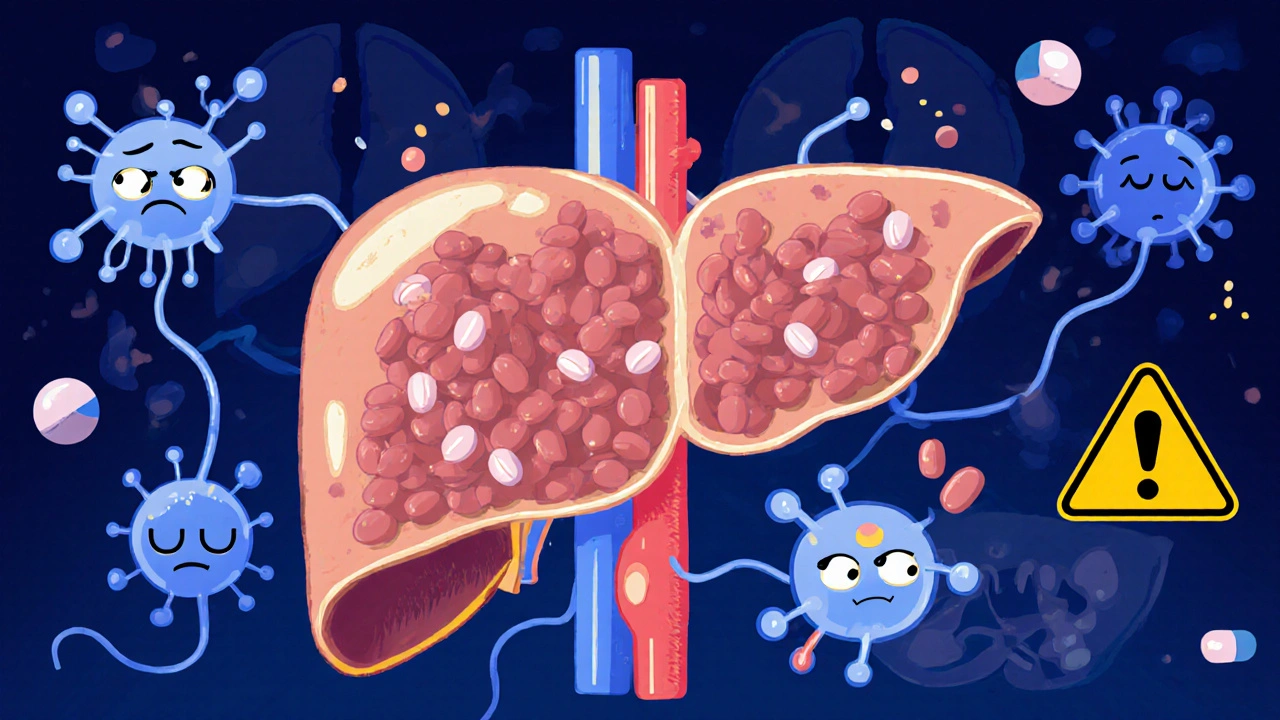
Opioids can become dangerous in liver disease due to impaired metabolism, leading to drug buildup and serious side effects. Learn which opioids are riskiest, how dosing must change, and what alternatives exist.
View Details