Malassezia Yeast: Causes, Symptoms, and How It Affects Skin Health
When your skin gets itchy, flaky, or develops oily patches that won’t go away, Malassezia yeast, a naturally occurring fungus that lives on human skin. Also known as Pityrosporum orbiculare, it’s not something you catch from someone else—it’s already on you, usually harmless, until it overgrows. This yeast thrives in oily areas like the scalp, face, chest, and back. When your skin’s oil production spikes, your immune system reacts oddly, or you’re under stress, Malassezia yeast starts multiplying faster than your body can control it.
That’s when problems show up. Seborrheic dermatitis, a chronic inflammatory skin condition. Also known as dandruff when it’s on the scalp, it’s one of the most common results of Malassezia overgrowth. You might see red, greasy skin with white or yellow flakes. In darker skin tones, it can cause lighter or darker patches—this is called pityriasis versicolor, a harmless but noticeable discoloration caused by the yeast changing skin pigment. It’s not contagious, but it can be embarrassing and stubborn. People with oily skin, teens, adults under stress, or those in hot, humid climates are more likely to deal with it.
What makes Malassezia yeast tricky is that it doesn’t respond to regular antibacterial treatments. Antibiotics won’t touch it. You need antifungal solutions—shampoos with ketoconazole, selenium sulfide, or pyrithione zinc. Topical creams with clotrimazole or ciclopirox help too. Even natural options like tea tree oil show promise in small studies. But the yeast comes back if you stop treatment, because it’s always lurking on your skin. Managing it isn’t about elimination—it’s about control.
And it’s not just skin deep. Malassezia yeast can worsen acne in some people, especially on the chest and back. It’s also linked to a rare but serious condition called Malassezia folliculitis, where it infects hair follicles and causes pimple-like bumps that look like acne but don’t respond to typical acne meds. If you’ve tried everything for your "acne" and nothing works, this might be why.
What you’ll find in the posts below isn’t just a list of treatments. You’ll see real comparisons between antifungal shampoos, how diet and hygiene habits affect flare-ups, why some people get it and others don’t, and what to do when over-the-counter options fail. There’s no magic cure, but there are clear, science-backed ways to keep it under control—and avoid the guesswork that makes so many people frustrated.
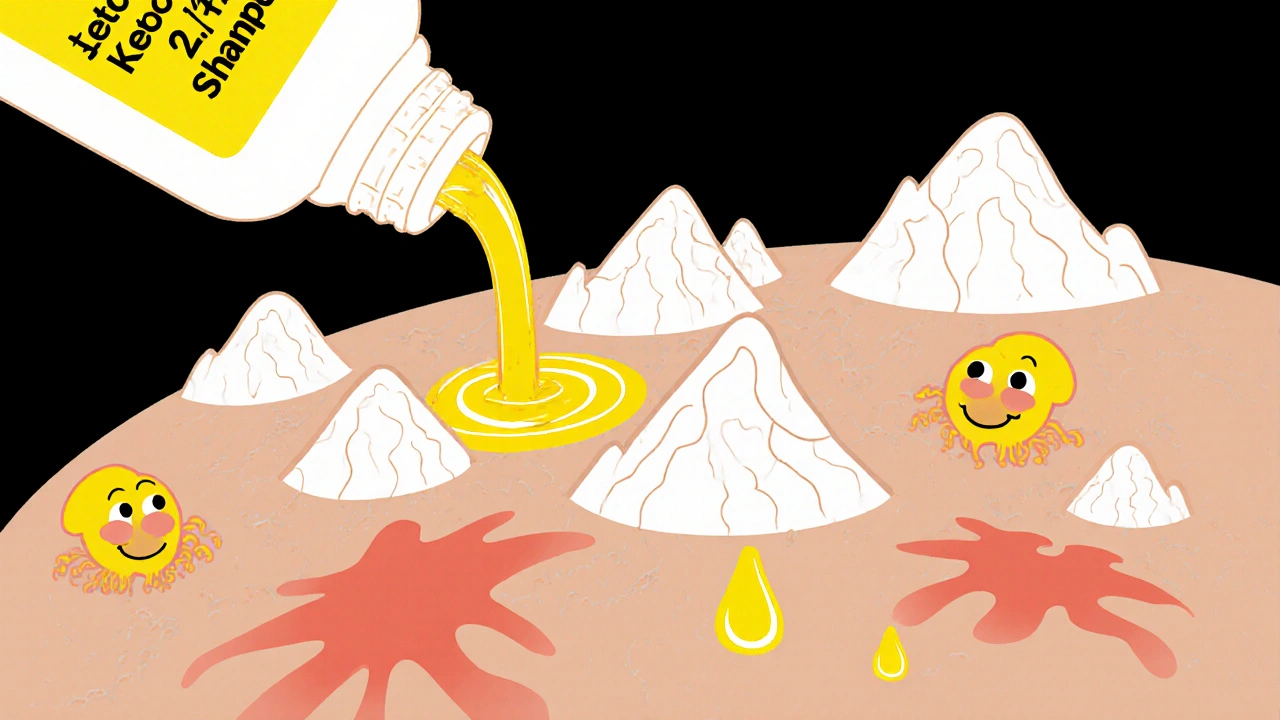
Seborrheic dermatitis causes stubborn scalp flaking and itching. Learn how medicated shampoos with ketoconazole, zinc pyrithione, and coal tar can control the yeast behind the flakes - and how to use them properly for lasting relief.
View Details