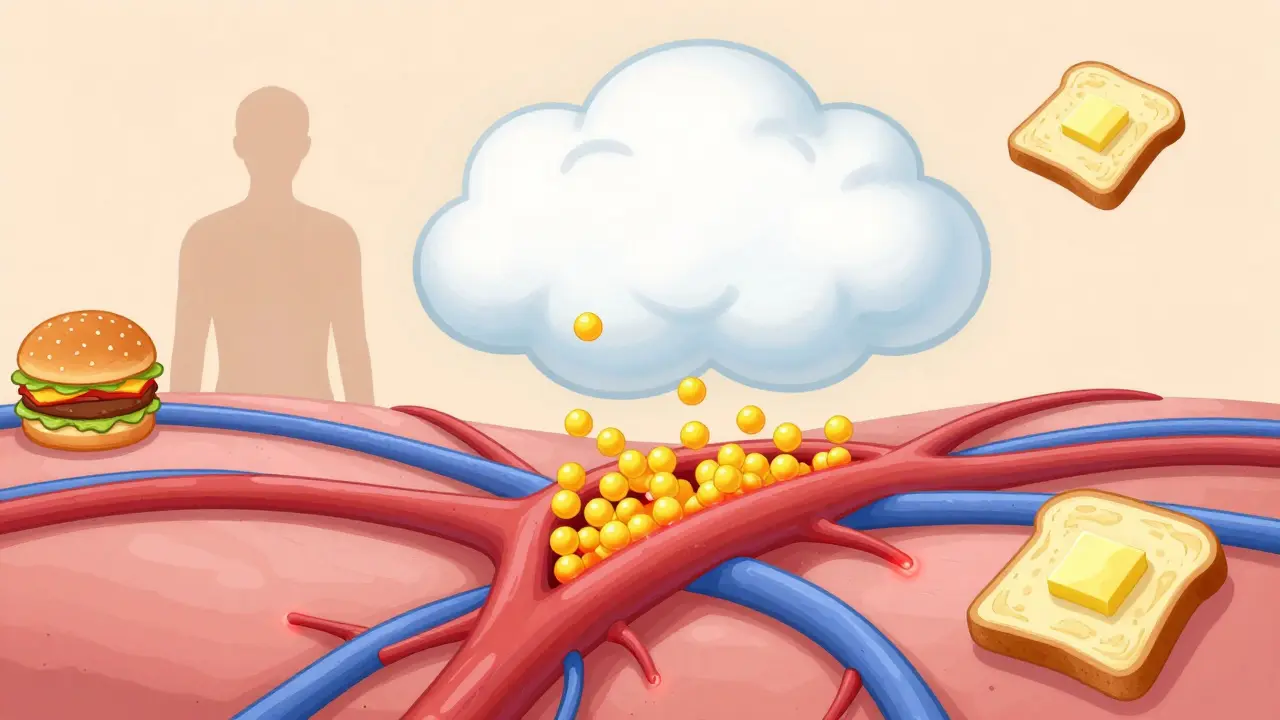
High cholesterol isn’t something you feel. No pain, no warning signs, no sudden dizziness. That’s why it sneaks up on people-until it doesn’t. By the time symptoms show up, the damage is often already done. Hypercholesterolemia is the medical term for having too much cholesterol in your blood. It’s not just a number on a lab report; it’s a silent driver behind heart attacks, strokes, and blocked arteries. And if you’re over 40, you’re at risk-even if you feel fine.
What Exactly Is Hypercholesterolemia?
Cholesterol is a waxy substance your body needs to build cells, make hormones, and digest food. But when levels get too high, it starts sticking to your artery walls. Over time, this builds up into plaque, narrowing your blood vessels and forcing your heart to work harder. That’s hypercholesterolemia: a condition where cholesterol, especially the bad kind (LDL), piles up in your bloodstream.
The American Heart Association says about 93 million American adults have total cholesterol above 200 mg/dL. That’s nearly 1 in 3 people. But here’s the twist: most of them don’t even know it. The only way to find out is through a simple blood test. No fasting required anymore-labs can give accurate results even if you ate breakfast.
The Two Types: Genetic vs. Lifestyle
Not all high cholesterol is the same. There are two main types: familial (genetic) and acquired (lifestyle-driven).
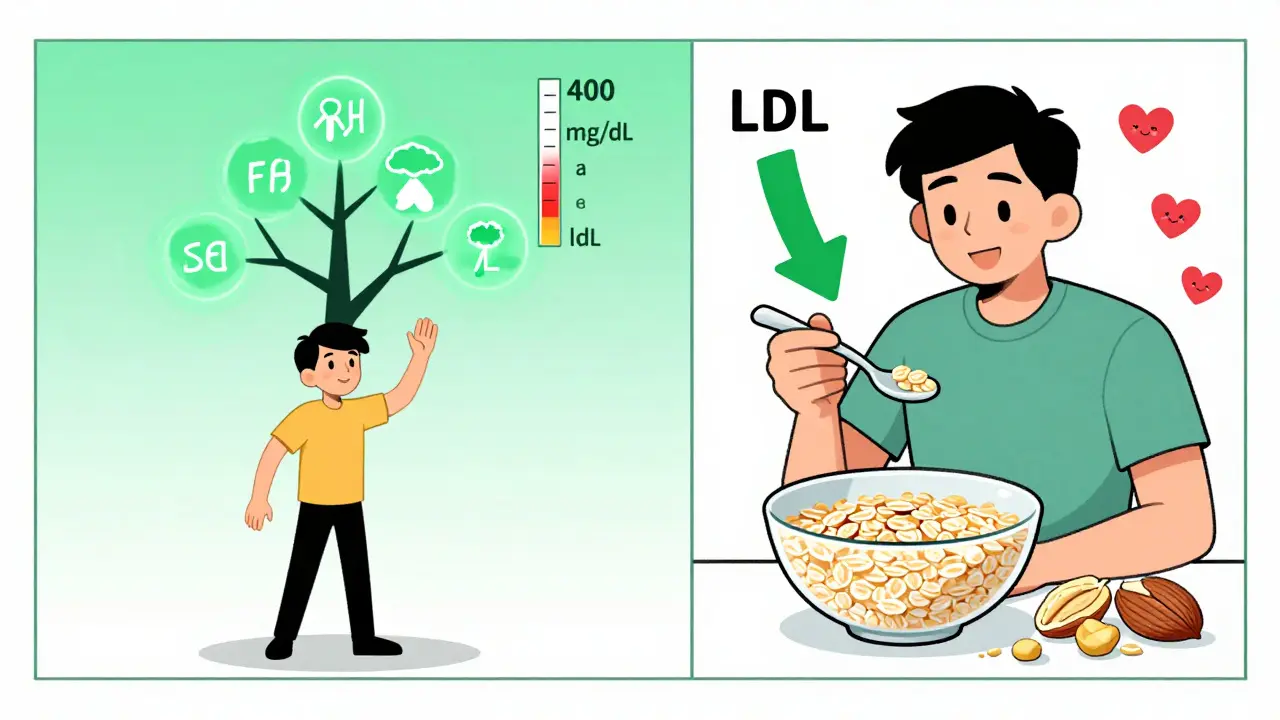
Familial hypercholesterolemia (FH) is inherited. If one of your parents has it, you have a 50% chance of having it too. It’s more common than you think-about 1 in 250 people worldwide carry the gene. People with FH are born with LDL levels already above 190 mg/dL, sometimes over 400 mg/dL. They don’t gain it from eating too many burgers; their bodies can’t clear cholesterol properly. By age 30, many show physical signs: fatty lumps on tendons (tendon xanthomas), yellow patches around the eyelids (xanthelasmas). Without treatment, men with FH often have heart attacks before 50. Women aren’t spared-they face them before 60.
Acquired hypercholesterolemia comes from what you eat, how you live, and other health conditions. Eating too much saturated fat, being overweight, not moving enough, or having diabetes, hypothyroidism, or kidney disease can all push your cholesterol up. This type usually shows up later in life, with LDL levels under 190 mg/dL. The good news? It often responds well to diet and exercise.
What Numbers Should You Worry About?
Not all cholesterol readings are equal. Here’s what the guidelines say:
- LDL (bad cholesterol): Below 100 mg/dL is ideal. 130-159 is elevated. 160-189 is high. Over 190 is severe-especially if you’re young or have other risk factors.
- HDL (good cholesterol): Above 60 mg/dL is protective. Below 40 for men or 50 for women raises risk.
- Total cholesterol: Under 200 mg/dL is recommended. Over 240 is considered high.
But numbers alone don’t tell the whole story. If you’re diabetic, smoke, have high blood pressure, or are overweight, even an LDL of 130 can be dangerous. That’s why doctors look at your overall risk-not just one number.
Why It’s So Dangerous
High cholesterol doesn’t cause chest pain or shortness of breath until it’s too late. By then, plaque has narrowed your arteries by 70% or more. That’s when you get a heart attack or stroke. The Global Burden of Disease Study found that heart disease caused by high cholesterol is still the #1 killer worldwide.
People with untreated familial hypercholesterolemia lose about 30 years of life expectancy. That’s not a guess-it’s backed by decades of research. Even those without FH but with high LDL face a 22% higher risk of heart events for every 39 mg/dL reduction in LDL. That’s why lowering it isn’t optional-it’s life-saving.
How It’s Diagnosed
There’s no other way but a blood test. Lipid panels measure total cholesterol, LDL, HDL, and triglycerides. You can get one during your annual check-up. The U.S. Preventive Services Task Force recommends testing everyone between 40 and 75. But if you have a family history of early heart disease, get tested as early as 20.
Doctors also look for physical signs: xanthomas on your knuckles or Achilles tendons, or yellowish skin around your eyes. These are red flags for FH. Genetic testing can confirm it, but it’s not always needed. If your LDL is over 190 and you have a family history, you’re likely dealing with FH.
Treatment: Beyond Statins
Statins are the first line of defense. Drugs like atorvastatin and rosuvastatin can drop LDL by 50% or more. They’re safe, effective, and cheap. But about 1 in 5 people can’t tolerate them-muscle pain, liver issues, or just feeling off. For them, there are other options.
Ezetimibe blocks cholesterol absorption in the gut. It lowers LDL by about 18%. It’s often paired with statins for extra punch.
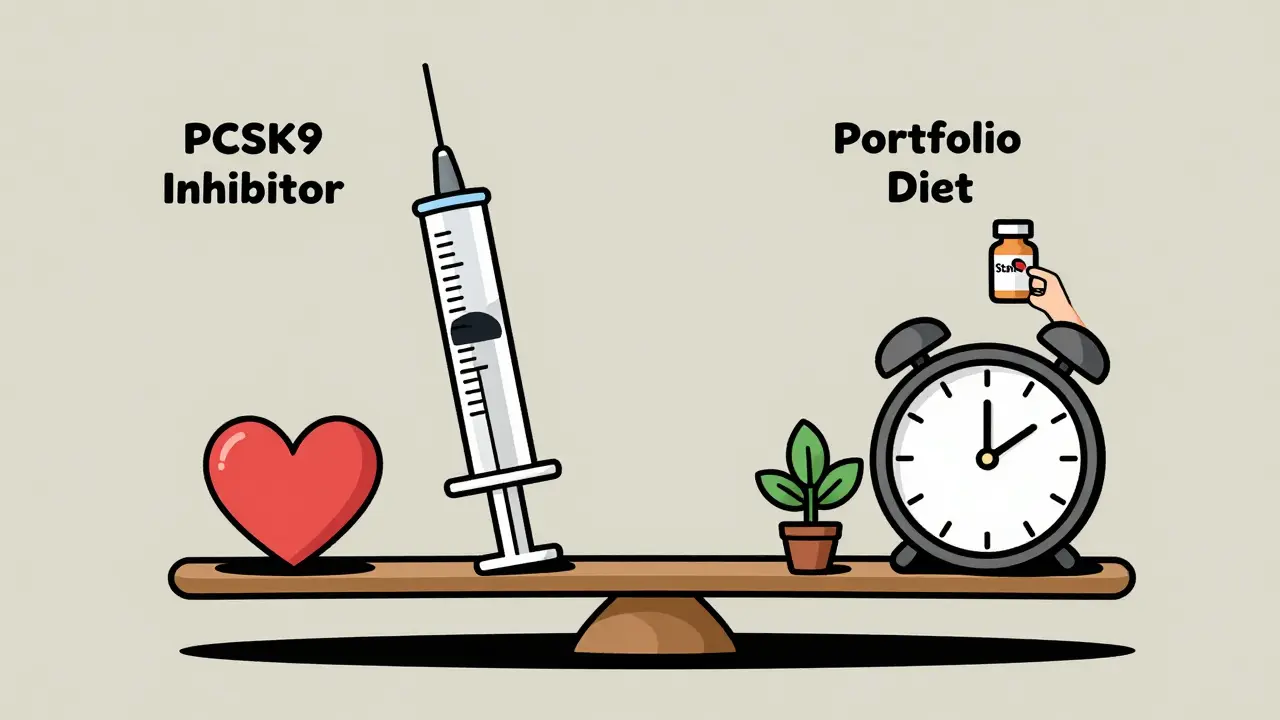
PCSK9 inhibitors (alirocumab, evolocumab) are injectables that help your liver pull more LDL out of your blood. They cut LDL by 50-60% on top of statins. They’re expensive but lifesaving for FH patients.
And then there’s inclisiran (Leqvio), approved in 2021. It’s an RNA therapy that works like a silent switch-turning off the gene that makes PCSK9. You get two shots a year. It’s a game-changer for people who forget pills.
For severe FH, doctors often use triple therapy: a high-dose statin + ezetimibe + a PCSK9 inhibitor. It’s not extreme-it’s necessary.
Lifestyle Changes That Actually Work
Yes, diet matters. But not in the way you think. Cutting out eggs won’t fix high LDL if you’re still eating fried chicken, buttered toast, and processed snacks.
The Portfolio Diet is backed by solid science. It combines four key foods:
- Plant sterols (found in fortified margarines)
- Soluble fiber (oats, beans, apples, psyllium)
- Whole soy proteins (tofu, edamame, soy milk)
- Nuts (almonds, walnuts-about 1.5 ounces a day)
Studies show this combo can drop LDL by 10-15%-as much as a low-dose statin. And it works even better with exercise. Just 30 minutes of brisk walking five days a week helps your body clear cholesterol faster.
But here’s the catch: most people quit. Adherence drops from 73% at six months to 45% at a year. It’s hard to stick with a diet that doesn’t feel like a reward. That’s why small, sustainable changes beat drastic overhauls.
The Real Barriers to Treatment
Even with all the tools we have, most people with high cholesterol aren’t getting the care they need. Only 55% of eligible U.S. adults are on statins. Among Black adults, it’s 42%. For women, it’s 49%. Why?
- Doctors don’t always test high-risk patients early enough.
- Patients don’t understand the long-term risk.
- Medication costs and side effects stop people from taking pills.
- Many think, “I feel fine, so I don’t need it.”
The NHS in England reports that only 48% of high-risk patients hit their LDL targets. That’s not just a medical failure-it’s a public health crisis.
What’s Next?
Science is moving fast. Polygenic risk scores now let doctors identify people with inherited high cholesterol even if they don’t have a family history. That means we can start treatment earlier-before damage begins.
Meanwhile, public health efforts are pushing to cut saturated fat in processed foods. The American Heart Association’s 2030 goal is to improve cholesterol levels across the population by 20%. That means better food labeling, school meals with less butter, and more access to healthy options in low-income areas.
But individual action still matters. If you’re over 40, get tested. If your LDL is over 130, talk to your doctor-not just about pills, but about your diet, your activity, your family history. If you have a parent or sibling who had a heart attack before 55, don’t wait. Get checked now.
High cholesterol isn’t your fault. But managing it? That’s your power. And it’s not about perfection. It’s about progress. One test. One change. One pill. One walk. Those small steps add up to years of life.
Can high cholesterol be reversed?
Yes, but it depends on the cause. Lifestyle-related high cholesterol can improve significantly with diet, exercise, and weight loss-sometimes enough to reduce or even stop medication. Familial hypercholesterolemia can’t be reversed because it’s genetic, but it can be controlled. With the right combination of meds and lifestyle, LDL levels can drop enough to prevent heart disease entirely.
Does eating eggs raise cholesterol?
For most people, dietary cholesterol from eggs has a minimal effect on blood cholesterol. What matters more is saturated fat-found in butter, fatty meats, and fried foods. The Dietary Guidelines removed the old 300 mg daily limit because research shows it’s not the main driver. But if you have familial hypercholesterolemia or diabetes, it’s still smart to limit high-cholesterol foods.
How often should I get my cholesterol checked?
If you’re 40 or older, get tested every 4-6 years. If you have risk factors-like obesity, diabetes, smoking, or a family history of early heart disease-get tested every 1-2 years. If you’ve been diagnosed with high cholesterol or are on medication, your doctor will likely want a lipid panel every 3-6 months until levels stabilize.
Can you have high cholesterol and still be thin?
Absolutely. Weight isn’t the only factor. Familial hypercholesterolemia affects people of all body types. Even lean, active individuals can have dangerously high LDL if they carry the gene. That’s why family history matters more than appearance. Thin people with high cholesterol are often overlooked-and that’s dangerous.
Are natural supplements like red yeast rice effective?
Red yeast rice contains a compound similar to statins and can lower LDL by 15-25%. But it’s not regulated like prescription drugs, so potency and safety vary. Some products contain harmful contaminants. If you’re considering it, talk to your doctor first. It’s not a substitute for proven treatment, especially if you have FH or a history of heart disease.
What happens if I stop taking my cholesterol medication?
Your LDL levels will rise again-often back to where they were before you started. Statins and other drugs don’t cure high cholesterol; they manage it. Stopping means your arteries start collecting plaque again. For people with familial hypercholesterolemia, stopping medication can lead to a heart attack within months. Never stop without talking to your doctor.


Colin Pierce
27 January / 2026Man, this post is a goldmine. I’ve been telling my dad for years to get his cholesterol checked-he’s 58, eats like a caveman, and swears he’s fine because he’s ‘skinny.’ Didn’t even know LDL over 190 was a red flag for FH. Now he’s booked an appointment. Thanks for the clarity.